Thursday, June 29, 2023

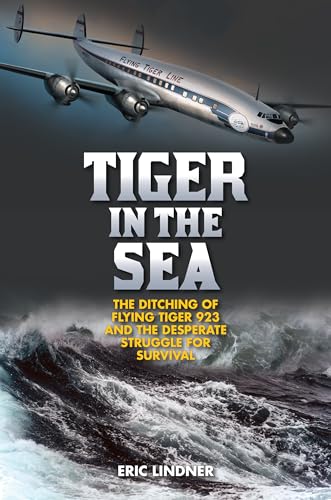
Book review: "Tiger in the Sea"

As a professional researcher, I love a well-researched book. That's why I respect author Eric Linder's work on "Tiger in the Sea," a deeply documented book about a U.S. military plane that went down in the Atlantic Ocean in 1962.

Linder says he did 1,700 interviews for the book, 94 of them in-person. He also dug through government documents, news articles and the personal memoirs of survivors. Though there were setbacks — in one chapter, he recalls his stunning discovery that records of the crash were missing from the National Archives — his persistence helped him assemble this detailed 2021 book.
Still, it take more than research to make a good book. You also need smart storytelling, thoughtful organization and the restraint to avoid cluttering the book with excessive detail. Unfortunately, "Tiger in the Sea" falls short on all those measures.

To be sure, the tale of Flying Tiger Flight 923 is a gripping story. The plane lost three of its four engines while flying over the Atlantic, forcing the pilot to land in the frigid ocean in the dark of night. All 76 aboard survived the ditching, but in the chaotic evacuation from the plane, lifeboats were lost, and many passengers ended up in the sea. 

After a harrowing eight hours, and an intense rescue effort by several nations, survivors were brought aboard a Swiss merchant ship. A total of 48 people survived, 28 died. 

The best part of the book is Linder's account of the passengers' frantic survival efforts in the wake of the ditching. If you've ever wondered what it would be like to be caught in such a situation, Linder puts you there.

He captures the terror and confusion, from multiple perspectives, of people struggling to put on life vests, swim through gasoline-choked waves, and find a lifeboat amid the inky blackness of the night. The lifeboat brought little solace: 51 soaked people end up crowded onto an upside-down inflatable that was only built for half that many.

But aside from that dramatic section, much of the book is bloated and overstuffed with information. At the onset of the book Linder, like too many authors, makes the mistake of dumping a crate of character background on the reader all at one. The problem with this approach is that  early in the book readers lack the context to understand why each person is important to the story.

The next section describes the plane's engine troubles and gradual descent into the sea. This should be a tense and suspenseful read, but Linder describes every instant from multiple perspectives, drawing out the scene into the most slow-motion crash ever. 

The post-crash portions are similarly bloated. Rather than trying to make a readable story, Linder seems to be attempting to create a Flight 923 reference book by pulling every detail from his notebooks, citing every wrinkle in the government crash investigations, and going into far too much detail on the survivors' post-crash lives.

Linder also fails on a basic issue of transparency.

The central character in the book is pilot John Murray. Linder portray Murrays as keeping a cool head in the cockpit as the plane was plummeting toward the sea, and skillfully putting the plane down in a manner that kept it from breaking up upon impact. He also notes that Murray's last-minute decision to retrieve a flashlight from the cockpit before evacuating was crucial to the eventual rescue.

In the post-crash investigation some questioned Murray's actions, but Linder is quick to shut those doubts down, quoting survivors and experts praising Murray. In short, Linder portrays Murray as a hero.

It's not until near the end of the book that Linder reveals an important fact: Murray is his father-in-law. I'm not here to question whether Murray was indeed a hero, but this revelation makes me wonder how unbiased Linder's account is. The author should have revealed the familial connection earlier in the book.

Finally, for all of Linder's deep research, the book largely ignores one important group in the story: The dead. The author has talked extensively to survivors and their families, but he only barely mentions a handful of people who ended up dead. Given the many interviews Linder did, why weren't more of them with the families of those who died? Might some of them question whether Murray was a hero? 

"Tiger in the Sea" isn't a bad book; I just wish it were better. Those with a deep interest in Flight 923 may get a lot out of it. More casual readers should focus mostly on the ditching and rescue, while skimming the rest.




Thursday, May 4, 2023

Book review: "Wild Life" by Keena Roberts

In an era when most American parents are afraid to let their children walk to a neighbor's house alone, Keena Roberts' mother and father took a different approach. 

Roberts' parents raised her largely in Botswana's vast Okavango Delta, where they were doing research on baboons. The family lived in a camp hours away from the nearest town, leaving Keena, even at a young age, to go off alone and explore an expanse dotted with hippopotamuses, elephants, water buffalo, lions and jaguars. 

This is the focus of Roberts' excellent 2019 autobiography, smartly titled "Wild Life." 

"Wild Life" brings together many of the best ingredients of  a great book. Ordinary people in unusual situations.  Exotic locales. Danger. Humans you can relate to. And, above all, clear, evocative writing that places you in the scene.  

Was living in the African wild really dangerous? Yes, it was, Roberts notes (and there is a jaguar attack in the book to emphasize the point), but she learned to reduce the risk by being keenly aware of her surroundings. She describes how smells, sounds, animal tracks, ripples in the water, and even specific calls of baboons and birds were all clues to the presence of dangerous animals. 

The book is not all about Roberts' life in Africa. She also describes her "alternate life" near Philadelphia, where she attended school off and on when her family wasn't in Africa.

Life in America was in many ways more difficult than it was in Botswana. You feel for her as she struggles to adapt to American teenager culture, her African life leaving her socially clumsy, and stumbles through the dynamics of "mean girl" encounters.

Roberts is an excellent writer that places you there. When she talks of the oppressive heat of Botswana's dry season, you feel it. When she is charged by a lion and prepares to die, your heartbeat rises too. When a snooty high school girl mocks her hairstyle, you can't help but get angry. 

For example, she describes her routine upon awakening at Baboon Camp:

I lay completely still for a minute or two, sniffing the air to see if I smelled elephants or buffalo among the scents of dry dust and sage bushes outside the tent. Smelling only the earth and hearing only the birds scratching on the ground, I sat up slowly. ... I slid out from under the heavy blankets piled on my cot and pulled on shorts, a T-shirt, and my purple Patagonia jacket. I was supposed to wear shoes so I didn't rack dirt into the tent, but I rarely followed this rule — I liked to feel the ground under my feet, the way the dust pooled between my toes and puffed up around my ankles.

My favorite scene from the book is where 10-year-old Keena is called upon, because of an urgent situation, to pilot one of the family's boats on a two-hour drive through the crocodile and hippo-infested swamps, her younger sister the only passenger. Though she was a capable boat driver even at that age, she had never done this kind of trip,. She is honest about her fears and I turned the pages rapidly to find out how the trip would turn out. 

My least favorite part of the book is where she is accepted into Harvard. I feel bad saying that, because this was obviously a big achievement for Roberts. But up until then, she had been largely an underdog — a child trying to fit in awkwardly in two worlds, troubled by so many of the anxieties we all face at that age —  and it was easy to root for her.

Her acceptance into Harvard abruptly elevated her to another level — an American success story. It didn't seem to fit, and for a little while it bothered me. 

But you know what? Roberts is so likeable that I soon got over it. 


Friday, April 28, 2023

Arriving at Puerto Vallarta airport

One of the most anxiety-inducing parts of travel is arriving at a new destination — especially a foreign destination. There are so many unknowns: What will I need in order to get through immigration? Will  customs search my luggage?  How will I get local currency? How will I get to my destination? 

That's why, as my wife's and my recent trip to Puerto Vallarta, Mexico, approached, I haunted the travel forum pages at TripAdvisor and other websites searching for information about the airport there and the arrival process

It worked —  mostly. I learned enough to reduce the number of unknowns and ease the anxiety just slightly. But there were still surprises awaiting us. 

To pay this forward, I thought it might be helpful to other travelers to share our experience from our arrival in Puerto Vallarta on April 18, 2023.

We arrived at PVR (aka Licenciado Gustavo Díaz Ordaz International Airport) at 5:15 p.m., about an hour late, and the crew encouraged us to move speedily through the facility as Customs closed at 6 p.m. This was both worrisome and comical (what happens if you don't get there until 6:01? Are you locked in the airport?). No matter, we fully intended to get through the airport as quickly as possible. 

We got off the plane and there was a long walk to our first checkpoint — immigration.  This was a large room and it wasn't immediately clear where to go, but a worker directed us to one of the stations where an immigration officer sat at a booth.

We only waited briefly before stepping up to the officer and presenting our passports. The officer asked me to remove my hat (there was a camera there, so maybe we were being photographed), but otherwise quickly stamped our passports and we were on our way.

We proceeded into the next room, a large space that houses baggage claim and customs. We only had carry-on bags, so we had no luggage to retrieve, but we did need to fill out a customs form.

In some cases, your airline may hand out customs forms to fill out on the plane, but our Southwest flight crew said they were out of them. There is also, supposedly, a way to fill out an online form ahead of time and pre-print it, but when I tried that before our flight it didn't include Puerto Vallarta as an option for the arriving airport (weird), so I gave up.

You'd think there would be plenty of customs forms in the customs hall, but at first we saw none. We found a few people filling out the form and I asked one of them where he got his. He pointed to a nearby counter. 

I hurried over there, just in time to see someone else snatch up the last of the forms on that counter. As I continued to search, another traveler handed me a form —  she had accidentally grabbed two. I was glad to have a form but couldn't help wondering what the other hundred or so people in the hall were going to do.

The form was pretty easy (you only need one for you and your family members traveling with you), but I did mess up my birthdate, reversing the month and day. Spoiler: It didn't matter.

There are numerous stations to exit the customs area. Some people report that they had to press a button and if you get a green light, you just leave, but if you get a red light, they search your luggage. 

That didn't happen with us though. We were directed into a line and then told to put our luggage through an X-ray machine. We did so, but it didn't appear that anyone was even looking at the X-ray screen. As our luggage came out on the other side, no one gave us any instructions, so we simply picked up our bags and left.

As you exit Customs, you enter the "Shark Tank." This is a hallway crowded with people, almost all men, offering to help you get a taxi or van. Some have on official-looking badges, but there's nothing "official" about them. By all accounts, if you decide to employ one of them for your ride, you will be charged much more — sometimes double — the prices of other options. The best advice is just to look straight ahead and keep going.

After the Shark Tank, you enter the main airport hall. Immediately on the right are five or six ATMs.  I pulled over to one to get some pesos. You, of course, want to be knowledgeable about fees anytime you are using an ATM not affiliated with your bank. Some U.S. banks will have partnerships with foreign banks, which may help you avoid some fees, but your best tactic is to get a Charles Schwab checking account and debit card. With the Schwab card, which I have, you pay zero ATM fees anywhere in the world.

I entered my Schwab card, and followed the prompts. There is one important step here: You need to say "No" when the machine offers to convert your dollars to pesos. If you say "Yes," you will be charged a much worse conversion rate than you would if you just said "No" and left the process to your bank. I knew to do this, but I almost fell for their trap.

Here's why: You have to accept the ATM fees (even though, with the Schwab card, I wouldn't end up paying pays them), so you click on "accept." On the very next screen is the conversion question, and it looks almost identical to the ATM fee question, so it was very tempting just to say "accept" again. Fortunately, I realized what they were asking and declined. Be wary! 

Pesos now in hand, we went in search of an Uber. We opted for Uber because by all accounts, Uber is something like half the price of taxis in the airport. Fortunately, there are numerous articles and videos online about catching an Uber at PVR, because it would be difficult to figure out how to get one on your own. 

Here's what to do: Exit the front of the airport and turn left — again, you will have to dodge numerous people offering you a taxi. Go to the end of the building and turn left again. You will see a footbridge that will take you over an adjacent road (the bridge has a ramp, so you can roll your luggage). Go up the footbridge and to the other side where you can catch an Uber. They're not allowed to pick up in the airport.

This might sound confusing if you've never tried it it but it turned out to be really quite simple.

The only thing that's not obvious is where exactly you catch the Uber. There's a bus stop, a small restaurant and some shops in that area, and quite a few people milling about —  including even more people trying to offer us a ride. 

I opened the Uber app and it first asked where exactly we wanted pickup — "Restaurant" or "Footbridge." Since we were standing right next to the footbridge, I almost clicked on that, but looking closer at app map, I realized that that location was the other side of the street (and seemed impossible to use). "Restaurant" was the right choice.

We were close to making our full escape from the airport, but there was more hitch ahead. When I tried to reserve an Uber, my Bank of America credit card was declined. Freakin' Bank of America. They specifically tell you that you don't have to warn them about foreign travel because they have "advanced" fraud detection in place. But when I tried to use the card in Mexico for this Uber ride, they detected that as suspicious and blocked the transaction. This was the second time B of A had unnecessarily blocked my card due when I was in a foreign country.  Grrrrr.

Fortunately, I had a back-up payment option in the Uber app and activated that. The lesson: Don't use Bank of America cards in foreign countries, and always have a backup payment source in your Uber app.

On second try, my ride request went through. And in just two minutes, our driver arrived at the footbridge and we were on our way to our destination.


Sunday, April 9, 2023

Book review: "Lies Across America" by James W. Lowewen

The cabin where Abraham Lincoln was supposedly born isn't genuine. The quotations on the walls of Jefferson Memorial aren't accurate. And the oft-described harsh winter that American troops endured at Valley Forge in 1775-76 really wasn't that bad. 

These are just a few of the startling facts described by James W. Loewen in his 1999 book "Lies Across America: What Our Historic Sites Get Wrong."  

This compendium lists nearly 100 sites across the United States where, according to Loewen, the history presented to the public is wrong. It's not just a game of "Gotcha!" — he's trying to make a deeper point: Much of the way history is presented in this country is twisted, or even flipped, to fit political or religious agendas. The achievements of white European men are emphasized, their mistakes ignored, while the contributions of women, blacks, and Indians, are omitted or minimized.

Loewen is a thorough researcher, but "Lies Across America" is a poor title.  Most of the flaws he finds are not "lies" or even inaccuracies, but omissions or simple differences of interpretation. Throughout much of the book, he seems peeved that history is not presented exactly the way he would like it to be. Maybe it should have been called "Hidden American History" or similar.

Omissions can certainly be important, such as on the marker of the Mountain Meadows Massacre in Utah that fails to mention who committed the slaughter of 120 people traveling in a westward-bound caravan in 1857 (spoiler: It was Mormons, not Indians). Kudos to Loewen for this section's great title: "Bad Things Happen in the Passive Voice."

But in other spots Loewen seems to be reaching for things to get upset about. He calls out a small marker in Nebraska praising author Willa Cather for not saying that she was a lesbian — but c'mon, how common is it for a historical marker to note the sexual orientation of any figure?

He's peeved that Virginia has no historical markers honoring Abraham Lincoln and there are no plaques mentioning slavery in Richmond, Virginia, He chides Indiana for having "only" one plaque mentioning the Ku Klux Klan, even though he notes that there are only four such markers in the entire U.S. He's miffed that a marker in Nevada describing nuclear tests, while not inaccurate, doesn't include the information he would like it to have.

To be clear, the book has some great stories, He describes the bizarre history of how a fake cabin ended up at the Lincoln birthplace in Kentucky to represent the birthplace of our 16th president. He outlines how Thomas Jefferson's quotes are mangled on the walls of the Jefferson Memorial to the extent that the meaning is distorted. And he cites George Washington for fueling the false idea that American soldiers were "naked and starving" at Valley Forge.

He finds some fascinating lesser-known stories, too, such as the tale of how Alaska's Mt. McKinley got that name due to a squabble over whether the U.S. dollar should be on the gold standard. Two good chapters are from the Civil War, one detailing the life of Elizabeth Van Lew, a Union spy living in the Confederate capital during Civil War, the other a description of Abraham's Lincoln's walk through Richmond, Virginia, at the end of the conflict. 

Still, Loewen seems too eager to hear himself talk, repeating the same points about historical injustices too many times. The 50-page opening to the book could be about half that long.

Too often, he comes off as an irritating know-it-all scold. He seems like the kind of guy who would say, just as you're about to dig into some ice cream, "Do you know how much fat is in that?"

For all his historical knowledge, Loewen overreaches when he says, without the slightest qualifier, that President James Buchanan was homosexual. This was eye-opening to me; I'd never heard this. So I dug deeper and found that the scholars who know most about Buchanan's relationships (such as Thomas Balcerski, who wrote a whole book on this question) have concluded that he was not gay. This is just one mistake in a book full of footnoted facts, but it's enough to make the reader wonder what else here is untrue. 

"Lies Across America" could be a decent reference book to look at just before you visit a historical site. But I would not recommend reading it all at once, or you'll just end up irritated by the author rather than absorbing the history


Thursday, February 9, 2023

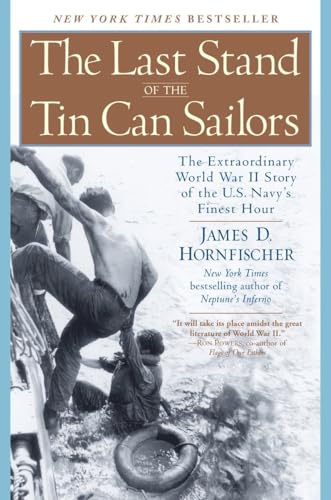
Book review: "The Last Stand of the Tin Can Sailors"

When a flotilla of 12 U.S. Navy ships was suddenly confronted with an approaching fleet of 23 Japanese warships east of the Philippines during World War II, the situation looked bleak.

Not only were the Americans outnumbered, they were outgunned. The U.S. group was mainly smaller ships designed to support combat operations, while the Japanese had their largest battleships and most powerful cruisers. 

This was the start of the "Battle off Samar," a 1944 confrontation in which five U.S. ships were sunk, seven others damaged, and over a thousand Americans died.

Yet, largely due to heroic efforts of men aboard ships the Americans called "tin cans," it ended as an improbable U.S. victory.

I knew almost nothing about the Battle off Samar before I started James D. Hornfisher's 2004 book "The Last Stand of the Tin Can Sailors." I know a lot more now, and if you like war stories, I can assure you this is a good one. 

The Battle off Samar was a key part of the Battle of Leyte Gulf, a four-day clash between U.S. and Japan fleets.

The book focuses on a nearly disastrous day for the Americans. A clever Japanese ruse combined with questionable decisions by a Navy admiral left a sizable hole in the U.S. armada.

Into that gap slipped a large contingent of Japanese ships. In their path was a group of U.S. ships known as "Taffy 3" that was mostly responsible for supporting troops on land — not for fighting sea battles.

Much of the credit for the American victory, Hornfisher explains, goes to the sailors of the ships Hoel, Johnston, Heermann and Samuel B. Roberts, which made pretty much suicidal runs at the Japanese to buy time for the other U.S. ships to get further away. By the end of the battle, the Hoel, Johnston and Roberts were at the bottom of the ocean.

As a researcher, Hornfisher gets an A++. The bibliography alone is 21 (!) pages. He interviewed 52 survivors of the battles, reviewed private letters, notes and writings that family members shared with him, and assembled facts, names, figures, from copious other sources. Besides the battle itself, the author demonstrates thorough knowledge of the ships, weapons, naval training and military strategies.

 "The Last Stand of the Tin Can Sailors" will certainly go down as the most comprehensive history of the Battle off Samar.

As a writer, Hornfisher gets a B+. The book starts slowly and at times goes into excessive detail, but it gets better as it goes on and eventually becomes a compelling page-turner.

The 130-page introductory section, while nicely setting the stage for the battle, spends too much time telling back stories of the many figures from the battle. I know Hornfisher wants to humanize the cold business of warfare, but this is not the kind of book where the reader follows a small number of characters.

There are scores of men who play key roles in the story — far too many for the reader to keep track of. Plus, the back stories are so far removed from the action in this 425-page book, it's difficult to connect a character to his later significance. 

Hornfisher also sometimes uses simplistic caricatures, as when he described one sailor this way: "The boyish twenty-four-year-old with the lantern jaw and quiet manner watched over the kids on the Johnston's deck like a father. The kids who swabbed and painted and scraped and loaded supplies and took on fuel loved him like one."

But after the unhurried start, the book hits its stride. The battle chapters are exciting and vividly described.

Hornfisher's meticulousness helps fill the story with subtle details. For instance, one sailor by the name of Bob Rutter was knocked down when an enemy shell hit his ship, and he believed the sticky stuff on his face was blood and mangled flesh. "After a terrified pause, Rutter realized he was all right, and lucky too. The mess that covered him was navy beans, cooked in storage by the blast of the shell, steamed by the sudden heat, and blown through the uptake, blasting him with a blast of paste."

Another example: An enemy shell hit the destroyer Hoel's safe, which held cash to pay the crew, sent money fluttering into the air. As the author described it, "The fifty-dollar bills settled and stuck fast on the deck, the gruesome windfall drifting with the flow of blood down the bilges."

Hornfisher does not sanitize the horrors of war. He documents the brutal destruction of ships, describing men who were decapitated, had limbs blown off, or were severely burned from fire and explosions.

Still, the author should learn that not every fact needs to go into the book. The blood-and-guts scenes are so numerous they eventually become repetitive and blur together. Highlighting some key moments and summarizing others could have helped. Sometimes less is more.

The final section detailing the miseries of the surviving sailors stranded for two days in the water awaiting rescue is Hornfisher's best writing, even if the content can be painful to read.  In the epilogue, he notes how Navy politics kept the heroism of the Battle off Samar from receiving much attention over the years (maybe this is one reason I knew little of this episode).

For all the death and destruction of the battle, Hornfisher eloquently describes how the ephemeral nature of naval warfare can leave little trace beyond memories: 

“When a ship sinks, the battlefield goes away. Currents move, thermal layers mix, and by the time the surveyors and rescuers arrive, the water that more witness to the slaughter is nowhere to be found. The dead disappear, carried under with their ruined vehicles. No wreckage remains for tacticians to study. There are no corpses for stretcher bearers to spirit away, no remains to shovel, bad, and bury. On the sea there is no place to anchor a memorial flagpole or headstone. It is a vanishing graveyard.”


Tuesday, January 3, 2023

One night at Ralphs

I went to my local Ralphs supermarket to buy diet soda last night. I've done this scores of times, but this time things went awry. 

I buy Ralphs-brand soda largely because of the price. Up until about six months ago, a two-liter bottle cost just 79 cents (plus recycling fees). Then the price went up to 99 cents. I wasn't thrilled, but hey — inflation — I get it. 

But last night I was stunned to see the price was now $1.49 per two-liter bottle. In other words, over six months, the price rose from 79 cents to $1.49 -- an 88% increase. That's a helluva lot more than can be blamed on inflation.

Looking at the shelves for alternatives, I saw that Diet Pepsi was just $1.29 — with a "digital coupon." I wasn't quite sure what a digital coupon was, but I was willing to give it a try.

The tag on the shelf said to scan the QR code to get the coupon. I took out my phone and did so, but it only brought me to the Ralphs website, not a coupon. Looking closer, it said to "log in" to get the coupon. Hmmm. I didn't have an account to log in to, so I stood in the aisle creating one — enter email, make password, accept terms and conditions.

That done, I logged in — and it still didn't show me the coupon. In my "cart," I found the coupon listed but no bar code or QR code I could use. 

Puzzled, I headed to the checkstand. I found a cashier with no one in line. Perfect. Or so I thought.

As I placed my items on the checkout belt, I asked her how I was supposed to use this online coupon. She took my phone in her hands and started tapping and swiping. I stood there waiting. And waiting. Another customer came up behind me and placed her items on the belt.

The cashier kept staring at my phone, tapping occasionally. Another customer got into line. To say this was awkward would be an understatement. To the other customers, it probably looked like the cashier was simply playing on her phone and I was letting her.

I gingerly tried to suggest moving on: "I guess it's not that easy," I said with a weak chuckle. Then a bagger came along and started chatting with the cashier. "The binder is broken," she said, inviting the cashier to look at a broken binder that was relevant to nothing going on at that moment. The cashier, rather than saying "I'm busy," turned from the phone, looked at the binder and talked briefly with the bagger.

The line of customers behind me grew longer. By this point, I just wanted to get my phone back and leave. Again, gingerly, I said, "If this is too hard, I can just..." Finally the cashier gave me my phone and said, "You need to enter your phone number."

Briefly, I was relieved. I'll just enter my phone number and all will be good. But instead, I got the message, "That number does not work." I checked the number; it was correct. Sigh. I told the cashier and she started tapping again on my phone. I could sense the frustration of everyone watching.

Then she said, "You need to enter a code" and handed me my phone back. What code? I didn't have any code (and never got one). She then said she would enter the discount manually this time.

She had to enter the discount one at a time for each of five bottles. With so many eyes staring at us, it seemed to take forever. 

Leaving the store, I made a count of how many grocery stores are closer to my home that this one: The total is four (Target, Vons, Lazy Acres, Trader Joe's). There's also Big Lots, which sells soda. I have options.

I don't need to go back to Ralphs and I won't. 


Saturday, November 5, 2022

Hello, New York Times: What's the problem?

We've all become accustomed to weak, poorly argued and half-ass opinions on the Internet. You see them on Facebook, Twitter, blogs and any site where people are allowed to vent.

I'm not talking about factually wrong statements, though there are plenty of those as well. I'm talking about writing that tries to make a point, but fails for lack of coherence, facts or organization. These are cases where the writer has simply failed to take the reader from Point A through Point B to the conclusion at Point C. 

It's unfortunate, because these writers may actually have a good idea, but they just don't express it well. 

It is one thing to see such muddled thinking around the amateurish corners of the Internet, but it is particularly troubling when it appears in the news pages of the authoritative New York Times.

Case in point is a recent NYT story on "fast furniture" that rambled on about solving a "problem," but never established what the problem was. Let's take a look how the story went awry:

The headline

The headline in the published paper was "'Fast Furniture' is Cheap, Stylish and Clogging American Landfills." Online, the headline was "‘Fast Furniture’ Is Cheap. And Americans Are Throwing It in the Trash / The mass-produced furniture that sold furiously during the pandemic could soon be clogging landfills."

Reading that, you might think the issue is obvious: Discarded furniture is either clogging landfills now or will "soon" be doing so. But the story actually doesn't say any thing like that.

A note for non-journalists: The headline of a story is not written by the writer of the story, but by an editor. While the editor tries to capture the essence of the story in the headline, every once in a while the editor gets it wrong. That's certainly what happened in this case.

The story

This story, by Debra Kamin, begins with a mostly factual report.

Americans bought piles of furniture during the pandemic, with sales on desks, chairs and patio equipment jumping by more than $4 billion from 2019 to 2021, according to a market data company. And a lot of it won’t survive the decade.

Fast furniture, which is mass-produced and relatively inexpensive, is easy to obtain and then abandon.

Kamen can't hide her disdain for this category of furniture. In the second paragraph, she says "fast furniture is for those looking to hook up but not settle down. It’s the one-season fling of furnishings." Then, the first source she quote piles on with more disdain:

Many of the Ikea beds and Wayfair desks bought during the Covid-19 lockdown were designed to last about five years, said Deana McDonagh, a professor of industrial design at the University of Illinois, Urbana-Champaign. “I relate to fast furniture like I do to fast food,” Ms. McDonagh said. “It’s empty of culture, and it’s not carrying any history with it.”

After Kamen quotes Ikea and Wayfair defending their products, she throws in some facts that lack context.

Each year, Americans throw out more than 12 million tons of furniture, creating mountains of solid waste that have grown 450 percent since 1960, according to the Environmental Protection Agency. Bits of tossed furniture can be recycled, but the vast majority ends up in landfills.

"Mountains of solid waste" sounds like a lot. But is it? In fact, 12 million tons is just 4% of all annual waste, but you won't find that in the story.

It is in the next paragraph that the really story starts to go off the rails:

“It’s quite a big problem, both spatially and also because of the way a lot of fast furniture is made now, it’s not just wood and metal. The materials don’t biodegrade or break down,” said Ashlee Piper, a sustainability expert and the author of “Give a Sh*t: Do Good. Live Better. Save the Planet.” “We’re creating this Leviathan problem at landfills with the furniture that we get rid of.”

Stop there. What is a "big problem" or a "Leviathan problem"? Discarded furniture is going to a landfill — so? Landfills are designed to handle all kinds of waste, and the U.S. has plenty of landfill space. The materials don't biodegrade -- well, ok, but again, so?

At this point in the story you would expect to find a quote from a landfill industry official saying they are overwhelmed with furniture waste. You also might expect a comment from a scientist explaining why it is significant that the furniture doesn't biodegrade. But there is none of either, anywhere in the story.

You remember how the headline used the word "clogging"? Kamen never uses that word in the story, nor does she ever indicate that this waste is too much for landfills to handle.  

Kamin goes on to give some background on the furniture industry and the appeal of inexpensive furniture (hint: It's inexpensive). She quotes people who buy this product and also a man who makes his own furniture. 

She says that some companies have "entered the market in the hopes of presenting a solution." Again, we're left wondering: A solution to what?

As I indicated at the top, maybe there really is a problem. But this story never says what it is. It never connects the dots. The New York Times should do better.