Thursday, November 26, 2020

Deonte Murray's criminal history

Deonte Lee Murray, born June 2, 1984, was arrested in September 2020 and charged with shooting two Los Angeles County sheriff's deputies. 

Here is Murray's criminal case history based on records from Los Angeles Superior Court. Note that in cases where a defendant is sentenced to jail, court records do not indicate how long the person spent incarcerated.

Aug. 19, 2002 (age 18): Murray pleads no contest to car theft and is sentenced to five days in Los Angeles County jail, 10 days of community service and 26 months of "summary probation" (this is also known as "informal" probation and does not require supervision by a probation officer). 

April 25, 2003 (age 18): Murray is charged with possession of methamphetamines with the intent to sell. He pleads no contest. The next month he is sentenced to 120 days in L.A. County Jail and formal probation for three years.

Jan. 12, 2004 (age 19): He is charged with petty theft. He pleads not guilty. The charges are later dismissed without a trial.

Feb. 10, 2006 (age 21): Murray is charged with transporting or selling marijuana, possession of marijuana, and possession of a gun while committing a "street gang crime." The possession charge is dismissed while he pleads no contest to the other two. He is sentenced to two years in state prison for each of the two convictions.

Dec. 27, 2007 (age 23): He is charged with being a felon in possession of a gun and pleads no contest. A charge of "obliteration of identification marks" on a firearm is dismissed. He is sentenced to two years in prison.

Jan. 26, 2010 (age 25): Murray is charged with receiving stolen property, later pleads no contest, and is sentenced to two years in prison. He pleads not guilty to a charge of "petty theft with a prior." That charge is dismissed.

June 28, 2011 (age 27): He is charged with possession of methamphetamine, pleads no contest and is sentenced to one year of formal probation. 

Sept. 11, 2011 (age 27): Murray is charged with receiving stolen property, later pleads no contest and is sentenced to two years in prison. Two other charges of burglary and possession of burglary tools with criminal intent are dismissed.

March 5, 2013 (age 28): Online court records show that a criminal case was filed in Los Angeles' Central Arraignment Courthouse on this date against Murray for a "violation" on Oct. 30, 2012. But the record indicates only two court proceedings in the case and no charges or sentencing details are shown.

July 11, 2013 (age 29): Murray is charged with possession of methamphetamine. He pleads no contest and is sentenced to 16 months in county jail. 

July 26, 2013 (age 29): Online court records show that a criminal case was filed in Central Arraignment Courthouse on this date against Murray for a "violation" on July 17, 2013. But the record indicates only two court proceedings in the case and says "There are no charges for this case."

Aug. 16, 2013 (age 29): He is charged with four crimes on this date. Two counts of robbery and one of burglary are ultimately dismissed, but he pleads guilty to a different burglary charge. He is sentenced to 40 months in county jail.

Aug. 23, 2013 (age 29): Online court records show that a criminal case was filed in Central Arraignment Courthouse on this date against Murray for a "violation" on June 23, 2013. But the record says "There are no charges for this case" and offers no further details. 

June 10, 2015 (age 31): Murray is charged with domestic violence. He pleads no contest and is sentenced to 60 days in county jail.

July 20, 2015 (age 31): Murray is charged with three crimes from a "violation" eight days earlier. He pleads not guilty to one count of domestic violence that is ultimately dismissed. He pleads no contest to charges of making criminal threats and disobeying a court order and is sentenced to 180 days in jail for each charge, plus five years of formal probation.

Oct. 26, 2016 (age 32): He is charged with being a felon in possession of a gun and assault with a firearm stemming from an arrest on Oct. 7. He pleads guilty to the possession charge; the other count is dismissed. On Jan. 6, 2017, he is sentenced to 32 months in prison.

Dec. 12, 2016 (age 32): He is charged with possession of methamphetamine and the next month pleads no contest. On Jan. 11, 2017, he is sentenced to 60 days in jail.

Oct. 3, 2018 (age 34): Online court records show that a criminal case was filed in Central Arraignment Courthouse on this date against Murray for a "violation" the day before. But the record says "There are no charges for this case" and offers no further details. 

Jan. 30, 2019 (age 34): He is charged with possession of methamphetamine and later pleads no contest. The next month he is sentenced to 364 days in jail.

Feb. 1, 2019 (age 34): Online court records show that a criminal case was filed in Central Arraignment Courthouse on this date against Murray for a "violation" four days earlier. But the record says "There are no charges for this case" and offers no further details. 

Feb. 18, 2019 (age 34): Online court records show that a criminal case was filed in Central Arraignment Courthouse on this date against Murray for a "violation" eight days earlier. But the record says "There are no charges for this case" and offers no further details.

March 16, 2020 (age 35): Murray is charged with possession of marijuana, possession of drug paraphernalia, and driving without a license. All charges are dismissed on July 22.

Sept. 17, 2020 (age 36): Murray pleads not guilty to carjacking and robbery in connection with a Sept. 1 event. While in jail, police identify him as the suspect in the shooting of two sheriff's deputies on Sept. 12. He is charged with two more counts of attempted murder, assault with a semiautomatic firearm, and three counts of possession of a gun by a felon. He pleads not guilty to all the charges. 

Summary: In the 18 years he has been an adult, Deonte Murray has been convicted of at least 16 crimes and been sentenced to nearly 20 years in jail.




Friday, November 6, 2020

Why did proposition 20 fail?

Proposition 20 got little attention on a California November 2020 ballot that was dominated by the presidential race and cluttered with 11 other state measures and numerous local issues. Voters just didn't have the bandwidth to recognize the common sense reforms offered by Prop. 20 — and the ballot itself actually made things worse. The measure failed.

Proposition 20 was aimed at fixing flaws in two earlier measures (propositions 47 and 57) that aimed to reduce California's prison population by releasing "non-violent" criminals and changing some crimes from felonies to misdemeanors.

These changes were well-intended, but the laws were imperfectly designed. First, 2014's Proposition 47 defined all crimes as "non-violent" unless the law specifically called them violent. This might seem fine, but in reality, there has been no consistent use of the term "violent" in California law.

This means that many clearly violent crimes are classified as "non-violent," including assault with a deadly weapon, exploding a bomb, rape of an unconscious person, assaulting a peace officer, felony domestic violence, shooting into an inhabited building, and assault by a caregiver on a child under 8 that could result in death or coma. 

In one Ventura County case, a man convicted of 86 counts of poisoning, sexual battery and rape of an unconscious or intoxicated person was not considered a violent criminal under California law, making him eligible for early release from prison.

Prop. 20 would have fixed this by defining all of the above crimes as violent (also on the list is the crime of selling a child for sex), preventing those offenders from getting a get-out-of-jail-free card.

The second major provision of Prop. 20 would have addressed a problem created by Prop. 47, which increased the dollar threshold for felony theft from $450 to $950 in stolen goods. As a result, retail stores have seen a surge in brazen and repeated thefts, with some thieves carefully tallying their haul to stay under $950. The thieves understand that police will not hurry to the scene of misdemeanor and, even at worst, they might get a ticket. 

Prop. 20 would have created a new felony of "serial theft" that applies to anyone who steals over $250 three times, helping to send repeat thieves to prison.

As you can see, these changes are hardly controversial. So why did Prop. 20 lose?

The answer is all in the ballot summary.

In an election like this one, 98% of voters' attention was on the Trump-Biden presidential race. A little room was left over for high-profile contests like Prop. 22, involving the treatment of rideshare drivers (this measure drew the highest advocacy spending of any in state history), and a couple battles over property taxes.

Prop. 20 got little attention and when that happens, the description of the measure that appears on the ballot becomes all-important. In California, the ballot summary is written by the attorney general and currently that is Democrat Xavier Becerra, who uses the role to advance his own political ideology. 

The first sentence of Prop. 20 ballot summary reads "Restricts parole for certain offenses currently considered to be non-violent." To say this twists the truth is an understatement. Who considers assault with a deadly weapon, felony domestic violence or setting off a bomb to be non-violent? 

A much better, and impartial, sentence would be "Changes classification of certain crimes from 'non-violent' to violent.'"

The second sentence of the ballot summary reads: "Authorizes felony sentences for certain offenses currently treated only as misdemeanors." The vagueness of this is astonishing. Given no details and no context, voters could hardly be blamed for reading this and questioning why felony sentences would apply to any misdemeanor.

A much-better, and fairer, sentence would be: "Creates new felony crime of serial theft for three or more convictions of stealing items of at least $250 in value."

The third sentence of the ballot summary says: "Limits access to parole program established for non-violent offenders who have completed the full term of their primary offense by eliminating eligibility for certain offenses."

Again, this is hugely misleading, suggesting the bill only relates to non-violent criminals and deliberately obscuring the fact that violent offenders are being released early from prison.

A better sentence would be, "Bars those convicted of offenses reclassified as violent from program for early prison release."


Saturday, October 24, 2020

Dijon Kizzee's criminal case history

Here is the criminal case history of Dijon Kizzee, born Feb. 5, 1991, according to records in Los Angeles County and Kern County superior courts:

Oct. 18, 2011 (Los Angeles County): Kizzee is charged with six crimes stemming from a Sept. 21 arrest. On June 22, 2012, he pleads no contest to selling or transporting methamphetamine for sale and to resisting an officer. He is sentenced to four years and 40 days in county jail, 40 days of community labor and five years of probation.

The other charges are dismissed — possession of methamphetamine for sale, possession of marijuana for sale, making criminal threats, and driving without a license. 

March 28, 2012 (L.A.): He is charged with domestic violence and false imprisonment stemming from an arrest on March 22.  On June 22, both charges are dismissed.

Jan. 20, 2016 (L.A.): He is charged with "reckless evading of a peace officer" and being a felon in possession of a firearm stemming from an incident four days earlier. He pleads no contest to both and is sentenced to 16 months in state prison.

Jan. 21, 2016 (L.A.): Kizzee is charged with two traffic code violations stemming from a incident on Sept. 23, 2015. He pleads no contest on Jan. 28 to driving while under the influence of drugs, while a charge of driving without a license is dismissed. He is sentenced to 13 days in Los Angeles County jail, fined $390 and ordered to complete an alcohol counseling program.

Jan 16, 2018 (L.A.): A criminal case is filed against Kizzee in the Antelope Valley courthouse of the Los Angeles Superior Court system. The case lists a "violation date" of Oct. 14, 2017, but the online court listing does not show what Kizzee was charged with, nor the outcome. The last event shown for the case is a pre-trial hearing held May 30, 2018

March 12, 2018 (L.A.): Kizzee is charged with being a felon in possession of a firearm stemming from a Jan. 3 arrest. He pleads no contest and is sentenced on July 20, 2018, to 28 months in prison. 

May 24, 2018 (L.A.): He is charged with felony domestic violence stemming from a March 23 arrest. He pleads no contest on Aug. 7 and is sentenced to 180 days in Los Angeles County Jail.

July 10, 2018 (L.A.): Kizzee is charged with three violations of the vehicle code date from a May 30 incident. He pleads no contest on Aug. 7 to leaving the scene of accident involving property damage only (no one was injured), Charges of driving with a suspended license and driving a vehicle without an ignition interlock device while having restricted license after a DUI were dismissed.

He is sentenced to 37 days in Los Angeles County Jail.

Nov. 8, 2019 (Kern): He is arrested and charged with 11 crimes. On Jan. 22, 2020, he pleads no contest to three of them -- transporting an illegal drug, driving while drunk, and driving with a suspended license.  He is sentenced to two years in jail.

The other charges are dismissed — possession of an illegal drug for sale (two charges), a second charge of transporting an illegal drug, another DUI charge, a restricted driver operating a vehicle without an interlock device, possessing an open container of alcohol while driving, no proof of insurance, and possessing an open container of marijuana while driving. 

Jan. 9, 2020 (Kern County): Kizzee is arrested and charged with driving without a license. The charge is dismissed on Jan. 22.

Jan. 13, 2020 (Kern): Kizzee is arrested and charged with "violation of post release supervision." He pleads guilty two days later and is fined $300.

June 18, 2020 (Kern): Kizzee is charged in Los Angeles Superior Court with possession of illegal drugs while in a state prison facility and battery of a peace officer stemming from an incident two days earlier. He pleads not guilty to both charges, which are still pending at the time of his death.

June 24, 2020 (Kern): He is charged with "violation of post release supervision." Court records show no further action in this case.

Aug. 31, 2020: Dijon Kizzee is shot to death by Los Angeles County Sheriff's deputies. He was 29.

Summary: In his adult life, Dijon Kizzee was convicted of 12 crimes and sentenced to a total of 10 years, seven months and 20 days in jail or prison. 


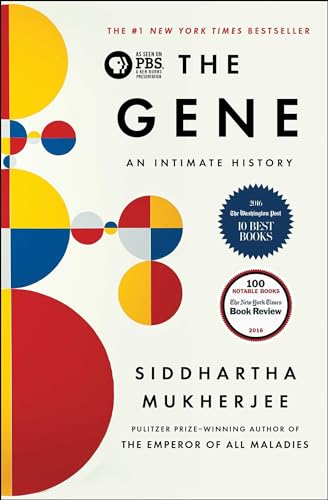
Book review: "The Gene" by Siddhartha Mukherjee (1st half)

Normally, I wait to finish a book before I do a review. But I'm midway through "The Gene" by Siddhartha Mukherjee, a book that is both long and densely packed with information, and if I wait until the end to write my review, I'll have forgotten everything I wanted to say about the first half. 

So, I'll review the first 235 pages now, the rest later.

I had feared this would be dry science book, but "The Gene" is impressively readable, largely because Mukherjee focuses on the people at each stage of the story. He engages us in the lives of scientists, researchers and theorists struggling and competing to understand the secrets of heredity and genetics.

That said, this 2016 book is a slow read.  This is partly because Mukherjee fills each page — each sentence, really — with important details. I don't want to rush through and miss something.

Mukherjee builds the book in steps, starting with a section on  primitive ideas about genetics (some people once thought that an entire miniature human was inside every sperm), moving to Charles Darwin's breakthrough model of evolution, then to Gregor Mendel's landmark research on heredity. From there we see scientists developing the first models the gene.

It isn't all about the triumph of science. Mukherjee outlines the disturbing growth of the eugenics movement, which  resulted in horrific practices by the Nazis and others,.

The author notes that DNA was considered a "stupid molecule" with a little value until the 1940s, when, by process of elimination, scientists realized that it was where genes were stored. He then describes the race by James Watson, Francis Crick and Rosalind Franklin to determine the structure of DNA, an intense competition that ended with the discovery of the double helix.

At each step, news issues and mysteries arose. Research on DNA soon led to ethical and moral questions about the potential to alter genes and transfer them between species.

Mukherjee describes a point in 1973 where scientists in a California lab quietly took the first step to mix genetic material between two organisms. "The birth of a new world was announced with no more noise than the mechanical tick-tick-tick of a bacterial incubator rocking through the night."

While I give Mukherjee much credit for making a daunting topic readable, the lack of continuing characters keeps the book from being compelling. You can get engaged with characters of the moment, but they will be gone in a chapter or two. Each section stands on its own. 

I also have a couple small quibbles. First, Mukherjee tries to frame the whole story by periodically describing the mental health issues of members of his own extended family. Frankly, it just doesn't work; there's not enough connection. Still, these sections are short and you can easily skip them.

I also wish the author would do more to describe the literal work of the scientists. He writes about "splicing," "splitting," and even "snapping" proteins and genes, but as a layman, I'd like to know, in real terms, how is that actually done? 


Wednesday, September 23, 2020

"Shocking" interpretation of Holocaust survey is misleading

 You may have seen the alarming headlines recently:

"Almost two-thirds of millennials, Gen Z don't know that 6 million Jews were killed in the Holocaust, survey finds" (USA Today)

"Survey finds 'shocking' lack of Holocaust knowledge among millennials and Gen Z" (NBC News)

"Nearly two-thirds of US young adults unaware 6m Jews killed in the Holocaust" (The Guardian)

The suggestion that two-thirds of young Americans are "unaware" of the Holocaust would be shocking — if it were true. But a closer look at the survey results shows these reports to be extremely misleading and, in some ways, flat inaccurate.

The survey, sponsored by the Conference on Material Claims Against Germany, asked 1,000 Americans ages 18 to 39 a series of questions about the Holocaust. In announcing the survey results, the organization not only described them as "shocking," but also as "disturbing" (four times) and "disquieting."

But an examination of the actual survey questions and responses shows a much more nuanced picture than the alarmist adjectives suggest.

Let's start with the sponsors' main assertion: "63 percent of all national survey respondents do not know that six million Jews were murdered." 

The study asked "Approximately how many Jews were killed during the Holocaust?" and gave six possible numerical answers, from 25,000 to 20 million, to choose from. Thirty-seven percent said "6 million," an estimate that most historians agree is close to accurate. Another 17% said "Don't know," while the rest gave other numerical answers.

Just because most respondents didn't say "6 million" hardly means they are unaware of the Holocaust or dismiss its importance. They just didn't have that particular number memorized.  If you asked any group how many people died in the Vietnam War, or the Civil War, or 9/11, you'd get a bunch of answers all over the board, most of them wrong. Still, nearly everyone would acknowledge that those were hugely important events. 

Not only is it misleading to say that 63% don't know that 6 million Jews were killed in the Holocaust.  , the survey itself shows it to be untrue. A total of 37% of respondents said 6 million died, and another 10% said 20 million died. Put those together and you find that 47% said that at least 6 million people died in the Holocaust. It was 53%, not two-thirds, of respondents who gave answers lower than 6 million or said "Don't know."

A separate question on the survey shows 8% of respondents were "not sure" the Holocaust happened and 3% consider it a myth. While those two numbers can certainly be disturbing, the results show that 89% of respondents are aware of the Holocaust and don't doubt that it happened, far more than the one-third suggested by the study sponsors. 

It's troubling how so many news outlets blindly accepted the interpretation of the results from its sponsor,  the Conference on Material Claims Against Germany. In judging the credibility of any study, one of the first things to look at is: Who paid for it and what is their agenda?

A study that says meat is great for you wouldn't get much traction if it was funded by the cattle industry. A survey that concluded people oppose gun control would be laughed at if it was paid for by the National Rifle Associaton.

The Conference on Material Claims Against Germany is an organization that continues to seek financial compensation from Germany for survivors of the Holocaust. It is in the group's interest to maintain a high level of public outrage over Holocaust. Alarmist announcements, even if not supported by the facts, serve this purpose. 

Some of the group's recent survey headlines have been:

  • "Stunning Survey of French Adults Reveals Critical Gaps in Holocaust Knowledge"
  • "New Survey by the Claims Conference Finds Critical Gaps in Holocaust Knowledge in Austria"
  • "New Survey by Claims Conference Finds Significant Lack of Holocaust Knowledge in the United States"
When a group has such a clear agenda, journalists need to approach with caution.


Tuesday, September 15, 2020

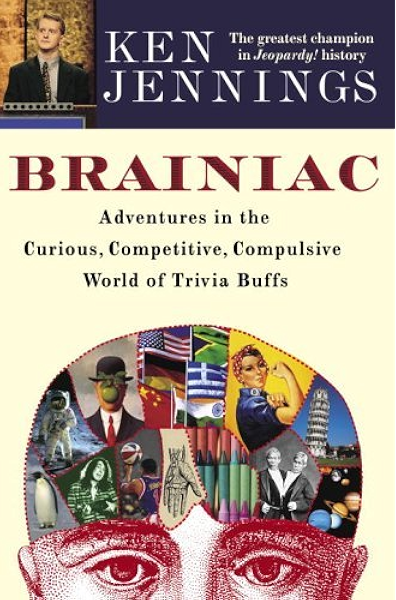
Book review: "Brainiac" by Ken Jennings

It's just not fair. Not only did Ken Jennings win 74 straight games on "Jeopardy," bringing home millions of dollars from those shows and subsequent tournaments, but in his 2006 book "Brainiac," he proves to be a deft writer and a darn capable reporter. Sure, you want to hate him, but the self-effacing tone of the book reinforces what he's shown on TV: He's a really likable guy.

Like I said, It's just not fair. 

In "Brainiac," Jennings weaves together two storylines. In one, he gives the back story on his record-breaking 2004 run on "Jeopardy," taking us from his initial tryout all the way through to his defeat in game number 75. I'm a big "Jeopardy" fan, so I found this behind-the-scenes view fascinating.

One of the biggest challenges Jennings faced during his run was keeping it a secret. He was contractually forbidden from telling anyone the results of his shows — which didn't air for months after the tapings — so he had to invent excuses to explain his frequent absences from work and didn't tell his dad why he kept borrowing suits. 

"I start to feel a little like Clark Kent at the Daily Planet, keeping up bland appearances to all his friends, who of course have no idea about bullet-stopping adventures in his double life," he writes.

Intertwined with Jennings' personal "Jeopardy" story is a parallel look at, as the book's subtitle says, the "Curious, Competitive, Compulsive World of Trivia Buffs." I can't say I liked this second storyline as much as the first, but it's still pretty good. 

Jennings delves deep into the history of trivia, and traces the development of general knowledge quizzes back to an 1830 book called "A Million of Facts." He described the emergence of quiz shows in the 20th century, first on radio, and then TV. He wonders whether trivia contests measure intelligence or only offer "the illusion of real intellectual mastery."

Jennings proves to be a solid writer, but what impressed me more is that he was willing to put on a journalist's hat and buzz around the country talking to people who have made trivia a big part of their lives. He visits a college quiz bowl team in Minnesota, a freelance trivia writer in California, a college student in Louisiana who talks about gender imbalance in trivia competitions, and the "World's Largest Trivia Contest" in Wisconsin. He's not above having some fun along the way: In Massachusetts, he puts on a modest disguise and helps a bar trivia team win a match.

The research brings him something of an epiphany: "It's rewarding to know a lot of great facts, but that knowledge is almost pointless if those facts don't help you get to know a lot of great people as well."

Many might think of Ken Jennings as the ultimate nerd, but when you see some of the people he interviews —  people whose bookshelves groan under the weight of binders and folders filled with obscure bits of information — you realize there's a whole another world out there. 

Helping make the book fun is that Jennings plants 10 trivia questions cleverly in the text of each chapter. As a little bonus, he sneaks in an interesting note at the very back of the book that describes the font used in the book. 

In the end, Jennings comes away with a renewed belief that trivia can be a valuable educational building block.

"Trivia can serve as a gateway drug to more substantive learning," he writes. "Life is full of subjects too intimidating to dive into headlong, from quantum physics to Russian cinema. But trivia can provide an easy, intriguing introduction to any topic you feared might bore you silly."


Wednesday, August 26, 2020

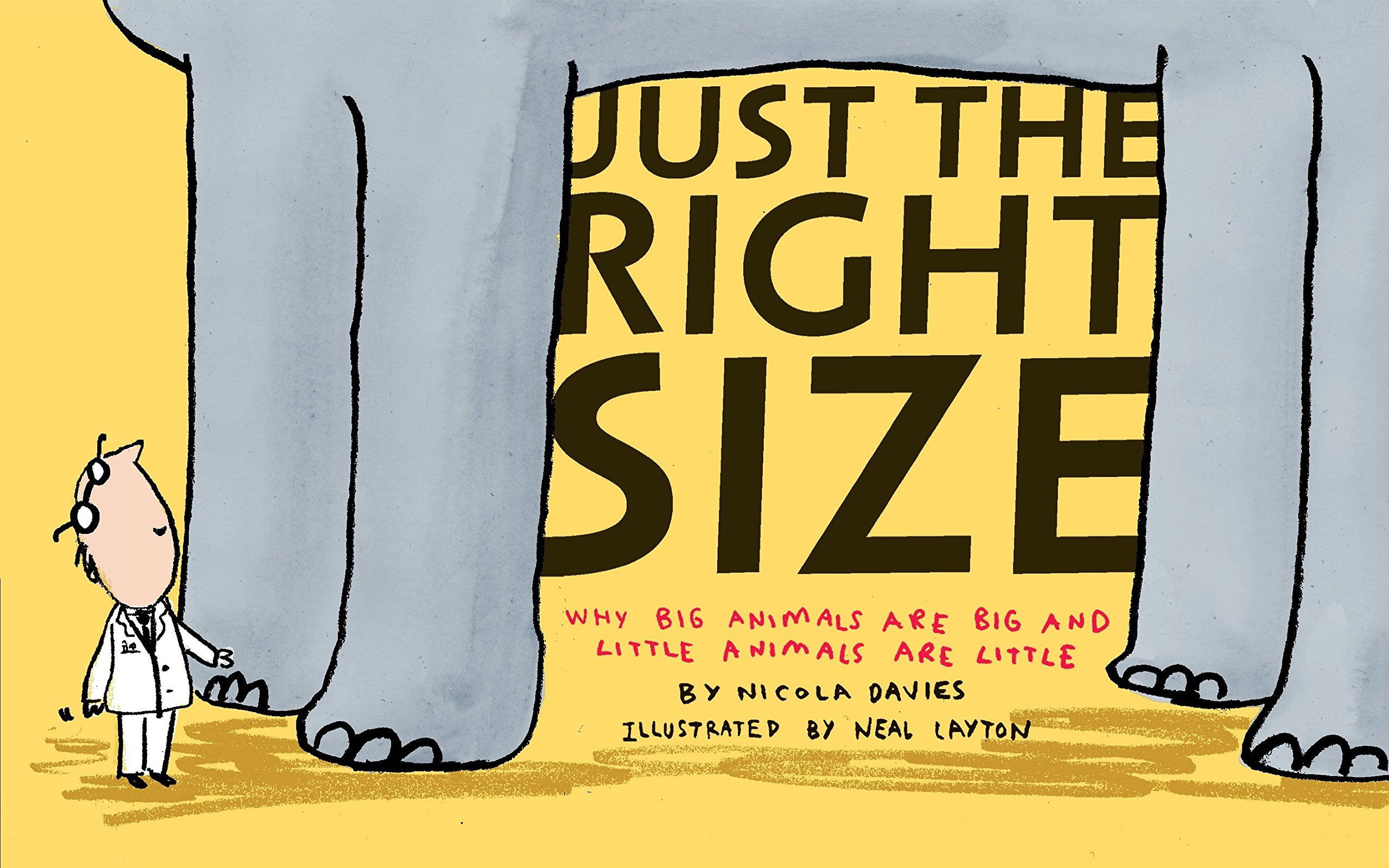
Book review: "Just the Right Size" by Nicola Davies

"Just the Right Size" is an enjoyable and educational 58-page book that helps explain, according to the subtitle, "Why Big Animals Are Big and Little Animals Are Little."

Nicola Davies' book is aimed at kids but I'm sure that plenty of adults like me can learn something. I certainly did. 

The book shows why the "superpowers" of tiny animals —  the rhinoceros beetle can lift 850 times its own weight, for instance —  can't simply be transferred to larger animals. It explains how larger animals have advantages in retaining heat and storing food for later use. It looks at clever animal adaptions such as fish gills, which pack oxygen-grabbing folds of skin into a tight space. 

Clever and fun graphics help accentuate points. The book even has index, which could prove helpful to anyone using this as a teaching tool.