Saturday, January 13, 2024

The pros and cons of composting — or not

Yesterday, Spotify recommended to me a podcast addressing the question, "Is composting worth it?" I was delighted and excited. What an interesting question! 

My family and I do not compost, but we've been considering it. You might say we are composting-curious.

While there is no doubt in our minds that composting is good for the environment, I wondered whether we would make enough of an impact to justify the cost, time commitment and inconveniences of the practice.

So a podcast asking "Is composting worth it?" seemed right on the nose. To be sure, it's a complicated question. Composting helps keep greenhouse gases out of the air, but how can you possibly measure how much carbon is sequestered or methane not released due to the actions of a single household? And even if you can figure that out, how do you determine how much that one household is doing to limit climate change?

On the other side, you would have to consider the cost of buying composting supplies like bins, buckets, even odor-preventing products. You would have to somehow measure the loss of a portion of your home's space for composting. Then there's the time commitment to separate and handle compostable items and perhaps even drive your material to a drop-off spot (and remember that driving itself releases greenhouse gases).  

Most of these elements will be small, but they're not zero either. And they vary greatly from household to household.

Still, the complications of the cost-benefit analysis made the question of whether composting is worth it all the more intriguing. I could imagine a podcast like Freakonomics breaking down the question to various parts, interviewing economists, scientists and other experts for thoughtful dissection.

Alas, this podcast was not Freakonomics. It was something called the "Anti-Dread Climate Podcast" and, boy, was it a huge disappointment.

First, just 53 seconds into the podcast the two giggling hosts announce, without explanation, that composting is "totally" worth it. This is even before they've introduced the listener who actually asks the question about composting's worth.

The show goes on to interview a composting advocate who —  surprise — also says that composting is worth it. The show shifts to a discussion of the mechanics of composting, but never even slightly considers how to weigh the benefits against the costs. 

They should have just called the episode, "Composting is great."

Friday, December 29, 2023

Book review: "Endurance: Shackleton's Incredible Voyage" by Alfred Lansing

If there was a museum of survival stories, the featured exhibit, without a doubt, would be Ernest Shackleton's failed Antarctic expedition of 1914-1916. No other story comes close to Shackleton's in terms of the number of obstacles overcome, the suffering endured by the people involved, and the group's stubborn determination to survive despite the longest of odds.

I'm a not newbie to the Shackleton-verse. I've read articles and a short book about it, and watched a documentary and a TV mini-series. So I hesitated before starting to read Alfred Lansing's 1959 book, "Endurance: Shackleton's Incredible Voyage," Would this just be a repeat of what I already knew?

The answer, I'm glad to report, is a resounding "No." Lansing not only covers little-known parts of the story, he tells the tale with riveting page-turning intensity.  I could feel the suffering of Shackleton's men as they persisted through freezing temperatures, miserable condition and sometimes torturous physical strain.

Shackleton and 27 other British men headed to Antarctica in 1914 intending to launch the first-ever crossing of the frozen continent. They never made it. Instead, their ship, the Endurance, became trapped in ice near the Antarctic coast. 

The entire crew was forced to over-winter aboard the ship through the 24-hour darkness of the Antarctic winter. When spring came, the crew hoped to be freed from it's frozen captivity, but instead the ice only squeezed harder. The Endurance was crushed and the men had to abandon her and set up camp on the floating ice.

Lansing is a top-notch writer who has done his homework. For this book, the author said he read the diaries of "virtually every expedition member who kept one." In addition, he tracked down almost all the members of the expedition still alive in the 1950s and interviewed them for "long hours, even days." 

What's impressive is that, even with clearly a wealth of information available, Lansing smartly and selectively chooses the details to include. He knows that he doesn't need to include every fact in his notebook to tell a compelling story. 

For six months, the men lived on the ice, their clothes and sleeping bags constantly wet, their food supplies dwindling. They hoped the currents would take their ice slab to land, but fickle winds kept them at sea. When their ice floe broke up, Shackleton and his men were forced to try to ride their three small boats through stormy seas to land — any land.

It is here where the men suffered the most. For two days, the men fought the seas with crude sails and oars, only to find they had gone 20 miles backward. They fought on for three more days — with almost no sleep and little water, their hands blistered upon the oars, their clothes thoroughly soaked with near-freezing waters. Finally, they arrived at the uninhabited and bleak Elephant Island. The men tossed themselves onto the solid ground as if they had reached Mecca.

As much as I liked this book, it has a weakness. Lansing largely fails to delineate the different men. We get to know Shackleton, of course —  he's a taciturn and sometimes stubborn leader — but aside from a occasional reference to one man being lazy or another grouchy, it is hard for the reader to discern much difference between them.

Still, once you're engaged, you'll find the story compelling.

No one was going to rescue the men from Elephant Island; they needed to go for help. So Shackleton and five others took to one of the boats in a long-shot attempt to reach a whaling station on South Georgia Island.

Many other accounts of the expedition focus only on the boat trip, skipping over the plight of the men left behind on Elephant Island. But Lansing fully describes their marooned lifestyle, a mix of boredom, squalid living conditions, unrelenting cold, and helplessness as they wonder whether Shackleton's boat had made it. Lansing's description of the amputation of one of the men's toes, lost to frostbite, at their primitive camp is one of the more memorable scenes.

On board the ship Caird, Shackleton and the five others fought through high seas. Lansing's account of this trip is riveting:

Here was a patched and battered 22-foot boat, daring to sail alone across the world's most tempestuous sea, her rigging festooned with a threadbare collection of clothing and half-rotten sleeping bags. Her crew consisted of six men whose faces were black with caked soot and half-hidden by matted beards, whose bodies were dead white from constant soaking in salt water. In addition, their faces, and particularly their fingers were marked with ugly round patches of missing skin where frostbites had eaten into their flesh.

Amazingly, they made it, but they arrived on the wrong side of South Georgia Island. The only option was to climb over the rugged and enormous snowy peaks of the island. And that is exactly what Ernest Shackleton, Frank Worsley and Thomas Crean did. They nearly froze to death, and had close calls with steep cliffs and icy crevasses, but they made it to the whaling station.

The three men left on the other side of South Georgia Island were rescued quickly by boat, but the misery of those on Elephant Island would endure for several months more. The first three boats chartered by Shackleton could not reach Elephant Island due to ice or vessel problems. 

Finally, on the fourth attempt, he made it — and found all the men alive. Lansing's description of the island's inhabitants, hearing of an approaching ship, then literally stumbling over each as they burst from their crude quarters, is both funny and touching. 

If you like this sort of book, you might also enjoy "Alone on the Ice," a tale of a different Antarctic expedition, and "The Last Gentleman Adventurer: Coming of Age in the Arctic," a story from the other end of the globe.


Sunday, November 12, 2023

Book review: "Treasure Island"

You won't get very far into "Treasure Island" before you start to wonder: Does Duolingo offer lessons in speaking "Pirate"?

That's because "Treasure Island," the 1883 book by Robert Louis Stevenson, contains a lot of piratesque dialogue that is largely indecipherable to the modern English ear. 

Can you figure out this sentence, for example: "This crew don't vally bullying a marlinspike"? 

Or how about: "I'll gammon that doctor, if I have to ile his boots with brandy'?

Or what about "foc's'le hands," "gibbet," "pieces of eight," or "you're in a clove's hitch"? 

True, you could probably figure out some of those words and phrases if you read the passage multiple times, checked for context clues, and got help from Google. But if you did that every time you were stumped in "Treasure Island," you'd never finish the book.

Here's the thing: The language of "Treasure Island" can be puzzling, but it's also kind of fun. There's a playful rhythm and tone to the pirate talk, especially if you say it out loud. Even trying to decipher it is part of the fun.

Consider this quote from one character: "It's because I thinks gold dust of you — gold dust, and you may lay to that! If I hadn't took to you like pitch, do you think I'd have been here a-warning of you? All's up —  you can't make nor mend; it's to save your neck that I'm a-speaking,"

With a second read and the help of some context, you can figure out that this pirate is saying, "I like you and I want to help you." 

It mostly works. "Treasure Island" is a fast-paced and fun story of adventure and suspense. The roller-coaster of a story revolves around a boy named Jim Hawkins. His exact age is never made clear but he seems to be around 14 or 15.

At the outset of the book, Jim lives a relatively mundane existence helping his mother run the family inn in a seaside town. The arrival of an irascible old pirate known as The Captain as a guest at the inn stirs things up. When The Captain suddenly dies Jim finds a treasure map in in his belongings.

Soon, Jim and a few men from his town are boarding a ship to seek that treasure. The hired crew is a motley crew of greedy pirates that soon plots a mutiny. Jim and his allies fight back, and before long the two sides are squaring off on a mysterious tropical island that contains a few surprises of its own. Eventually —  and inevitably—  the story leads to a treasure hunt.

There is plenty of double-crossing, trickery, and fighting, as well as lessons about loyalty. bravery, and trust. Jim is a bit of a frustrating character because he twice abandons his allies to sneak off, but his bold actions prove important to his group's survival and keep the story exciting. One dramatic scene has him fighting a pirate while clinging high to the sails of the ship.

While the pirate talk can be frustrating at times, it also makes this book distinctive.  And how can you dislike a book that has character names like Black Dog, Billy Bones and, of course, the one-legged Long-John Silver?

Speaking of Long-John Silver, here's how he describes the life of pirates (try reading this aloud and imagine you're enjoying a drink of sweet rum in ye olde grog shop):

"Here it is about gentlemen of fortune. They lives rough, and they risk swinging, but they eat and drink like fightingcocks, and when a cruise is done, why, it's hundreds of pounds instead of hundreds of farthings in their pockets." 


Tuesday, October 24, 2023

Book review: "Prisoners of Geography"

"Prisoners of Geography," a 2015 book by British journalist Tim Marshall, is unlike any work I've ever read. It's a book that looks at the world from high above — the metaphorical view from 30,000 feet — to show you how the Earth's physical characteristics help determine the strength and weakness of nations and help define the political battlegrounds of today.

This is a book about countries and regions. Hardly any people are even mentioned by name. Marshall looks at the world like a global chess match between countries, which may seem cold, but is actually fascinating. 

As Marshall shows, geography defines what a nation is capable of accomplishing, long before it's even built a military or launched an economic policy. The United States, he notes, is geographically blessed, with easy access to two oceans (plus the Arctic Ocean, though not so easily), a large network of navigable rivers, good agricultural land and natural deep-water ports. 

On the other hand is s a country like Brazil, which despite its large size, lost in the geographic lottery, Marshall says. Its ports are small and insufficient, and its landscape so rugged and dense with forest and swampland that it makes it difficult to build highways and train routes. As a result, the vast majority of the population clings to the coast in crowded and poverty-ridden cities.

The book has weaknesses —  which I'll get to —  but it is worth reading if only for Chapter One, where Marshall explains why Russia desperately wants to hang on to Ukraine.

You might think that this book, written well before the Russia-Ukraine war, would be completely outdated on the topic. But Marshall shows that the history and geography of this part of the world is still relevant today. The author explains that Vladimir Putin needs Ukraine to be a buffer between Russia and its enemies in Western Europe. 

"Russia has never been conquered from this direction partially due to its strategic depth. By the time an army approaches Moscow it already has unsustainably long supply lines, a mistake that Napoleon made in 1812, and that Hitler repeated in 1941," Marshall writes. 

Marshall divides his book into 10 chapter dedicated to different parts of the world: Russia and Eastern Europe, the United States, Africa, Latin America, Western Europe, the Middle East, the Arctic, India and Pakistan, China, and Korea and Japan. You could easily read the chapters in any order, or only read the ones that interested you.

I didn't read this book quickly, but that's not a criticism. Each section of the book is so full of interesting facts that it takes time to digest.

Marshall identifies some of the most critical geographic conflicts of today as brewing in the the South China Sea, where China is attempting claim control of that body of water, riling its neighbors in the Philippines, Vietnam, Taiwan and Malaysia. 

"Every one of the hundreds of disputed atolls, and sometimes just rock poking out of the water, could be turned into a diplomatic crisis, as surrounding each rock is a potential dispute about fishing zones, exploration rights, and sovereignty."

Among Marshall's surprising assertions is that Indonesia and Malaysia could be a key players in world politics because they control the Strait of Malacca, a passage through which Chinese ships must pass to reach the oil-rich nations of the Middle East.

"It has always been a choke point — and the Chinese remain vulnerable to being choked."

Many of the problems of the Middle East can be traced to the rivalries between feuding Muslim groups, Marshall says. It's not just Israel vs the Arabs, as some would have you believe  "The problems of the region do not come down to the existence of Israel. That was a lie peddled by the Arab dictators as they sought to defect attention from their own brutality." 

Latin American is full of feuds I was unaware of. Bolivia has been peeved at Chile since an 1879 war. Guatemala claims Belize as its own territory. Venezuela believes half of Guiana belongs to it. Ecuador has historical claims on Peru. Chile and Argentina bicker over a water passage at the southern tip of the continent

Rivers can be a source of trouble. Egypt is afraid that a new dam in Ethiopia will threaten its Nile River water supply. Meanwhile, with global warming, Marshall warns that Turkey could take more water from the Euphrates River, sparking a conflict with Iraq and Syria.

Marshall helps me understand the importance of Cuba. The United States is fortunate to have no enemies on its borders, but Cuba is not exactly a friend either. The U.S. fears that a power like China could exert its influence in Cuba, and we'd suddenly have this rival at our doorstep. 

"Economically the United States will also compete with China throughout Latin America for influence, but only in Cuba would Washington pull out all the stops to ensure it dominates the post-Castro/Communist era."

Marshall points to the Arctic as an emerging battleground as sea ice melts from climate change, exposing new sea routes. This clearly benefits Russia — they have the most ports on the Arctic Ocean and the most icebreakers. 

Marshall does not pause to quote experts. He cites few reference works. This gives the book a smooth, streamlined pace, though occasionally I would have liked more explanation on some of his assertions.

For all its attributes, the book has some notable weaknesses. The biggest is that it doesn't have enough maps. 

The book's subtitle is "Ten Maps that Explain Everything about the World," and indeed each chapter begins with a broad map of the region discussed. There are also some smaller maps sprinkled around.

But it's not nearly enough. This kind of  book should have LOTS and LOTS of maps. Every page features a discussion of something geographic. I spent a lot of time flipping pages back to the maps, but in many cases they didn't help. Periodically, I had to look up maps online to understand Marshall's points.

The other basic issue with the book is that it is growing more outdated every day. True, the geography doesn't change and the history remains the same, but Marshall also ties those elements to the current events of 2014 and 2015, when the book was being finished. 

Much has changed since then: Wars in Ukraine and Russia, a coup in Niger, China saber-rattling over Taiwan, tensions over control of the Black Sea.  And much more.

I would love to see an updated version of the book. We need Tim Marshall to tell us what it all means.




Wednesday, August 2, 2023

Book review: "Don't Print That" by Donna C. Myrow

"Don't Print That" is a collection of stories about L.A. Youth, a Los Angeles newspaper written by teens that existed from 1988 to 2013.

Author Donna C. Myrow, who founded and ran the newspaper from its start to to its finish, takes us behind the journalism to give us glimpses into the lives of the teens that worked on the paper. As Myrow describes them, many are poor and many are struggling with problems at home and at school.

Myrow encouraged the teens to write about issues important to them. That meant L.A. Youth, unlike typical high school newspapers, ran edgy articles about dating, drugs, school, crime, homelessness, perceptions of racism, sex, teen pregnancy, and other serious topics.

In "Don't Print That," Myrow offers up a cornucopia of interesting stories, most of them only a page or two long.

There was the girl who wrote a first-person story about being labeled by therapists as "emotionally disturbed" and "out of control." Another teen wrote about the complications of being half-Chinese and half-Jewish. Another wrote about how the cafeteria at his school was effectively segregated — different racial groups isolated themselves in different parts of the space.

Through such stories, "Don't Print That" offers a window into a world most of us don't see. 

The one weakness in the book is that Myrow's short stories are unable to take us very deep into the teens' lives. The reason: Teens cycled in and out of the newspaper program rapidly, rarely staying for very long. Myrow would just be starting to get to know them when they'd move on.

The only continuing character is Myrow herself. She describes the non-stop challenges of running this shoestring operation that was constantly in need of money and staff, and frequently battered by criticism from parents or teachers over a story someone found offensive. It's amazing she did this for 25 years.

While stories of the teens dominate the book, I did enjoy Myrow's chapter on the complications of fundraising. One takeaway: Even in Los Angeles, you can't count on celebrities to show up to a fundraiser.

"Generally speaking, they (celebrities) are self-centered, make costly demands, and prove to be utterly unreliable," Myrow writes. "If an actor agrees to be the honoree and promises there's nothing on his schedule around the time of the event, don't believe him." 

Given the heavy material that fills much of the book, I liked one lighter moment when Myrow steps away from a fundraiser in a hotel and inadvertently crashes a different event — where she won two free dinners to a Beverly Hills restaurant in a raffle.


Monday, July 17, 2023

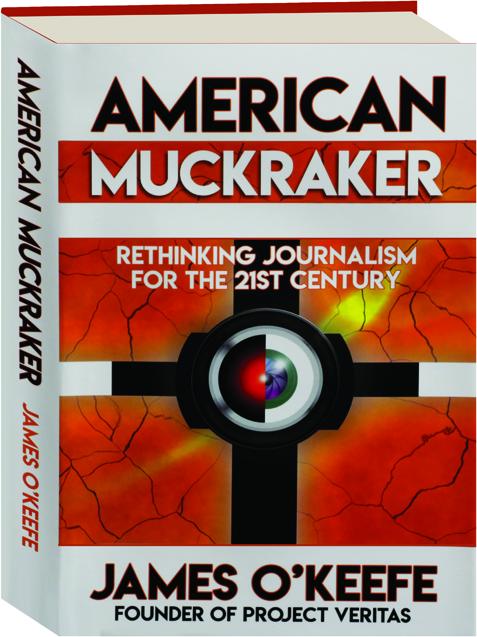
Book review: "American Muckracker" by James O'Keefe

When I started reading the 2022 book "American Muckracker," I was hoping to get the inside scoop.  But author James O'Keefe instead serves up a plateful of bitterness.

O'Keefe is is the founder of Project Veritas, a band of right-wing gadflies that has produced various investigative reports using hidden cameras and microphones to "expose" supposed misdeeds of the media or organizations favored by liberals.

While some conservatives love Project Veritas, its work has largely been ridiculed as one-sided, incomplete and inaccurate. 

I was hoping to sidestep the politics, because I was interested in something different: The mechanics. How do you film or record people without them knowing? How do you approach those people in the first place and how do you hide the recording devices? And what do you do when — inevitably — things don't go the way you expected?

In short, I was hoping "American Muckrucker" would take us behind the scenes of Project Veritas' investigations.

Alas, that's not what's in this book.

Rather, "American Muckracker" is a forum for O'Keefe to air gripes, grievance and grudges. In his view, the media, big tech companies, and much of the world are all lined up against him. So, as you can imagine, he's got a lot of ranting to do.

O'Keefe skitters around numerous topics like a hyperactive child, tossing out bits and pieces of unfinished thoughts, and never referring to himself in the first-person. He is, instead, "The muckracker."

Like a college sophomore who has just learned how to add footnotes to his paper, O'Keefe tries in vain to give his incoherent message credibility by tossing in random quotes from authors Ernest Hemingway, Upton Sinclair, Aleksandr Solzhenitsyn, and Alexis de Toqueville.

At one point, he likens himself likens himself to an "allied commander" fighting a war with the help of "guerilla fighters" — aka whistleblowers

If all this sounds like the ramblings of a paranoid man, you've got the right idea.


Thursday, June 29, 2023

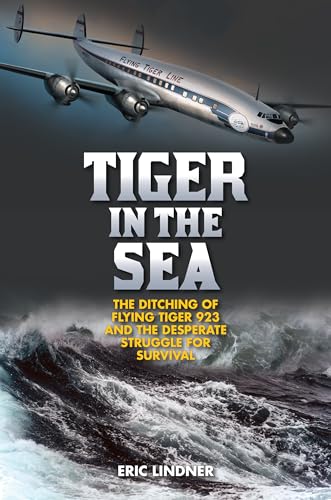
Book review: "Tiger in the Sea"

As a professional researcher, I love a well-researched book. That's why I respect author Eric Linder's work on "Tiger in the Sea," a deeply documented book about a U.S. military plane that went down in the Atlantic Ocean in 1962.

Linder says he did 1,700 interviews for the book, 94 of them in-person. He also dug through government documents, news articles and the personal memoirs of survivors. Though there were setbacks — in one chapter, he recalls his stunning discovery that records of the crash were missing from the National Archives — his persistence helped him assemble this detailed 2021 book.

Still, it take more than research to make a good book. You also need smart storytelling, thoughtful organization and the restraint to avoid cluttering the book with excessive detail. Unfortunately, "Tiger in the Sea" falls short on all those measures.

To be sure, the tale of Flying Tiger Flight 923 is a gripping story. The plane lost three of its four engines while flying over the Atlantic, forcing the pilot to land in the frigid ocean in the dark of night. All 76 aboard survived the ditching, but in the chaotic evacuation from the plane, lifeboats were lost, and many passengers ended up in the sea. 

After a harrowing eight hours, and an intense rescue effort by several nations, survivors were brought aboard a Swiss merchant ship. A total of 48 people survived, 28 died. 

The best part of the book is Linder's account of the passengers' frantic survival efforts in the wake of the ditching. If you've ever wondered what it would be like to be caught in such a situation, Linder puts you there.

He captures the terror and confusion, from multiple perspectives, of people struggling to put on life vests, swim through gasoline-choked waves, and find a lifeboat amid the inky blackness of the night. The lifeboat brought little solace: 51 soaked people end up crowded onto an upside-down inflatable that was only built for half that many.

But aside from that dramatic section, much of the book is bloated and overstuffed with information. At the onset of the book Linder, like too many authors, makes the mistake of dumping a crate of character background on the reader all at one. The problem with this approach is that  early in the book readers lack the context to understand why each person is important to the story.

The next section describes the plane's engine troubles and gradual descent into the sea. This should be a tense and suspenseful read, but Linder describes every instant from multiple perspectives, drawing out the scene into the most slow-motion crash ever. 

The post-crash portions are similarly bloated. Rather than trying to make a readable story, Linder seems to be attempting to create a Flight 923 reference book by pulling every detail from his notebooks, citing every wrinkle in the government crash investigations, and going into far too much detail on the survivors' post-crash lives.

Linder also fails on a basic issue of transparency.

The central character in the book is pilot John Murray. Linder portray Murrays as keeping a cool head in the cockpit as the plane was plummeting toward the sea, and skillfully putting the plane down in a manner that kept it from breaking up upon impact. He also notes that Murray's last-minute decision to retrieve a flashlight from the cockpit before evacuating was crucial to the eventual rescue.

In the post-crash investigation some questioned Murray's actions, but Linder is quick to shut those doubts down, quoting survivors and experts praising Murray. In short, Linder portrays Murray as a hero.

It's not until near the end of the book that Linder reveals an important fact: Murray is his father-in-law. I'm not here to question whether Murray was indeed a hero, but this revelation makes me wonder how unbiased Linder's account is. The author should have revealed the familial connection earlier in the book.

Finally, for all of Linder's deep research, the book largely ignores one important group in the story: The dead. The author has talked extensively to survivors and their families, but he only barely mentions a handful of people who ended up dead. Given the many interviews Linder did, why weren't more of them with the families of those who died? Might some of them question whether Murray was a hero? 

"Tiger in the Sea" isn't a bad book; I just wish it were better. Those with a deep interest in Flight 923 may get a lot out of it. More casual readers should focus mostly on the ditching and rescue, while skimming the rest.