Friday, July 31, 2020

Book review: "You Can Date Boys When You're Forty" by Dave Barry

Dave Barry has written books on home repair, Jews, the U.S. government, money, traveling in Japan, the quirky state of Florida, men, and "Marriage and/or Sex." And each one is hilarious.

But he's never before written a book taking a sober and intimate look at quantum mechanics.

And he still hasn't.


Until he does, we'll have to be content with Dave Barry books like "You Can Date Boys When You're Forty," which I just finished reading.

The subtitle on this book is "Dave Barry on Parenting and Other Topics He Knows Very Little About," but don't let that deceive you. As Barry acknowledges at the outset, his editors just wanted some catchy title. Yes, part of the book is about parenting, but it also covers a lot more.

With all his usual wit, sarcasm and self-deprecation, Barry describes attending a Justin Bieber concert, lists "Things a Man Should Know How to Do," analyzes the plot of "Fifty Shades of Grey," outlines the program for his own funeral, deconstructs the rules of grammar and much more.

Dave Barry fans will not be disappointed -- except by one part. Late in the book, Barry describes his family's trip to Israel, and  the first half of this chapter isn't very funny. 

Not only is this section lacking in the humor department, Barry get's a little preachy. At one point, noting the presence of armed soldiers everywhere in Israel, he says, "It's a reminder that Israel has to always be ready. Always."

 It's as if the Mossad feared that this American humorist would say something offensive about Israel and managed to replace him with a less-funny look-alike for this chapter.  If that's what  happened, though, Dave Barry must have wiggled out of his bonds and escaped his captors midway through the section, because by the end he's back to himself, making pointed fun of Middle East leaders, American tourists and Roman latrines.


Tuesday, July 14, 2020

Book review: "Real Boys" by William Pollack

I didn't read all of "Real Boys," a 1998 book by William Pollack; I quit after about 110 pages because the book was awfully repetitive. The author kept making the same points over and over and over. A lot of it was redundant. And repetitive.

I think you get my point.

That is not to say there's nothing in this book that's worthwhile. Pollack's main theme is that boys are more vulnerable and sensitive than we realize, and we need to find ways to reach them. In Pollack's view, today's parents are doing it all wrong.

To connect with boys, Pollack recommends:
  • At least once a day, give your boy your undivided attention
  • Encourage your boy to express a full range of emotions
  • When a boy expresses vulnerable feelings, avoid teasing or taunting him
  • Avoid shaming language (e.g. "What happened?" is better than "How could you do that?")
  • Look behind a boy's anger to find out how he needs help
  • Express your love and empathy openly and generously
There you go, I just saved you from reading 400 pages.

It's hard to argue with a message to be more caring and loving, but sometimes Pollack goes too far. At one point, he says, "You simply can't give your boy too much positive reinforcement."

Really? I was just reading a different book that said you absolutely can give too much positive reinforcement. It's not too hard to come up with examples of over-praise. Would Pollack support this?: "Hey son, way to go spending all day long in your darkened room playing misogynist video games. I'm proud of you!"


Sunday, July 12, 2020

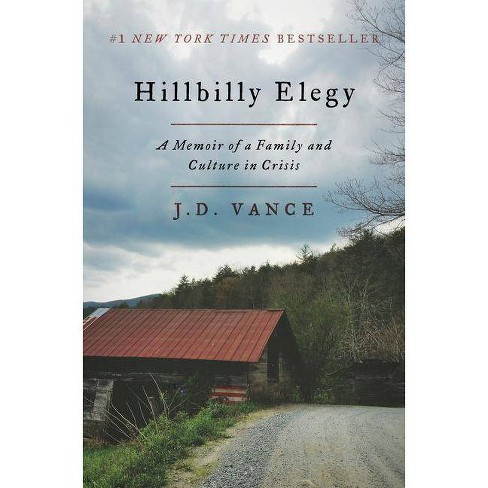
Book review: "Hillbilly Elegy"

J.D. Vance makes it quite clear that he comes from a long line of lunatics.

One great-uncle, after being called a "son of a bitch" by a delivery driver, beat the man senseless and cut him up with an electric saw (the driver lived, though it was close). Another uncle, taking an umbrage at a remark aimed at his sister, forced a man to eat a pair of girls underwear. At gunpoint.

Vance's grandmother, who he called Mamaw, once was so fed up with her husband's drinking that she poured gasoline on him and lit him on fire (he survived). Mamaw (pronounced "Ma'am-aw") commonly backed up her bad temper with a loaded gun in her hand.

"Mamaw came from a family that would shoot at you rather than argue with you," Vance writes in his 2016 book "Hillbilly Elegy."

But it was this same extended family who rescued Vance from a turbulent childhood. His father abandoned him early on, and his mother wrestled with depression and drug addiction. It seemed that Vance, like so many other children of Appalachia, would be trapped in the poverty of the southern Ohio town he grew up in.

But thanks largely to Mamaw -- as well as his grandfather and older sister -- Vance not only persevered but excelled. After high school, he spent four years in the Marines, then graduated from Ohio State University and, eventually, Yale Law School.

"Thinking about it now, about how close I was to the abyss, gives me chills. I am one lucky son of a bitch," Vance writes.

It seems a bit premature to write a memoir when you're only in your mid-30s, but I'm glad Vance did. "Hillbilly Elegy" is a fascinating story of an unconventional upbringing and a remarkable example of human perseverance.

If you liked "The Glass Castle," by Jeannette Walls and "Educated" by Tara Westover, you'll like "Hillbilly Elegy."  In each, the author shows amazing resilience amid a dysfunctional environment that most of us would have trouble imagining.

At one point, for instance, Vance recalls what he learned from his Mom and a stepfather (one of many he had) in "marital conflict resolution":

Here were the takeaways: Never speak at a reasonable volume when screaming will do; if the fight gets a little too intense, it's okay to slap and punch, so long as the man doesn't hit first; always express your feelings in a way that's insulting and hurtful to your partner; if all else fails, take the kids and the dog to a local motel, and don't tell your spouse where to find you.

The book is not perfect. The story occasionally clunks to a halt when Vance suddenly shifts from compelling memoir to stuffy op-ed, citing academic studies or dry statistics to illustrate the problems of Appalachia. A chapter on how the closing of Midwest factories has devastated small towns might have been a revealing read — in 1992.

I also wish Vance had included more on his stint in the Marines. He went to Iraq, but barely says anything about it.

Even with those flaws, the book is worth a read. While Vance did make it out of a difficult atmosphere, there are scores more young people who's hopes and dreams are crused by poverty, dysfunctional families and drug use.  He emphasizes that the solutions must come from within those communities.

He concludes: "We hillbillies must wake the hell up."

Saturday, July 4, 2020

Book review: "Risk!" by Kevin Allison

I'm not a good poolside reader. Many a time when I go to a pool with family or friends, I bring along a book or a magazine, thinking I'll read while relaxing on a chaise lounge.

But it never works out that way. I might glance at a page or two of my reading material, but it never holds my interest. Instead, I swim, chat, eat, play games or snooze in the sun.  The book or magazine comes home with me, barely touched.

I tell you this to point out how unusual my experience was while on a family trip to Arizona. We stayed in two places, each with a pool. And the book I brought to the pool was "Risk!," a 2018 collection of personal stories based on a podcast of the same name.

After a swim in our hotel's pool, I sat down nearby and decided to start the book, To my amazement, once I started, I kept going, page after page, chapter after chapter. I was utterly engaged.

Each day we went to the pool, the same thing happened. By the time the vacation was over, I had covered over 200 pages in the book.

The stories in "Risk!" are all tales of personal trauma or turmoil. They're told genuinely from the heart, and you can't help but be hooked.

In one story, for instance, writer A.J. Jacobs describes the disturbing exchanges he had with men while posing on online dating sites (with consent) as his kids' gorgeous female babysitter. In another, Lili Taylor recalls the time her mentally ill father challenged her 15-year-old brother to a knife fight.

There are stories of rape, suicide, murder, family conflict, and relationships gone terribly wrong. Sex is a big topic, including kinky encounters with graphic descriptions. Gay sex is addressed more than straight. Three of the stories wrestle with the difficulties of being transgender.

Typically, collections of stories suffer from a disappointing lack of consistency. There might be some winners, but there are losers, too. But in "Risk!," all the stories are engaging. Impressively, almost none of them go on too long. The author tells the story and stops.

While all the stories are worth reading, If I could only pick a handful of stories to recommend, it would be these:

  • "Dressing the Wound." A cop recalls being called to help out a young man who had been stabbed in the neck and the surprising events that followed.
  • "Another Saturday Night." A transgender hooker describes being kidnapped.
  • "Slave." A woman lives out a domination-submissive sexual fantasy that goes too far.
  • "Chasing the Sunset." A husband describes the death of his wife shortly after giving birth to their fourth child. 

Encouraged by the book, I decided to check out the "Risk!" podcast. I downloaded an episode and started listening. The host listed four or five storytellers that would be featured. Cool — I was eager for some good stories like the ones in the book.

Then the host started talking, first about the show's financial problems, then asking for donations, then discussing how amazing it was that this was the show's 500th episode. Soon, I realized I was 4 minutes into the show and we still hadn't started a story. He kept talking, rambling disjointedly into any topic that popped into his head.. Six minutes, eight, then 10. At 11 minutes he was still talking and I gave up.

I can't recommend the podcast, but i do recommend the book.

Monday, June 29, 2020

Road to a Covid test in Long Beach is filled with potholes

In response to the coronavirus pandemic, the City of Long Beach, California, set up five drive-through testing sites across the city. 

In May, Mayor Robert Garcia gushed about the importance of the sites: “Having a robust testing capacity is crucial to keeping people safe and gradually reopening the Long Beach economy,” he said.

But when my son and I attempted to actually get a test at one of the Long Beach sites, we found the process so frustrating that we nearly gave up.

My son needed a Covid-19 test before starting his summer job as a camp counselor. The city encouraged people wanting a test to make an appointment, but on my first try there were zero time slots available. That was partly because the scheduling only seemed to allow appointments about a week ahead of time. 

I had better luck on my second try, a few days later. I was able to schedule an appointment on June 27 at 3:30 p.m. at Jordan High School. I received a confirmation email with a reservation number. 

The day before the appointment, we received a voicemail saying our tests had been moved to Veterans Stadium, at the same time. This was good, because the site was closer to us.

When we arrived at Veterans Stadium the next day, about 3:15, the parking lot was dotted with orange cones marking driving lanes and a few pop-up tents. But something was amiss: There were no people there and the gate was locked.

We did see six other occupied cars lined up at the gate and took our place in line. We were confused, but hopeful that somebody would show up soon to do tests.

After about 10 minutes, a man drove up and told all of us that our tests had been moved to a different site, the Long Beach Community College campus on Pacific Coast Highway. We headed off and arrived at the other site in about 10 minutes.

But the scene there was disturbingly reminiscent of the one at Veterans Stadium: Lines of traffic cones and a few tents, but no people. We saw a security guard and asked where the testers were.

"They closed up at 2 o'clock," he said.

Frustrated, we wondered if this test -- even though free -- was worth the trouble.

Still, we returned the Long Beach City College site the next morning, encountering a long line of cars snaking through the lot. I'd estimate there were about 80 cars there.

When we pulled in at about 9:45 a.m., a woman worker asked if we had an appointment and I told her, "Yes — yesterday. But there was no one here." This puzzled her, but after we explained, she directed us into a line.

We sat still for about a half hour, then our line started to move and at about 10:25, we got to the check-in station. I showed the woman there our appointment confirmation number and she was confused, and sought help. Soon a man arrived and tried to tell us we had to go to Jordan High. I explained what had happened, and he said they would have to enter my son's info "manually."

To be clear, all the workers there were super nice and did their best to help us. Still, I was surprised they had no way to access my son's information, which I'd entered online.

So we had to pull out of line, and a different man wrote down my son's information. This delayed us about 10 minutes.

Then we pulled ahead to the testing station. A woman came to our window and gave my son a testing kit. This revealed another confusing part of the process. Our email confirmation had included a link to a video showing how to do the test. It instructed you to rub the test swab inside both cheeks, inside the bottom and top of your lips, underneath and the top of your tongue, and finally, the roof of your mouth.

But the woman at the site instructed my son differently: He was to put the swab up his nose as deep as he could without pain, and rub it around for 10 seconds in each nostril. So that's what he did.

He described it as very uncomfortable —  his eyes watered — but not painful. Then he placed the swab in a test vial as instructed, place the cap on, and returned it to the woman.  We were done about 10:40, slightly less than an hour after arriving.

Now we wait for the results, which are supposed to arrive in about 72 hours.


Sunday, June 28, 2020

Book review: "In the Wake of Madness" by Joan Druett

It says a lot about the job options available to young American men in the first half of the 19th century that so many of them opted to work on a whaling ship. Sure, you would get to travel the world and visit idyllic South Seas islands, but, as Joan Druett illustrates in "In the Wake of Madness" it would have been a grim career path, and possibly a hellish one.

In this 2003 book, Druett tells the story of the whaleship Sharon, and its seemingly cursed voyage of 1841 to 1845. Two men were brutally murdered on the trip, while other men died in accidents. The captain harshly put down an attempted mutiny, and most of the crew eventually deserted the ship at various ports of call.

Sound like a downer? Far from it: It is a fascinating story of life on a whaleship and the varied men — some brave, some cowardly, some cruel — that inhabited it.

While "In the Wake of Madness" revolves around the two murders, that's not the key to its compelling story. After all, if you're interested in homicide, there are countless true crime books to choose from. What sets Druett's book apart is that she places you on the whaleboat, amid the salty air, the dank smells of the cramped cabins, the sweat and blood of the men who lived and worked together without break.

Druett does this even while acknowledging that her primary sources are flawed and fragmented.  She relied on the diaries of sailors as key sources of information, but at times they were are cryptic or mute. To fill in the spaces, she pulls from documents from other whaleships, news reports of the time, and accounts from authors like Herman Melville.

Druett makes it clear that while the trip of Sharon was particularly snakebitten, the work on any whaleship was often miserable and conflict-ridden. I suppose that's not too surprising when you have men living in close contact for years, never getting a full night's sleep (they swapped shifts every four hours around the clock), and pushed to the brink in extreme conditions.

No one asked me, but I've got to wonder how much trouble could have been avoided if the owners of the Sharon and the other whaleships would have put more time into selecting and training their men before the voyage even began. As Druett describes it, it was common at the time to take virtually any man with a pulse on board, regardless of whether he had any experience at sea or any skills at all.

So suddenly you're deep into a three- or four-year voyage and you realize that your crew is unqualified and possibly unwilling. It's also possible, as with the Sharon, that the captain himself was not up to the task.

One of the biggest problems on the Sharon was that the harpooners repeatedly missed the whale or threw so weakly the implement easily fell out of the target. Here's an idea: Hire better harpooners, or train them before you leave home. It might cost you a bit more upfront but it would have greatly increased the success of the journey and your ship would return more quickly with a full load of whale oil.

If you like this book, I would recommend,  "In the Heart of the Sea" by Nathaniel Philbrick, another story of a whaleboat trip that went very wrong.


Saturday, June 6, 2020

Book review: "After Further Review" by Mike Pereira

There are a lot of things wrong with the book "After Further Review" — it's poorly organized and the writing is amateurish, just to name a couple. Still, I really liked it.

"After Further Review" is the autobiography (mostly) of former National Football League reffing czar Mike Pereira, a man many know from his appearances as the rules expert on Fox NFL broadcasts. I'm almost the perfect target market for this book because I have a lot of interest in both football and refereeing.

Pereira brings us inside the tent of a couple notably closed worlds — the NFL and the reffing community. He tells stories of good refs and bad ones, of difficult times in his personal life, and of off-the-field battles he had with various NFL executives and coaches. Wonderfully, he's not afraid to name names.

The book succeeds largely because Pereira comes off as a likeable guy with a lot of good stories to tell. Many of these are the kind of tales a guy would tell in the bar — rough and unpolished, but told with conviction.

He recalls  a crucial call — plus a missed non-call — he made in a 1998 playoff game. He describes fighting to get replay review made a permanent part of the NFL. And he tells of fighting cancer not just once, but twice.

Still, if you don't love the subject so much, the flaws of the book may drive you crazy. First, the book is maddeningly disorganized. The first quarter of the book starts straightforwardly enough as Pereira tells the story of his boyhood and early adult life, his mind focused on his ultimate goal: Joining the NFL.

But at this point — just when you're eager to hear about his first years in the league — Pereira abandons the chronological format and starts jumping all over place. Jarringly, he throws in a chapter on how much referees are paid. I actually enjoyed it, but it is completely out of place.  The same can be said about another chapter in which he analyzes key referee decisions from the NFL's past (of which he had no part).

I guess Pereira and his co-writer Rick Jaffe must have had some method to this madness, but the constant back and forth in time is confusing. A chronological approach would have been better. For example, instead of separating Pereira's battles for rule changes and his experience fighting cancer into separate chapters, putting them in context with each other would have given us a more well-rounded picture.

It's a little hard to believe that Pereira had a co-writer on this because the book it is written like Pereira dictated it all over several nights while holding a vodka tonic. Phrases like "So you can guess what happened next," "You should have heard the response," and "I fell for it, hook, line and sinker" give you some idea of the casualness of the writing.

For all the interesting stories Pereira has to tell, he sometimes skips away just when things are getting intriguing. Early in the book, for example, he says that when he first reffed football (a kids game) he realized, "I had found my passion." What was it about the experience that excited him? He doesn't explain.

Later, when he was supervising officials in the Western Athletic Conference he describes catching a bunch of referees cheating on their annual rules test. This would seem to be a big deal, but he laughs it off with a chuckle and moves on.

Those are forgivable flaws, though. If you like football — and especially if you like football and refereeing — you will find "After Further Review" an enjoyable read.