The first issue was basic: Where were we going?
As my son and I got ready to attend last Saturday night's Chargers-Seahawks matchup, I found myself stumbling when others asked where the game would be. I could have used the stadium's new proper name but nobody knew what Dignity Health Sports Park was. It was more effective to call it "The stadium formerly known as the StubHub Center and before that the Home Depot Center." It wasn't poetic, but it got the message across.
It had been years -- many years -- since I last attended an NFL game, and I was curious what the experience would be like. Some thoughts:
1. The Chargers Express works really, really well. This free shuttle brings fans to the game by bus from two locations. My son and I arrived at one of those, the Del Amo Metro train station, about 90 minutes before kickoff. There was plenty of parking. We hopped on a waiting bus -- with ample empty seats -- and in a just few minutes we were on our way to the game.
It took about 15 minutes to get to stadium and we were dropped close to the stadium. It was unbelievably smooth (and -- did I mention? -- free!).
After the game, we easily found the shuttle and got on. This time the bus was full and we stood in the aisle along with many others. Still, the bus soon departed and we were quickly back at our car.
To be fair, this was a preseason game with a stadium that was at best three-quarters full. And many people left early, so the crowd at the end of the game was less than it would usually be. During a regular season game, you're more likely to find larger lines to board the bus. Still, the shuttle worked so well for us, I would definitely use it again.
2. Entering the stadium was pretty easy. Yes, we did have to empty our pockets of keys and cellphones to go through a metal detector, but there was no intrusive search of our bag or an insulting pat-down.
3. The atmosphere in the stadium was fun and friendly. There were some light games for fans -- like throwing a football at a spinning target -- just outside the seating areas. There were plenty of places to pay too much for beer and food if you were inclined to do so. During breaks in the game, they had some entertaining games on the big screen, including one comparing pictures of Taylor Swift's ex-boyfriends to those of live shots of "lookalike" fans in the stands.
4. The public address announcer provided little useful information to the fans, and came off instead as petty cheerleader. Sports fans crave information, yet the PA announcer stubbornly refused to name any Seahawk player.
If a Seattle player caught the ball and was tackled by a Los Angeles player -- or visa versa -- the announcer would only name the Charger, never the Seahawk. (Note that at least half those in attendance were Seahawks fans.) This small-minded approach was not just tacky, it was frustrating for sports fans on both sides who wanted to know who made a TD run or who threw a great pass.
5. There was too much music. Almost every time there was slightest available moment -- even the
normal intervals between plays -- music would blast from the speakers. This was not just annoying for people trying to focus on the game, it also kept us from even hearing the names of Charger players when they were announced (see No. 4)
Have a little faith in the fans, Charger management. We came to watch football. Let us enjoy it.
Monday, August 26, 2019


Friday, August 16, 2019
Book review: "Last Man Off" by Matt Lewis
Ah, the joy of fishing on the open sea: A light breeze tousling your hair, the sun warming your face, your mind free from everyday concerns.
That might be a nice trip, but it'd be a pretty boring book.
Then there's the fishing trip in "Last Man Off" by Matt Lewis, the true story of how a ferocious storm, combined with human error and selfishness, put a boatload of men in a desperate fight for survival. It is one of the best books I've ever read.
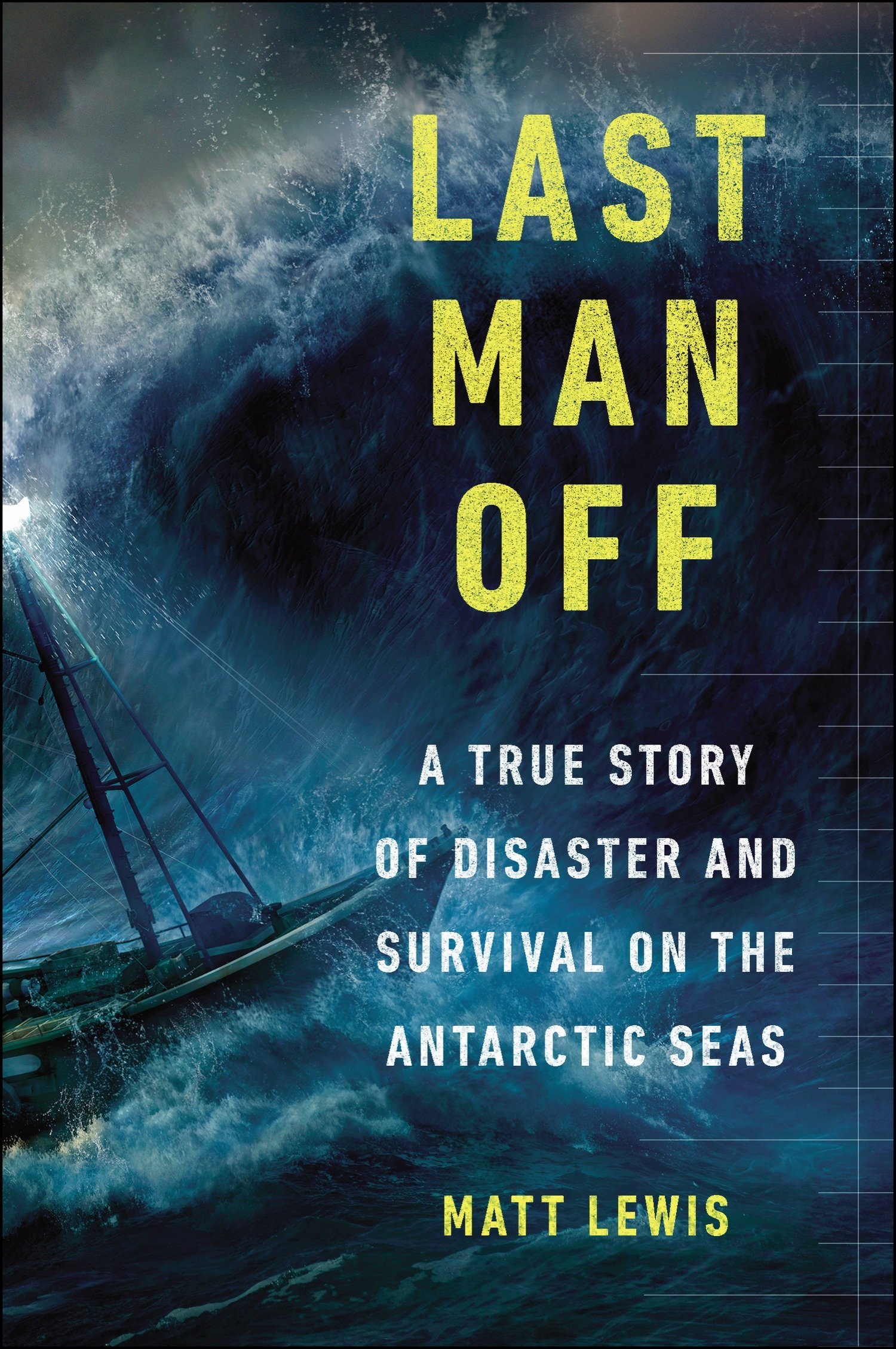
"Last Man Off" is the story of the Sudur Havid, a South African fishing boat that sank during a 1998 trip into the frigid Southern Ocean.
Lewis was 23 years old at the time, a recently graduated marine biologist, when he came on board the Sudur Havid as an "observer." His job was to make sure the boat's fishing practices followed the law.
There was little to make the trip pleasant from the start. With 38 men on board, the Sudur Havid's cramped conditions were accompanied the persistent odors of diesel, sweat and fish.
Lewis introduces many of the key characters -- including Bubbles, the captain -- early in the book. As much as I like the book, Lewis could have done better distinguishing some of the key players. There are a lot of names and it's sometime hard to keep them straight. Helpfully, he does include a list of the crew at the front of the book for reference.
It's in the middle section of the book, describing the sinking, where Lewis' writing really shines. As the storm moves in, tossing the boat around like a toy and the crew struggles to deal with encroaching water, a rough trip suddenly become a life-or-death situation. Lewis describes each moment in vivid detail.
I don't want to give away too much, but like a car crash, the story is both horrifying and riveting. You can't look away, and each page brings fresh surprises. My mouth was literally agape as I read..
In the final section, Lewis recounts the aftermath of the sinking and smartly analyzes what we wrong. While the storm and the boat design were factors, he doesn't disguise his disgust for certain members of the crew who failed to help during the high-seas crisis, perhaps dooming the Sudar Havid.
I rarely go back and read a book a second time -- there are so many good stories to read out there, after all -- but there is so much that happens so fast in "Last Man Off" that I felt like I couldn't absorb it all. I'm going to put on the shelf for now, but some day soon I'll pick it up and read it again.
That might be a nice trip, but it'd be a pretty boring book.
Then there's the fishing trip in "Last Man Off" by Matt Lewis, the true story of how a ferocious storm, combined with human error and selfishness, put a boatload of men in a desperate fight for survival. It is one of the best books I've ever read.
"Last Man Off" is the story of the Sudur Havid, a South African fishing boat that sank during a 1998 trip into the frigid Southern Ocean.
Lewis was 23 years old at the time, a recently graduated marine biologist, when he came on board the Sudur Havid as an "observer." His job was to make sure the boat's fishing practices followed the law.
There was little to make the trip pleasant from the start. With 38 men on board, the Sudur Havid's cramped conditions were accompanied the persistent odors of diesel, sweat and fish.
Lewis introduces many of the key characters -- including Bubbles, the captain -- early in the book. As much as I like the book, Lewis could have done better distinguishing some of the key players. There are a lot of names and it's sometime hard to keep them straight. Helpfully, he does include a list of the crew at the front of the book for reference.
It's in the middle section of the book, describing the sinking, where Lewis' writing really shines. As the storm moves in, tossing the boat around like a toy and the crew struggles to deal with encroaching water, a rough trip suddenly become a life-or-death situation. Lewis describes each moment in vivid detail.
I don't want to give away too much, but like a car crash, the story is both horrifying and riveting. You can't look away, and each page brings fresh surprises. My mouth was literally agape as I read..
In the final section, Lewis recounts the aftermath of the sinking and smartly analyzes what we wrong. While the storm and the boat design were factors, he doesn't disguise his disgust for certain members of the crew who failed to help during the high-seas crisis, perhaps dooming the Sudar Havid.
I rarely go back and read a book a second time -- there are so many good stories to read out there, after all -- but there is so much that happens so fast in "Last Man Off" that I felt like I couldn't absorb it all. I'm going to put on the shelf for now, but some day soon I'll pick it up and read it again.
Tuesday, July 30, 2019
The University of California gets this math problem wrong
U.S. colleges are required by law to post a "net price calculator" on their websites to help prospective students and their parents estimate the true cost of attendance once financial aid is factored in. The calculators ask for information on a family's finances (you can do it anonymously) and household size so the college can produce a realistic estimate of costs.
But the calculators at five University of California schools include an incorrectly worded question that prevents users from getting an accurate estimate -- or any estimate at all.
The calculator at UC Berkeley, for instance, asks the user for "Number in college." When you move your mouse over the question for more information, it explains, "Total number of people in your household that were in college during the last academic year, including your Parent(s)."
For many families -- such as those who are getting ready to send their eldest child to college -- the answer to that question will be zero. But if you enter 0, you get an error message: "'Number in College' must be greater than zero."
Huh? Why can't you enter zero when that's the accurate answer?
Here's why: The question is worded wrong. It should ask how many people in the household will be in college next year. At that point, you would theoretically have at least one person -- your freshman student -- in college. But the question doesn't ask that.
Berkeley isn't the only UC campus to get this wrong. It's also wrong at the calculators offered by UC San Diego, UC Santa Cruz, UC Merced and UC Irvine.
While many families will get an error message, they at least will realize at that point that something's wrong with the calculator. But families who already have a child in college and who follow the calculator's instructions will end up with a misleading number and may not know it.
Let's say the oldest child in the family is already in college and the parents are preparing to send off their second oldest. If the parents reply to the question "Total number of people in your household that were in college during the last academic year, including your Parent(s)" by honestly saying "1" (when they really should say "2"), they will get an inaccurate estimate. That's not a small problem: It could influence where the second child goes to college.
UPDATE, Oct. 7, 2019: UC Santa Cruz has corrected the wording on its page. The other four UCs, however, still have it wrong.
But the calculators at five University of California schools include an incorrectly worded question that prevents users from getting an accurate estimate -- or any estimate at all.
The calculator at UC Berkeley, for instance, asks the user for "Number in college." When you move your mouse over the question for more information, it explains, "Total number of people in your household that were in college during the last academic year, including your Parent(s)."
For many families -- such as those who are getting ready to send their eldest child to college -- the answer to that question will be zero. But if you enter 0, you get an error message: "'Number in College' must be greater than zero."
Huh? Why can't you enter zero when that's the accurate answer?
Here's why: The question is worded wrong. It should ask how many people in the household will be in college next year. At that point, you would theoretically have at least one person -- your freshman student -- in college. But the question doesn't ask that.
Berkeley isn't the only UC campus to get this wrong. It's also wrong at the calculators offered by UC San Diego, UC Santa Cruz, UC Merced and UC Irvine.
While many families will get an error message, they at least will realize at that point that something's wrong with the calculator. But families who already have a child in college and who follow the calculator's instructions will end up with a misleading number and may not know it.
Let's say the oldest child in the family is already in college and the parents are preparing to send off their second oldest. If the parents reply to the question "Total number of people in your household that were in college during the last academic year, including your Parent(s)" by honestly saying "1" (when they really should say "2"), they will get an inaccurate estimate. That's not a small problem: It could influence where the second child goes to college.
UPDATE, Oct. 7, 2019: UC Santa Cruz has corrected the wording on its page. The other four UCs, however, still have it wrong.
UPDATE, Oct. 12, 2022: UC San Diego, UC Merced, and UC Irvine all use the same calculator with the same incorrect wording. UC Berkeley moved its calculator to a different page. But it's still wrong.
Monday, July 1, 2019
This New York Times advice doesn't wash
The New York Times recently fell into a trap set by the commercial car wash industry. It is a trap that has ensnared many lesser publications, but you expect the NYT to be more careful.
In an article titled "One Thing You Can Do: Opt for the Carwash," the Times said that commercial car washes are kinder to the environment than a home car wash because they use less water. The story says that a driveway car wash "can quickly rack up 100 gallons of water or more." Commercial car washes, the article assures us, use less.
And what is the source of the numbers used in this comparison? Um, it's the commercial car wash industry itself, hardly an unbiased party in this debate. Yet the Times uses the industry's numbers without even a hint of skepticism.
The fact is that the 100 gallons figure is just flat wrong, and the Times could have easily found that out with a tiny bit of research, as I told the story's author, Jillian Mock, in an email:
Dear Ms. Mock:
In an article titled "One Thing You Can Do: Opt for the Carwash," the Times said that commercial car washes are kinder to the environment than a home car wash because they use less water. The story says that a driveway car wash "can quickly rack up 100 gallons of water or more." Commercial car washes, the article assures us, use less.
And what is the source of the numbers used in this comparison? Um, it's the commercial car wash industry itself, hardly an unbiased party in this debate. Yet the Times uses the industry's numbers without even a hint of skepticism.
The fact is that the 100 gallons figure is just flat wrong, and the Times could have easily found that out with a tiny bit of research, as I told the story's author, Jillian Mock, in an email:
Dear Ms. Mock:
I wish you had run your article by the
New York Times' fact checkers before publication. The notion that home
car washes use 100+ gallons is a long-discredited myth perpetuated by
the commercial car wash industry.
Way back in 2012, for example, Politifact put the idea to the test and found it took a mere 11 gallons to wash a car at home.
You can easily test this yourself, as I did one day with my and my wife's cars.
First, I determined my hose's flow rate by timing how long it took to fill a one-gallon milk jug. Time: 7.37 seconds.
Then I measured how much water it took to fill the bucket. Total: 2 gallons.
The
final step was to time how long it took to pre-rinse and post-rinse
each car. Then add up the total number of seconds and divide by 7.37.
Since my wife and I have two cars, I was able to basically run the
experiment twice. Here are the results:
As
you can see, each car wash used about 14 gallons total, not even close
to the 110 gallons mentioned in your story. (To be clear, it's best to
take a moment before starting to think about how to rinse your car all
the way around without backtracking. If you spray back and forth
covering the same parts of the car more than once, you will obviously
use more water. Still, you would have to be extremely careless to hit the 100-gallon mark.)
As far as runoff, there are ways to limit, or even eliminate, this at home. First, you can use biodegradable, non-phosphate car wash soap.
You also can do as some of my neighbors' do - wash the car on the front
lawn. Not only does this prevent runoff, it has the bonus effect of
allowing the overspray of water to help irrigate your lawn.
My
wife and I can't do this because we long ago replaced our lawn with
low-water-use plants. So when I wash our cars, I put down an old rolled
up sheet to redirect any runoff (there isn't much since we're conscious
of our use). The extra water flows onto a patch of grass by the curb.
So
while commercial car washes may claim to send contaminant-laden water
to treatment facilities, smart home washers prevent those contaminants
from entering the water system in the first place.
One last thing: Simply by choosing to stay home and not to drive to the car wash, you're lowering your carbon footprint.
The unfortunate conclusion from all this is that the New York Times gave readers precisely the wrong advice. If you want to be kind to the environment, stay away from the commercial car wash and instead wash your car thoughfully at home.
Book review: "Idea Man" by Paul Allen
Paul Allen lived the dream.
As a college student in the 1970s, Allen teamed up with his former high school colleague Bill Gates to create the first microcomputer operating system and found a company they originally called "Micro-Soft."
For eight intense years, Allen worked with Gates to build the business into a technology powerhouse that would soon rank as one of the largest companies in the world. And then he stepped away and essentially,retired at age 29. His shares in Microsoft would make him a multi-billionaire, and for the rest of his life -- he died at 65 in 2018 -- Allen had the special privilege to spend money on almost anything he wanted.
This is the story told in Allen's 2011 autobiography, "Idea Man," a book that is mostly fascinating, but sometimes dull.
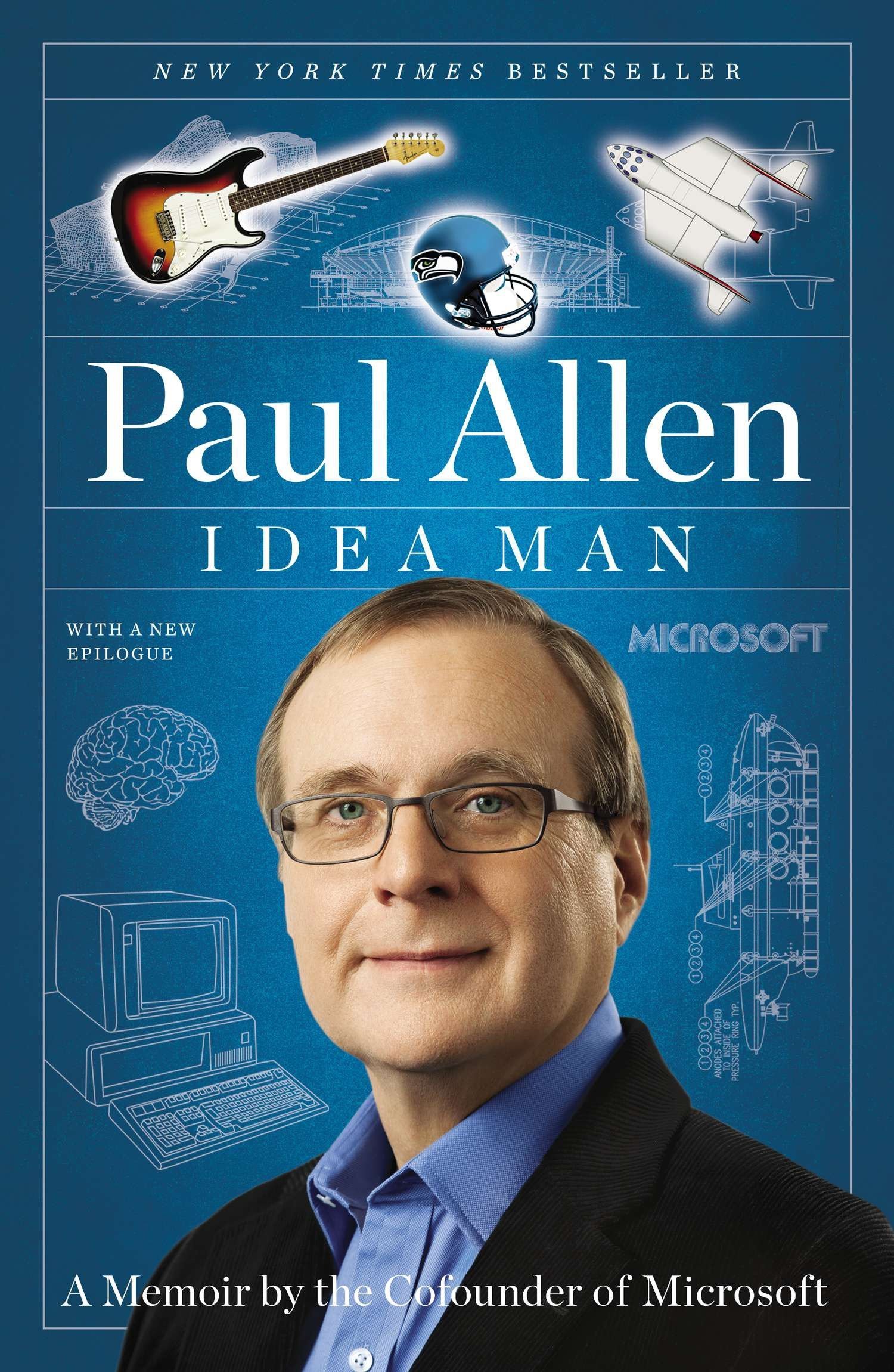
"Idea Man" is almost two separate books. The first half, dedicated to Allen's early life, and the birth and growth of Microsoft, is the part most worth reading.
I like reading "origin" stories that show the steps that led to big things. For Allen, one of the biggest breaks he got was his parents' decision to stretch their budget and put him in the private Lakeside School in Seattle. This was the late 1960s and early '70s and the school had a computer club that introduced Allen to the primitive programming languages of the day.
Allen insists that he wasn't a nerd -- he was interested in the rock music of Jimi Hendrix, for example -- but as he describes his interest in computers, robotics, brain science and space exploration, you might conclude otherwise.
It was in Lakeside's computer club that Allen met Gates, two years his junior, and found that they shared a almost insatiable interest in programming. Through an arrangement between the school and a local business they got crucial time to spend crafting their skills on a mainframe computer, the only option in those pre-PC days.
The release of the Altair, the first personal computer (though incredibly crude by today's standards), sparked Allen and Gates to build their first operating system and soon Microsoft was off and running.
I was particularly intrigued by Allen's depictions of his relationship with Gates. While both were talented programmers, Allen was more fascinated with the technical aspects while Gates pushed to make money off their skills. Gates often could be a bully with an explosive temper, Allen writes.
Tensions between them built over the years. At one point, Gates told Allen that he because he had worked hard on one particular project he wanted to alter their 50-50 split to 60-40 in his favor. Allen agreed. Later, Gates pushed to make it 64-36. But when Allen completed a hard project and asked for a shift in his direction, Gates refused to budge.
"In that moment, something died for me," Allen wrote. "I'd thought that our partnership was based on fairness, but now I saw that Bill's self-interest overrode all other concerns."
In 1982, while Allen was being treated for Hodgkin's lymphoma, he said he caught Gates and company president Steve Ballmer conspiring to reduce his ownership of Microsoft. Soon after, Allen resigned.
The second half of the book is devoted to Allen's post-Microsoft life and it would be easy to become jealous here. Many of us, watching the latest lottery super-jackpot, have pondered what we would do if we were a zillionaire. Allen actually got to live that, investing his time and energy in a wide range of endeavors from technology to sports to brain science.
"Some people are motivated by a need for recognition, some by money, and some by a broad social goal," he wrote. "I start from a different place, from the love of ideas and the urge to put them into motion and see where they might lead."
This section of the book is less interesting than the first, in part because it's hard to match the intensity of the Microsoft creation story but also because Allen is less directly involved in the projects he describes. For example, he goes into much detail about SpaceShipOne, an effort he funded to send a plane-like vehicle into space. But he is mostly an observer, so the story is less engaging.
He also goes on too long with a dry story about a poor investment in Charter Cable.
Still, there are surprises here. He delights in his ownership of the Portland Trailblazers professional basketball team, even getting involved in the selection of particular players (he is more hands-off with his ownership of the football Seattle Seahawks).
Then there's his yacht. Despite his wealth, he said he long had no interest in acquiring a yacht, which he associated with "a society of snobs." But eventually he was persuaded to first rent, then buy, a large vessel to explore parts of the planet and indulge in his passion for scuba diving.
Later he ended up with a custom-built 414-foot yacht -- the fourth largest at that time in the world. The yacht even had an eight-person submarine that launched from an internal lagoon on the boat. Maybe you'd do the same if you were a zillionaire.
As a college student in the 1970s, Allen teamed up with his former high school colleague Bill Gates to create the first microcomputer operating system and found a company they originally called "Micro-Soft."
For eight intense years, Allen worked with Gates to build the business into a technology powerhouse that would soon rank as one of the largest companies in the world. And then he stepped away and essentially,retired at age 29. His shares in Microsoft would make him a multi-billionaire, and for the rest of his life -- he died at 65 in 2018 -- Allen had the special privilege to spend money on almost anything he wanted.
This is the story told in Allen's 2011 autobiography, "Idea Man," a book that is mostly fascinating, but sometimes dull.
"Idea Man" is almost two separate books. The first half, dedicated to Allen's early life, and the birth and growth of Microsoft, is the part most worth reading.
I like reading "origin" stories that show the steps that led to big things. For Allen, one of the biggest breaks he got was his parents' decision to stretch their budget and put him in the private Lakeside School in Seattle. This was the late 1960s and early '70s and the school had a computer club that introduced Allen to the primitive programming languages of the day.
Allen insists that he wasn't a nerd -- he was interested in the rock music of Jimi Hendrix, for example -- but as he describes his interest in computers, robotics, brain science and space exploration, you might conclude otherwise.
It was in Lakeside's computer club that Allen met Gates, two years his junior, and found that they shared a almost insatiable interest in programming. Through an arrangement between the school and a local business they got crucial time to spend crafting their skills on a mainframe computer, the only option in those pre-PC days.
The release of the Altair, the first personal computer (though incredibly crude by today's standards), sparked Allen and Gates to build their first operating system and soon Microsoft was off and running.
I was particularly intrigued by Allen's depictions of his relationship with Gates. While both were talented programmers, Allen was more fascinated with the technical aspects while Gates pushed to make money off their skills. Gates often could be a bully with an explosive temper, Allen writes.
Tensions between them built over the years. At one point, Gates told Allen that he because he had worked hard on one particular project he wanted to alter their 50-50 split to 60-40 in his favor. Allen agreed. Later, Gates pushed to make it 64-36. But when Allen completed a hard project and asked for a shift in his direction, Gates refused to budge.
"In that moment, something died for me," Allen wrote. "I'd thought that our partnership was based on fairness, but now I saw that Bill's self-interest overrode all other concerns."
In 1982, while Allen was being treated for Hodgkin's lymphoma, he said he caught Gates and company president Steve Ballmer conspiring to reduce his ownership of Microsoft. Soon after, Allen resigned.
The second half of the book is devoted to Allen's post-Microsoft life and it would be easy to become jealous here. Many of us, watching the latest lottery super-jackpot, have pondered what we would do if we were a zillionaire. Allen actually got to live that, investing his time and energy in a wide range of endeavors from technology to sports to brain science.
"Some people are motivated by a need for recognition, some by money, and some by a broad social goal," he wrote. "I start from a different place, from the love of ideas and the urge to put them into motion and see where they might lead."
This section of the book is less interesting than the first, in part because it's hard to match the intensity of the Microsoft creation story but also because Allen is less directly involved in the projects he describes. For example, he goes into much detail about SpaceShipOne, an effort he funded to send a plane-like vehicle into space. But he is mostly an observer, so the story is less engaging.
He also goes on too long with a dry story about a poor investment in Charter Cable.
Still, there are surprises here. He delights in his ownership of the Portland Trailblazers professional basketball team, even getting involved in the selection of particular players (he is more hands-off with his ownership of the football Seattle Seahawks).
Then there's his yacht. Despite his wealth, he said he long had no interest in acquiring a yacht, which he associated with "a society of snobs." But eventually he was persuaded to first rent, then buy, a large vessel to explore parts of the planet and indulge in his passion for scuba diving.
Later he ended up with a custom-built 414-foot yacht -- the fourth largest at that time in the world. The yacht even had an eight-person submarine that launched from an internal lagoon on the boat. Maybe you'd do the same if you were a zillionaire.
Tuesday, June 11, 2019
What do you call illegal border-crossers?
The English language needs your help. Despite having over 200,000 words, English has no single term that succinctly describes a person who illegally crosses a border.
Thus we're stuck with terms like "illegal immigrant," "illegal alien," or "undocumented immigrant," all of which prompt protests from some quarter. Shortening it to single words like "illegal" and "undocumented" doesn't help, and phrases like "people who entered the country illegally" are just plain unwieldy.
Sadly, the search for a proper term has become intertwined with politics, and many people are less interested in clear communication than in using words to manipulate the policy debate. That just makes the problem worse.
So let's set aside the politics, and consider this only as a linguistic problem.
Consider the fact that we have simple, clear words to describe most types of criminals. For example: "jaywalker," "trespasser,""counterfeiter," "arsonist," "kidnapper," "thief," "robber," "rapist," "perjurer," "embezzler," "murderer," and "vandal." Those are all good, unambiguous words that describe a particular type of criminal.
(To be sure, you should use caution if applying those labels to particular people. It's one thing to talk in general about, say, "thieves" in your community, but if you're calling a specific person a thief, you better be sure you're right.)
Still, for all the fluidity of the English language, not all types of criminals can be described in a single word. There is, for example, "drunk driver," "reckless driver" and "drug dealer." Note how both words are important: Simply saying "driver" or "reckless" is not enough.
And -- to get back to our point -- there's no single word to describe people who illegally enter a country. Even the two-word phrases aren't very good.
"Undocumented immigrant" is a clunky euphemism that makes it sound like the person lost his or her wallet. Besides, it's just not accurate -- all people are documented in some fashion, and illegal immigrants are specifically documented by the Border Patrol and immigration courts once they're caught or give themselves up. Some people in the country illegally even have drivers licenses and bank accounts.
I like "illegal immigrant" and "unauthorized immigrant" better as they are clearer and more accurate. But the need to use "illegal" or "unauthorized" just shows how far we are from having a good term. After all, we don't need to say "illegal murderers" or "unauthorized rapists."
We need a new word to describe people who cross the border illegally. I've churned over various ideas in my minds but none seem that good: "Crossers"? "Borderjumpers"? "Illegrants"? I don't think so.
There is room in English for a better term if we can all agree on it. Even terms that sound awkward at first can become accepted over time. Got an idea? Submit it in the comments below.
Thus we're stuck with terms like "illegal immigrant," "illegal alien," or "undocumented immigrant," all of which prompt protests from some quarter. Shortening it to single words like "illegal" and "undocumented" doesn't help, and phrases like "people who entered the country illegally" are just plain unwieldy.
Sadly, the search for a proper term has become intertwined with politics, and many people are less interested in clear communication than in using words to manipulate the policy debate. That just makes the problem worse.
So let's set aside the politics, and consider this only as a linguistic problem.
Consider the fact that we have simple, clear words to describe most types of criminals. For example: "jaywalker," "trespasser,""counterfeiter," "arsonist," "kidnapper," "thief," "robber," "rapist," "perjurer," "embezzler," "murderer," and "vandal." Those are all good, unambiguous words that describe a particular type of criminal.
(To be sure, you should use caution if applying those labels to particular people. It's one thing to talk in general about, say, "thieves" in your community, but if you're calling a specific person a thief, you better be sure you're right.)
Still, for all the fluidity of the English language, not all types of criminals can be described in a single word. There is, for example, "drunk driver," "reckless driver" and "drug dealer." Note how both words are important: Simply saying "driver" or "reckless" is not enough.
And -- to get back to our point -- there's no single word to describe people who illegally enter a country. Even the two-word phrases aren't very good.
"Undocumented immigrant" is a clunky euphemism that makes it sound like the person lost his or her wallet. Besides, it's just not accurate -- all people are documented in some fashion, and illegal immigrants are specifically documented by the Border Patrol and immigration courts once they're caught or give themselves up. Some people in the country illegally even have drivers licenses and bank accounts.
I like "illegal immigrant" and "unauthorized immigrant" better as they are clearer and more accurate. But the need to use "illegal" or "unauthorized" just shows how far we are from having a good term. After all, we don't need to say "illegal murderers" or "unauthorized rapists."
We need a new word to describe people who cross the border illegally. I've churned over various ideas in my minds but none seem that good: "Crossers"? "Borderjumpers"? "Illegrants"? I don't think so.
There is room in English for a better term if we can all agree on it. Even terms that sound awkward at first can become accepted over time. Got an idea? Submit it in the comments below.
Wednesday, May 29, 2019
Book review: "The Long Haul" by Finn Murphy
I'm a sucker for stories about working people.
While others may seek out novels about wizards, vampires, or war and peace, or deep-thinking treatises on politics or social issues, to me some of the best stories come from some of the most ordinary places.
I'm fascinated by the fact that we're surrounded every day by people who do different jobs that we do, but we rarely get a look at what their lives are really like.
That's one of the reasons I find books like "The Long Haul: A Trucker's Tales of Life on the Road" (2017) intriguing. In this book, author Finn Murphy takes us inside the world of a "bedbugger" -- a long-distance mover.
The other reason I like "The Long Haul"is that it's just plain fun to read. The book is filled with so many good stories I have trouble picking my favorites.
There was his disastrous first day as mover -- so bad he offered to quit right there and then (his boss refused his offer). There's the story of moving a baby grand piano when things go awry. There's a tense story of driving his truck backwards up a muddy, narrow and winding mountain road in the rain -- the only way he could deliver his cargo.
There are stories of various "shippers" -- those are the people who hire the movers, like you and me -- who are arrogant, rude, strange or friendly (included one attractive wife who was very friendly).
I love how Murphy finds joy in practical things. For instance, he rhapsodizes about the beauty of a well-packed truck constructed of carefully built "tiers" of household goods:
"A well-built tier is a beautiful thing to see and lots of fun to make. It's basically a real-life, giant Tetris game with profound physical exertion incorporated into the mix. When I'm loading I go into a sort of trance because I'm totally focused on visualizing everything in the house and mentally building tiers. This is one of the sweet spots where -- as anyone who has done repetitive manual labor understands -- the single-minded focus, concentration, and hard physical work combine to form a sort of temporary nirvana."
If you also like books about the working people, I would recommend "Rivethead" by Ben Hamper, the story of life at an auto assembly plant. Also, I liked this article about the life of a woman "cable guy."
While others may seek out novels about wizards, vampires, or war and peace, or deep-thinking treatises on politics or social issues, to me some of the best stories come from some of the most ordinary places.
I'm fascinated by the fact that we're surrounded every day by people who do different jobs that we do, but we rarely get a look at what their lives are really like.
 |
| Finn Murphy, right, author and truck driver |
That's one of the reasons I find books like "The Long Haul: A Trucker's Tales of Life on the Road" (2017) intriguing. In this book, author Finn Murphy takes us inside the world of a "bedbugger" -- a long-distance mover.
The other reason I like "The Long Haul"is that it's just plain fun to read. The book is filled with so many good stories I have trouble picking my favorites.
There was his disastrous first day as mover -- so bad he offered to quit right there and then (his boss refused his offer). There's the story of moving a baby grand piano when things go awry. There's a tense story of driving his truck backwards up a muddy, narrow and winding mountain road in the rain -- the only way he could deliver his cargo.
There are stories of various "shippers" -- those are the people who hire the movers, like you and me -- who are arrogant, rude, strange or friendly (included one attractive wife who was very friendly).
I love how Murphy finds joy in practical things. For instance, he rhapsodizes about the beauty of a well-packed truck constructed of carefully built "tiers" of household goods:
"A well-built tier is a beautiful thing to see and lots of fun to make. It's basically a real-life, giant Tetris game with profound physical exertion incorporated into the mix. When I'm loading I go into a sort of trance because I'm totally focused on visualizing everything in the house and mentally building tiers. This is one of the sweet spots where -- as anyone who has done repetitive manual labor understands -- the single-minded focus, concentration, and hard physical work combine to form a sort of temporary nirvana."
If you also like books about the working people, I would recommend "Rivethead" by Ben Hamper, the story of life at an auto assembly plant. Also, I liked this article about the life of a woman "cable guy."
Subscribe to:
Posts (Atom)