Wednesday, June 25, 2014

Review: Greenfield Village in Dearborn, Michigan

Until Google gets around to inventing a time machine, a visit to Greenfield Village may be the best way to send yourself back through American history.

The 90-acre Greenfield Village, in Dearborn, Michigan, doesn't just teach visitors history, it helps them experience it.

Greenfield Village is tough to classify. Is it a museum? A theme park? A theatrical show?  It's a little of each, and the combination works well, as my family discovered when we visited in June 2014.

The lure of Greenfield Village begins with its collection of significant historical buildings that have been brought the site, sometimes from many states away. We visited Thomas Edison's actual laboratory, Henry Ford's home and school house, the Wright Brothers' home and bicycle shop, and a courthouse where Abraham Lincoln practiced law.

We also stopped in at a post office, a railroad roundhouse and a boarding house, each brought to Greenfield Village from elsewhere and decorated to fit the correct historical period. We particularly enjoyed our stop at the general store, which sold necessities like buggy whips and housed "the only phone in town." (To be clear, all these buildings have undergone various levels of restoration and maintenance, so nitpickers may point out that they're not 100% original.)

While the historical buildings are an excellent start, the village would be a staid place were it not for the costumed characters who travel around the grounds and perform for visitors.  A smiling man and woman circled the grounds on antique bicycles, while others in period costumes introduced visitors to old-time games on the village green. We found all the workers, both the re-enactors and the building guides, to be very friendly.

My family particularly enjoyed the short shows that are put on throughout the day. We liked "Back from Kitty Hawk" (about the Wright Brothers), a talk by "Thomas Edison," and a show called "The Disagreeable Customer" about the life of a general store operator.  Disappointingly, we found a show about a one-room school had been canceled when we got there, and a demonstration of a railroad coaling tower mysteriously didn't take place at the scheduled time.

Greenfield Village tickets are $24 for adults and $17.50 for ages 5-12. They don't offer a AAA discount, but if you buy tickets for the village you can get half-price admission to one of other attractions – the Henry Ford Museum, the Ford Rouge Factor Tour, or the IMAX movies. Note, also, that they will charge you $5 for parking when you buy your tickets – if you didn't park there, be sure to tell them. (Or, if you have two parties in your car who buy tickets separately, don't let them charge you both for parking). If you buy tickets for two or more days at once, you will only get charged once for parking.

There are various modes of old transportation you can ride for an extra cost – a train that circles the grounds, a Ford Model T, a horse-drawn wagon, a 1931 bus and a 1913 carousel. These cost $5 per ride or $14 for unlimited rides on all. We got the unlimited ride pass and were glad we did since our kids rode the carousel seven times.

One of our few complaints involved the park's new children's play area. The area features a cool mix of play structures, including a 20-foot long tunnel made from a boiler tower, a 1931 Model AA truck, a moderate-sized steam shovel, ramps, and climbing walls. It looked great, so you can imagine the disappointment of my kids, ages 11 and 13, when they were told they couldn't go in because it is only for 10 and under. Heck, I even wanted to go in and play.

Tips:
  • There are several dining options on the property but none are cheap.  We ate at the Taste of History, the large (and neatly decorated) cafeteria. It cost us about $38 for the four of us and we weren't extravagant in our choices. A one-serving container of milk cost $3. You can bring your own food in, if you're willing to carry it, and you can even go out and get food and bring it back in, though I think that would dampen the "immersion" experience.
  • Mix it up. One of Greenfield Village's greatest strength's is the variety of ways to experience history. You can walk around a bit, stop in at historical sites that interest you, see some shows, ride on old time transportation, or spin in circles on the carousel. We found it fun to do a little of everything.
  • Avoid visiting Greenfield Village on a hot or humid day. You'll be outside most of the time, and doing a fair amount of walking. If you're in the area more than one day, check the weather report and find a cool or mild day to visit the village. If you are here on a hot or humid day, come early and do your walking around before the heat sets in. 
  • I liked Greenfield Village more than the adjacent Henry Ford Museum – not that the the Museum is bad, it's just that the Village has wider variety of ways to experience history. But if it's a hot, humid day, the air-conditioned museum may be a better choice. 
  • We visited on a Thursday in mid-June and the village was not crowded. The one place where we encountered some, albeit minor, crowding was at the line for the Model T rides, where we waited about 10 minutes at 3:30 p.m. Consider going earlier or later for this attraction.
  • If you get there early – the village opens at 9 a.m. – you can have the place almost to yourself and since the few other people around will be historical re-enactors, you can almost feel like you've been transported in time.


---
 (Please support this blog by clicking on an ad, or by donating via the Paypal button below.)


Tuesday, June 24, 2014

Where art thou, Oliver? A Craigslist deal comes back to bite

When my family travels, friends often give us a ride to the airport (we reciprocate, of course). But as a recent trip neared, our friends were otherwise occupied on the day of departure, so we had to look for other options.

I considered Supershuttle, the van service, but the $53 cost to take three of us  from Long Beach to Orange County's John Wayne Airport seemed high. Another negative: The van might make one or two other stops along the way.

Looking around online, I came upon an ad on Craiglist from someone offering rides to and from the airport in his Prius, and offering prices in the $20 to $25 range.

Yes, this was an offer that screamed "Too good to be true," but I called the number and reached Oliver Quenneville, the author of the ad. He sounded sincere and eager, and said he could take us to the airport – with no stops – for $20. I decided to take the chance.

I still thought there was a fair chance he wouldn't show up, but on the morning of our departure, Oliver was at our curb right on time. The drive to the airport was flawless. Take that, "Too good to be true" gremlins! I was so pleased I gave him an extra $5.

But the gremlins soon got their revenge. A week later, Oliver agreed to give us a ride home from the airport. But when the time came, he didn't show. I texted him five times and left three voice mail messages, but he never responded.

We took a van service home, sadder but wiser.


---
 (Please support this blog by clicking on an ad, or by donating via the Paypal button below.)

Saturday, May 31, 2014

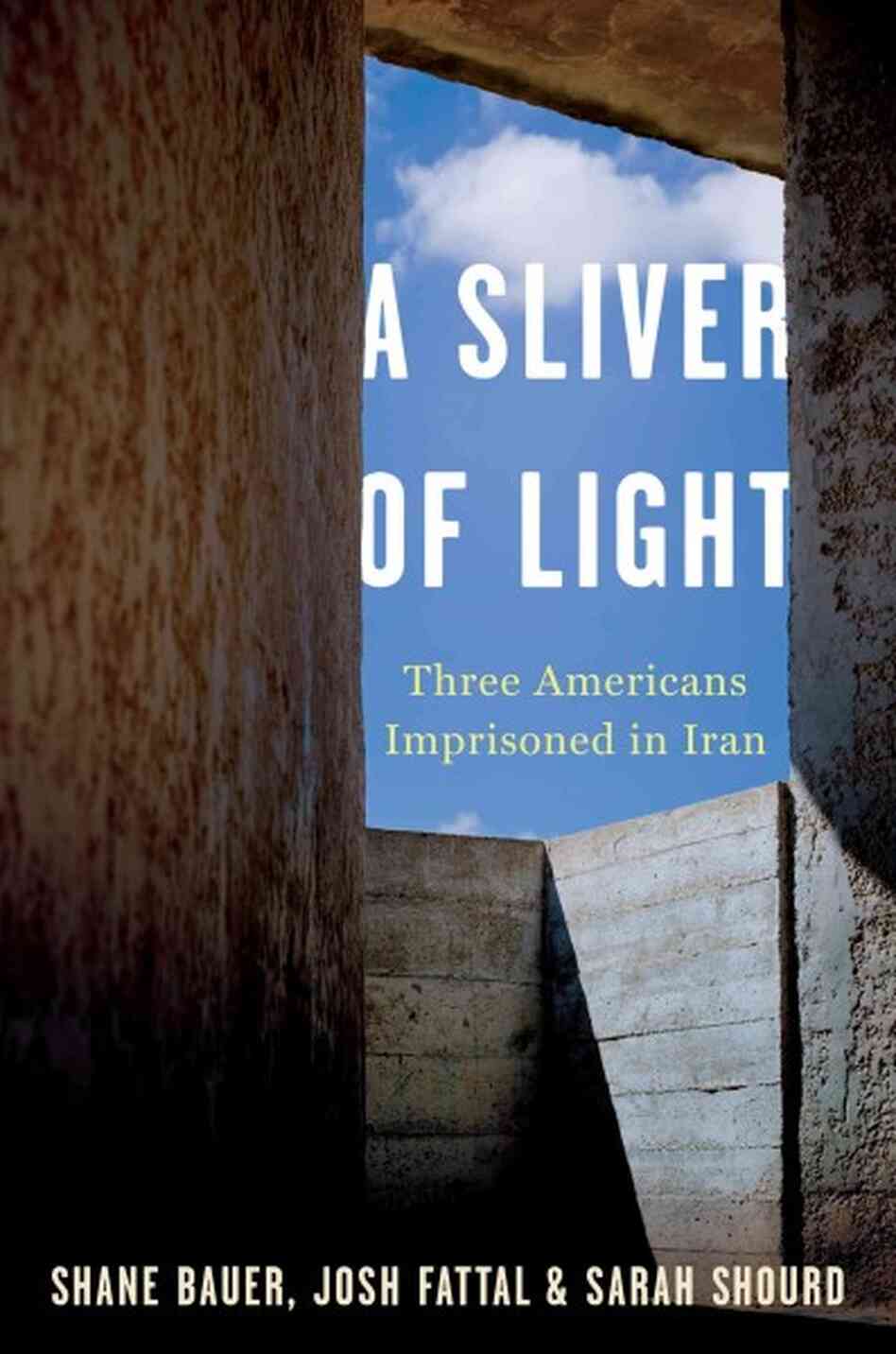
Book review: "A Sliver of Light"

Three Americans – Shane Bauer, Joshua Fattal and Sarah Shourd – were visiting the Kurdish region of Iraq in 2009 when they decided to go for a hike. Locals directed them to a hilly area and soon the Americans headed up a trail.

As they neared a ridge, the Americans spotted an isolated stone building with a soldier standing next to it. The soldier waved to them to come over. They did. And just like that, Bauer, Fattal and Shourd unknowingly crossed the border and become prisoners of Iran.

Shourd would be imprisoned for the next 13 months; Bauer and Fattal for more than two years.

In "A Sliver of Light," the three hikers tell the story of their capture and imprisonment, which drew international attention.  The authors describe the mental wear and tear of their captivity, their nuanced relationship with an array of interrogators and guards, and how they eventually found subtle ways to resist their captors.

While the Americans are never physically tortured during their captitivity, they emphasize that the long imprisonment eats at them psychically . Shourd, particularly, is affected by a long period of solitary confinement. "I talk to myself, eat my food with my hands. Like an animal, I spend hours crouched by the slot at the bottom of my door listening for sounds."

Still, one of the more surprising elements of their confinement is how far it is from a "Midnight Express"-style prison hellhole. The Americans are fed adequately and eventually are able to "order" a wide variety of foods. They have hot showers. They get books and, one time, a birthday cake. They eventually get TVs, a DVD player and a refrigerator in their cells. To celebrate Bauer's birthday in 2011, the guards take him and Fattal out for a picnic where they have pizza and ice cream.

As a factual accounting of the Americans' experience, "A Sliver of Light" does a fine job. But in terms of emotional engagement, it falls short.

In this kind of book you want to root for the captives, but in this case, Bauer, Fattal and Shourd are just not that likeable. In fact – based on their own words – I often found them annoying.


They are incredibly slow to realize that they are political prisoners, and in the early going they naively believe that if they cooperate completely with their captors they will be set free.

During one interrogation, Bauer is so eager to please the Iranian across the table that he wonders, "Are we bonding? Is he interested in me? Does he feel guilty for partaking in my captivity?"

Even though the Iranians repeatedly lie to the Americans, the gullible Shourd trusts each new interrogator. At one point, she says, "I truly believe he wants to help me, to speed up this process and play his part in getting me out of here." This "kind" interrogator orders her to keep her blindfold on.

It is over a year before Shourd has an epiphany: "They knew from the first day that we weren't spies and that we did not willingly cross the border, yet they decided to hold us anyway."

The Iranians interview the Americans for long periods, clearly poking around for information they can use to frame them as spies. But the American don't resist in the slightest, failing to recognize that they have leverage to ask for a quid pro quo – some short time for them to be together, for example, or the opportunity to make a phone call. 

It take a whole year before the Americans realize they do have some power to get better treatment, but it requires them to resist. "Defiance gets results," Fattal discovers.

On one night early in their confinement, Bauer is able to sneak into Shourd's cell and the dating couple have sex. Hey, sex is good, but since this is their first time together in a long time, wouldn't this also be a great time to discuss their situation and develop a strategy for the interrogations? Maybe they could try a hunger strike, a tactic they later find quite effective. Nope – after sex, Bauer just leaves and goes back to his cell.

Worse, perhaps, is that the Americans repeatedly come off as smug and self-righteous. You might think it would be hard for people in their situation to seem smug, but somehow these three do it.

They lecture the reader on politics, American foreign policy and even the institution of marriage. "Why trap yourself in an institution that is so feeble, that so often crumbles and wreck lives," Bauer wonders. "Why participate in the state incentivization of one particular type of relationship: one man and one woman."  (Bauer and Shourd are now married.)

When Fattal and Bauer decide to divide the food in their cell between them, they don't use the word "divide." They call it "privatizing."

And after they're all released, they refuse to help the FBI in a investigation into another American missing in Iran.

If you like these sort of stories, check out the National Geographic Channel's series, "Locked Up Abroad."

An excellent book about someone held hostage in the Middle East is "Buried Alive" by Roy Hallums. He didn't have hot showers and his captors never took him out for pizza.


---
 (Please support this blog by clicking on an ad, or by donating via the Paypal button below.)


Tuesday, May 20, 2014

Citi's American Airlines credit card: The good, the weak and the ugly

The Citi American Airlines Mastercard, which I just got, comes with a host of bonus features. Some of these are very good. Some others might be good depending on your needs. But most of the "bonuses" are nothing more than parsley on a dinner plate – they make things look good but offer practically nothing of value.

The card comes with a $95 annual fee. I hate annual fees, but this one is waived for the first year. I'll decide before the year is up whether to cancel the card.

Here's a look at the various perks of the card, from the good to to the lame.

Very Good

First bag checked free for you and up to four traveling companions. This is the reason I got the card. Normally, you pay $25 to check your first bag on American. I will be flying with my two kids next month – going one way on American – and since we'll each have a bag to check, we'll save $75 right there.

If you fly a lot on American, this could amount to significant savings.

A bonus of 30,000 AAdvantage miles after you spend $1,000 within the first three months.  Thirty thousand miles is enough to buy a round-trip ticket, so I figure this is worth $400 or so, at some point.

Kinda good

Earn frequent flier miles. When you use this card, you earn miles in American's AAdvantage frequent flier program. That's not bad, but I'd prefer to just to get a 1% cash rebate as some cards offer.

Group 1 boarding. This means we will get to get on the plane ahead of those poor slobs in "general boarding." (Insert imperious sneer here.) The advantage, I guess, is that you get first shot at the overhead bin space. I consider this only a very slight benefit. My family and I are not the type of travelers who have a lot of carry-ons, and when we do need bin space, I haven't had a problem finding it.

Auto rental insurance. Covers damages to your rental car when you use the card for the transaction. Nice, but nearly all cards offer this. 


Just OK

Double AAdvantage miles on American Airlines purchases. If I'm buying American Airlines tickets and use this card I get double miles. It's better than nothing I guess.

Earn miles for using miles. If you redeem your AAdvantage miles for a flight or something else, you get 10% back. I use AAdvantage miles so rarely, this isn't worth that much, but it is better than nothing.


"Parsley" benefits

25% off food, drink or headsets on board.  Whoopee. The food and drink on board are about 40% overpriced. It's easy to bring your own food and headsets.

Personal concierge service. "We'll make your dinner reservations, purchase tickets to events, coordinate business arrangements for you worldwide, locate hard-to-find items, and buy and deliver gifts with the costs of goods or services billed to your card." By the time you explain what you want, and go back and forth a few times explaining how much you want to spend, you could have done it yourself.

$100 American Airlines Flight Discount if you spend $30,000 in a year. Maybe some people charge an average of $2,500 a month, but not me. And if you do spend $30,000 annually, then $100 doesn't seem like much of a reward.

Reduced mileage awards. This is one of those "benefits" that sound good, but upon closer inspection really aren't. This bonus allows cardholders to use up to 5,000 to 7,500 fewer miles than normally required to get a roundtrip flight to certain cities.

But the eligible cities and dates in this program are so spotty, that this is like grabbing a deal from the discount bin at Big Lots. Oh, yay, I can get a price break on a flight to Beaumont, Texas, or Kalamazoo, Michigan! You can use the discount to go to Jackson, Miss., in April, but not in May, June or July. The discount is available for Fort Lauderdale in May, but not April, June or July.

In short, if you happen to benefit from this feature, it would only be by sheer luck.

 "Buyers Security Program." This feature, supposedly, will protect purchases you make with this card for 90 days against fire, theft or accidental breakage. OK, you might think, you're not going need that very often, but it would be nice to have just in case.

Well, good luck using this if you need it. There are a full 1,139 words describing the conditions of this, and most of them say what is not covered.

Theft from vehicles is not covered. Nor are boats, motorized vehicles or their equipment and accessories. Also not covered: "permanently installed items, fixtures or structures," "tickets of any kind," plants, "consumables" or "perishables." "Theft or damage of jewelry, cameras and video recording equipment contained in baggage is not covered." Items given as gifts are not covered.

There are many other limits on the coverage, plus strict requirements for making a claim. If anyone has actually successfully used this program, please let me know in the comments below.  Until I hear from such a person, I deem the program as worthless.

"Price Protection Program." If you buy something with the card, and see a printed ad offering the same item for less money within 60 days, Citi supposedly will refund the price difference up to $250. But the restrictions on the offer are so many to make it a virtually empty promise.

First, the ad must be for the exact same item.  It does not apply to Internet purchases or advertisements. It also does not apply to any ad with the words, “limited quantity,” “going out-of-business,” “cash only” or “close out.” There are 19 other bullet points in the fine print outlining exceptions to the offer.

Bottom line: worthless.

Others.  There are several other bonuses that come with this card, including lost luggage coverage, trip cancellation and interruption insurance, an extended warranty program, travel accident insurance, roadside assistance service, and a "price rewind" feature. All sound nice on the service, but a look at the small print shows so many limitations that the chance of actually benefiting is miniscule to non-existent.

If you actually have used any of these bonuses, let me know in the comments below.


---
 (Please support this blog by clicking on an ad, or by donating via the Paypal button below.)