"The Glass Castle" is not the kind of book I would normally read, but my wife
recommended it so I decided to give it a try. From the moment I started,
I could barely put it down.
Author Jeannette Walls gets you
hooked in the first half of the book with disturbing and funny tales of
her peculiar childhood. Her parents, though clearly smart in an academic
sense, avoided steady work and conventional lifestyles, keeping the
family perpetually poor. They often "skeedaddled" out of town in the
middle of the night to avoid bill collectors.
Walls and her three
siblings had to learn to be self-reliant early on. She was cooking her
own hot dogs at age 3 (getting seriously burned in the process), she
learned to shoot a gun at age 4. All the kids learned how to forage for
food in dumpsters and garbage cans – they had to, since the
refrigerator was frequently empty. Once, Walls fell out of the car when
the door flew open on a hard turn, and her parents almost didn't notice.
Her parents were selfish, unstable and irresponsible. But just when you're ready to hate them, they do something right.
Walls'
father was an alcoholic whose parenting philosophy was illustrated when
he throws her, as a little girl, in deep water repeatedly and literally expects her to
sink or swim. He's horrid with money, but later on, miraculously comes
up with $1,000 to keep Walls in college.
Her mother was an artist
who seemed to have little idea of how to raise children, and really
didn't care. But she did have a love for books which was passed on to
her children.
The second half of the book takes a turn for the
grim, when the family finally settles in a depressing and unfriendly
small town in West Virginia. The kids get in fights, they help their
mother shoplift, their roof leaks so bad that Walls' brother has to
sleep under a rubber raft. They forage for food yet again.
If the
book had started this way, I might have been turned off. But by this
point, I was hooked and found the story tugging at my heart. I read
eagerly all the way to the end to see how the Walls children would turn
out.
This isn't one of those memoirs where the author whines.
Walls tells her stories with graceful detachment, offering colorful
details, but doesn't ask for pity.
On the whole, "The Glass
Castle" shows the resilience of children. Despite their strange and
difficult upbringing, it's remarkable how well Walls and her siblings
turned out.
---
(Please support this blog by clicking on an ad, or by making a donation
via the Paypal link below.)
Sunday, September 15, 2013
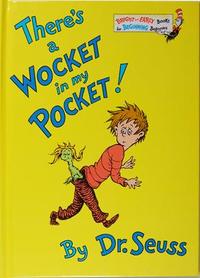
Book review: "There's a Wocket in My Pocket" by Dr. Seuss
"There's a Wocket in My Pocket" is a delight for kids and adults. It's fun to read
out loud, with
goofy creature names like yottle, nooth grush and quimney.I've read it many times to my two kids without getting tired of it. The artwork is fun and playful. What else would you expect from Dr. Seuss?
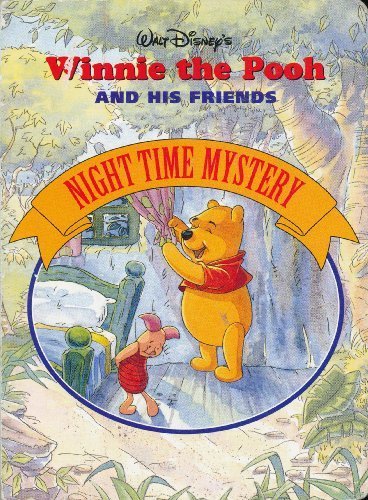
Book review: "Walt Disney's Winnie the Pooh and His Friends: Night Time Mystery"
"Night Time Mystery" is a nice, simple book for Pooh fans. While it doesn't have
any standout characteristics that might earn it awards, it does offer a story that's easy for kids to follow, has just a bit of mystery, and ends pleasantly.
The artwork nicely fits the story.
Probably best for the under-five crowd.
any standout characteristics that might earn it awards, it does offer a story that's easy for kids to follow, has just a bit of mystery, and ends pleasantly.
The artwork nicely fits the story.
Probably best for the under-five crowd.
Saturday, September 14, 2013
Book review: "Born Standing Up" by Steve Martin
As a teenager in the 1970s, I was among the legions swept up in the
Steve Martin craze. I listened to his albums repeatedly, memorizing much
of the humor and entertaining (well, sort of) my classmates with
adaptations of Steve Martin comedy routines. When Martin sang "King Tut"
on Saturday Night Live, my friends and I sat in my family's living room laughing
heartily.
To us, Martin's comedy was a revelation: It was unpredictable, unconventional and, well, wild and crazy. It was irresistible.
What I didn't realize until reading this book is how much careful, even meticulous, preparation went into Martin's act. "Born Standing Up" is a fascinating look at how Martin spent years delicately manicuring his on-stage zaniness.
At age 15, Martin got his start working in a Disneyland magic shop, developing showmanship skills while performing tricks up to eight hours a day. Later, he gradually shifted into comedy, first at the Birdcage Theater at Knott's Berry Farm, and then on his own as a stand-up performer.
Martin's early career was filled with plenty of ups and downs as he continually tried to win the laughter of audiences. He was often broke, but showed a remarkable persistence. Many people would have given up and found a real job, but somehow Martin knew that comedy was his calling.
There is an undercurrent of melancholy to the book, fueled by his cool relations with his family, by the insecurity of his profession and also by the fact that while Martin had many acquaintances, he seemed to have few close friends. Even once he hit success, he was nagged by doubts that it would last, and then troubled by the loss of privacy brought on by celebrity. Still, he ultimately admits to enjoying many of the perks of wealth and fame.
Martin is a wonderful writer – he seems to have a knack for choosing just the right details to include – and "Born Standing Up" is a pleasure to read.
---
(Please support this blog by clicking on an ad, or by making a donation via the Paypal link below.)
To us, Martin's comedy was a revelation: It was unpredictable, unconventional and, well, wild and crazy. It was irresistible.
What I didn't realize until reading this book is how much careful, even meticulous, preparation went into Martin's act. "Born Standing Up" is a fascinating look at how Martin spent years delicately manicuring his on-stage zaniness.
At age 15, Martin got his start working in a Disneyland magic shop, developing showmanship skills while performing tricks up to eight hours a day. Later, he gradually shifted into comedy, first at the Birdcage Theater at Knott's Berry Farm, and then on his own as a stand-up performer.
Martin's early career was filled with plenty of ups and downs as he continually tried to win the laughter of audiences. He was often broke, but showed a remarkable persistence. Many people would have given up and found a real job, but somehow Martin knew that comedy was his calling.
There is an undercurrent of melancholy to the book, fueled by his cool relations with his family, by the insecurity of his profession and also by the fact that while Martin had many acquaintances, he seemed to have few close friends. Even once he hit success, he was nagged by doubts that it would last, and then troubled by the loss of privacy brought on by celebrity. Still, he ultimately admits to enjoying many of the perks of wealth and fame.
Martin is a wonderful writer – he seems to have a knack for choosing just the right details to include – and "Born Standing Up" is a pleasure to read.
---
(Please support this blog by clicking on an ad, or by making a donation via the Paypal link below.)
Friday, September 13, 2013
Book review: "The Innocents Abroad" by Mark Twain
This book is NOT an easy read, but it does have its rewards.
"The Innocents Abroad" is a long and meandering travelogue recounting Twain's 1867 trip to Europe and the Middle East aboard a chartered steamship carrying American tourists. Twain is observant, droll and amusing, but he also bogs the narrative down with numerous tedious tangents and obscure literary and biblical references.
It is interesting to see the world of 1867 through Twain's eyes and to find that many of the annoyances of travel then are still common today – pushy vendors, long-winded guides, aggressive beggars. But it's also fascinating to see what's different – the difficulty of finding soap in Europe, for example, or the need to travel partly by carriage, horse and donkey.
A couple of scenes were especially enjoyable. In Greece, the Americans were forbidden to land. Desperate to see the Parthenon and the Acropolis, Twain and others snuck off the ship in the middle of night, crept through city streets and then bribed guards to see the landmarks. Later, at Yalta on the Black Sea, the travelers remarkably got to meet the emperor of Russia simply because they were Americans, and were treated as grand representatives of their country.
While Twain makes it clear that he is a Bible-reading man, he despises those who are excessively pious or who use religion arrogantly. Italy, he says, has built magnificent churches while "starving half her citizens to accomplish it. She is today one vast museum of magnificence and misery." In the Middle East, he mocks those who operate questionably "holy" sites to lure in tourists.
It is hard to imagine any travel writer as blunt as Twain. He describes the Azores as "eminently Portuguese – that is to say, it is slow, poor, shiftless, sleepy, and lazy." He says Moorish women have "atrocious ugliness."
The most disturbing element of the book is Twain's bigotry toward Muslims. He calls the Muslim Turks "by nature and training filthy, brutish, ignorant, unprogressive, superstitious." He calls the residents of Damascus the "ugliest, wickedest-looking villains we have seen." He unapologetically says Muslims will never be the equal of Christians until they learn to repent.
This is a long book (my edition was 495 pages of rather dense type), but I found you don't have to read it straight through. Since there are few continuing characters, you can put it down and pick it up later with little loss. To avoid getting bogged down, I suggest you skip over Twain's numerous digressions and instead skip ahead to the parts where he is actually traveling or personally engaged in an activity.
---
(Please support this blog by clicking on an ad, or by making a donation via the Paypal link below.)
"The Innocents Abroad" is a long and meandering travelogue recounting Twain's 1867 trip to Europe and the Middle East aboard a chartered steamship carrying American tourists. Twain is observant, droll and amusing, but he also bogs the narrative down with numerous tedious tangents and obscure literary and biblical references.
It is interesting to see the world of 1867 through Twain's eyes and to find that many of the annoyances of travel then are still common today – pushy vendors, long-winded guides, aggressive beggars. But it's also fascinating to see what's different – the difficulty of finding soap in Europe, for example, or the need to travel partly by carriage, horse and donkey.
A couple of scenes were especially enjoyable. In Greece, the Americans were forbidden to land. Desperate to see the Parthenon and the Acropolis, Twain and others snuck off the ship in the middle of night, crept through city streets and then bribed guards to see the landmarks. Later, at Yalta on the Black Sea, the travelers remarkably got to meet the emperor of Russia simply because they were Americans, and were treated as grand representatives of their country.
While Twain makes it clear that he is a Bible-reading man, he despises those who are excessively pious or who use religion arrogantly. Italy, he says, has built magnificent churches while "starving half her citizens to accomplish it. She is today one vast museum of magnificence and misery." In the Middle East, he mocks those who operate questionably "holy" sites to lure in tourists.
It is hard to imagine any travel writer as blunt as Twain. He describes the Azores as "eminently Portuguese – that is to say, it is slow, poor, shiftless, sleepy, and lazy." He says Moorish women have "atrocious ugliness."
The most disturbing element of the book is Twain's bigotry toward Muslims. He calls the Muslim Turks "by nature and training filthy, brutish, ignorant, unprogressive, superstitious." He calls the residents of Damascus the "ugliest, wickedest-looking villains we have seen." He unapologetically says Muslims will never be the equal of Christians until they learn to repent.
This is a long book (my edition was 495 pages of rather dense type), but I found you don't have to read it straight through. Since there are few continuing characters, you can put it down and pick it up later with little loss. To avoid getting bogged down, I suggest you skip over Twain's numerous digressions and instead skip ahead to the parts where he is actually traveling or personally engaged in an activity.
---
(Please support this blog by clicking on an ad, or by making a donation via the Paypal link below.)
Thursday, September 12, 2013
Book review: "Ice Bound" by Jerri Nielsen
Jerri Nielsen's 2002 book, "Ice Bound," slowly drew me in. By the end, it fell into the
can't-put-it-down category. I really liked the descriptions of life at
the South Pole (the difficulties of living there were far beyond what I
imagined), and became caught up in her battle over cancer.
There were a few things I might quibble about: Her relationship (or lack of relationship) with her ex-husband and children hangs mysteriously in the background without resolution. Clearly, there's more going on there than she explains. Also, in describing life at the station, she seems to overemphasize the parties. At times you wonder: Aren't these people there to do some work?
Still, it's a compelling story driven by colorful characters, day-to-day dramas, and the cancer and eventual rescue that you know is coming at the end.
The full title is "Ice Bound: A Doctor's Incredible Battle For Survival at the South Pole."
---
(Please support this blog by clicking on an ad.)
There were a few things I might quibble about: Her relationship (or lack of relationship) with her ex-husband and children hangs mysteriously in the background without resolution. Clearly, there's more going on there than she explains. Also, in describing life at the station, she seems to overemphasize the parties. At times you wonder: Aren't these people there to do some work?
Still, it's a compelling story driven by colorful characters, day-to-day dramas, and the cancer and eventual rescue that you know is coming at the end.
The full title is "Ice Bound: A Doctor's Incredible Battle For Survival at the South Pole."
---
(Please support this blog by clicking on an ad.)
Wednesday, September 11, 2013
Book review: "Bottoms Up, America" by Bill Fitzpatrick
"Bottom's Up" is a light, enjoyable book. If you've thought at all about cycling
coast-to-coast, you can live vicariously through the experiences of Bill
and Dave.
This book isn't deep, nor are the adventures particularly wild, but there are some nice vignettes and interesting observations about the people and places the authors encountered.
The full title is "Bottoms Up, America!: Two Mean, Tired of Climbing Corporate Ladders, Bicycle Across the Backroads of America in a Bold Attempt to Find a Lost Soul."
---
(Please support this blog by clicking on an ad or donating via the Paypal button below.)
This book isn't deep, nor are the adventures particularly wild, but there are some nice vignettes and interesting observations about the people and places the authors encountered.
The full title is "Bottoms Up, America!: Two Mean, Tired of Climbing Corporate Ladders, Bicycle Across the Backroads of America in a Bold Attempt to Find a Lost Soul."
---
(Please support this blog by clicking on an ad or donating via the Paypal button below.)
Subscribe to:
Posts (Atom)