Tuesday, September 10, 2013

Book review: "A Voyage for Madmen" by Peter Nichols

In "A Voyage for Madmen, " author Peter Nichols lures the reader from the start by offering careful descriptions of the nine men who will attempt to sail nonstop around the world alone. By the middle, you'll find yourself engaged and trying to guess how it will all turn out. By the end, it became a gripping page turner that I could not put down.

This is more than a sailing story; it's a story of people and personalities. Nichols has thoroughly assembled all the pieces but he's coy about not giving away the ending. Indeed, there are some jolting surprises along the way.

The one quibble I have concerns the use of sailing terminology and I give Nichols half-credit on this. Some authors of sailing books and articles bury the reader in so much yachting jargon that it can be incomprehensible to the average person.

Nichols does slightly better. At some points, he stops the narrative to carefully explain sailing principles. But at other times he's not as vigilant and the reader can get lost amid sailing phrases and terms.

Still, you can easily work you way through that, and follow the race as it develops. Even if you're not a sailor, you'll feel like you're along for this highly engaging ride.

---

(Please support this blog by clicking on an ad, or donating through the Paypal button below.)

Book review: "Undaunted Courage" by Stephen E. Ambrose

About a third of the way into "Undaunted Courage," I began to feel disappointed. Not disappointed in the book, but rather disappointed by the fact that I knew how the Lewis and Clark expedition turned out. Had I not known, I thought, this book could be a tantalizing will-they-make-it adventure story.

But here's the surprise: This is a great adventure story anyway. Lewis and Clark's expedition had to overcome so many obstacles that the reader, even knowing the ultimate outcome, can't help but be engaged.

I was struck by how often Lewis and Clark almost DIDN'T make it. Their boats nearly overturned, they were attacked by grizzly bears and Indians, they ventured onward despite near starvation, harsh weather, sickness, accidents and various wrong turns. Author Stephen Ambrose seems to include just right pieces of information to keep the drama going.

A tip to readers: Try not to peak ahead in the story by looking at the maps too early. You'll find more suspense in the tale if you're not totally sure where they're going.

Ambrose gave the book the rather unwieldy full title, "Undaunted Courage: Meriwether Lewis, Thomas Jefferson, and the Opening of the American West," but his research is so impressively thorough you can't complain. He doesn't make up quotes or try to add artificial color – he gives us only what can be supported in the historical record.

Ambrose does adds important commentary at critical times, assessing Lewis's personality and providing historical perspective on the accomplishments of the expedition.

One nitpick: I wish Ambrose had done more to describe the physical characteristics of the areas where Lewis and Clark traveled. E.g.: Was it a pine forest? Open prairie? Thick brush? Too often I had to build that image on my own.

It's important to note that this is not just a story of the Lewis and Clark expedition, though that is the bulk of the book. This is a biography of Meriwether Lewis. The expedition section is the best part of the book, and it might be tempting to skip over the other parts.

But the beginning offers nice background details about Lewis, describes his close relationship with Thomas Jefferson, and gives the reader a foundation for understanding the purpose and importance of the expedition. The ending describes Lewis faltering post-expedition life. This, unfortunately, can't help but be sad.

---

(Please support this blog by clicking on an ad.)

Monday, September 9, 2013

Book review: "The Dig Tree" by Sarah Murgatroyd

In "The Dig Tree," Sarah Murgatroyd does a terrific job of assembling a compelling story about a doomed expedition into the heart of Australia. She carefully pulls together pieces from diaries, old news accounts, and official records, and even throws in insights into human and camel physiology when necessary.

The story moves along with interesting characters and sometimes heartbreaking events. Importantly, Murgatroyd grounds everything in historical research, giving her account valuable credibility.

If there's a weakness in this book it is only because the author does so well bringing the reader close to the events. You want the book to go one further step and recreate the conversations among the explorers, but of course it cannot do that.

This is a great book for anyone interested in adventure or Australian history.

----

(Please support this blog by clicking on an ad.)

Sunday, September 8, 2013

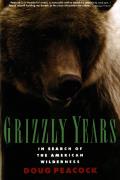
Book review: "Grizzly Years" by Doug Peacock

Doug Peacock is a strong descriptive writer, and in "Grizzly Years" he brings the reader along with him as he explores the woods seeking grizzly bears or as he recounts haunting episodes from his Vietnam War days.

But while his stories are usually interesting, they're only occasionally compelling. I never had that can't-put-it-down feeling. Plus, there's only so many ways to describe a hike in the woods, and after awhile Peacock's bear quests begin to sound repetitive.

This may be a book that's better read in small bites, rather than one gulp. Read a chapter or two, then put it down for a month or so. When you're ready to be transported back to the woods, pick it up again.

---

(Please support this blog by clicking on an ad or donating via the Paypal button below.)

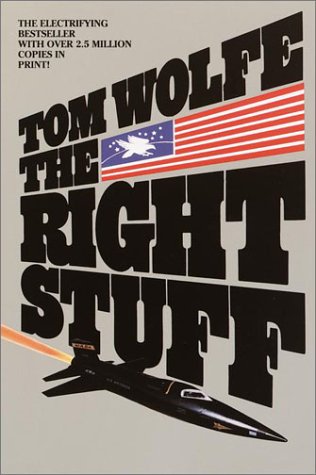
Book review: "The Right Stuff" by Tom Wolfe

Tom Wolfe's rollicking style (exclamation points!!) can take a little getting used to, but once you settle in, you'll find that this book is both fun-to-read and well-written.

First, Wolfe clearly did his research, filling the story with details and facts which prove illuminating (I do wish he included dates more frequently; sometimes it's hard to tell when an event is taking place). His detailed descriptions of the flights
of Alan Shepard, John Glenn and Chuck Yeager practically put you in the pilot's seat.

Second, he manages to capture the emotions and feelings of the time, showing the competitive nature that drove the astronauts, how their wives wanted respect, and how the public adored their new space heroes.

Finally, he ties it all together with some good philosophical insights. The Right Stuff! Single Warrior Combat!

My only lament about the book is that Tom Wolfe makes it look so easy. Too many writers since then have tried to imitate his style – but without doing the fundamental research that makes a good story. The result can be tedious and superficial writing.

---

(Please support this blog by clicking on an ad or donating through the Paypal button below.)

Book review: "The Infant Mind" by Richard Restak

This 1986 book has some interesting nuggets, but you have to sift through a lot of gravel to find them.

I read this as a parent, hoping for some insights into the minds of my young children. I can't really recommend it for parents – there's too much technical and scientific background and not enough specifics.

Students or researchers interested in the infant brain from a scientific perspective might get more out of this book.

Unfortunately, the book is poorly organized – author Richard Restak seems to drift from one topic to the next with no clear sense of where he's going. But just when you're ready to give up, he'll offer a nice bit of information on the curiosities of how babies think.

---

(Please support this blog by clicking on ad.)

Friday, September 6, 2013

Book review: "The Valleys of the Assassins"

I found this book disappointing, especially considering that some call it a classic.

Freya Stark traveled among the remote valleys of western Persia (today's Iran) in the early 1930s, when this area was barely known and rarely visited by Europeans. (Actually, it's not much better known today.)

But while her travels may have been pioneering, this account is surprisingly dull and mundane. Stark travels from village to village, briefly meeting the locals, eats a meal or two, then goes on the next day to repeat the process. There's rarely a spark of excitement or adventure – just a dry recording of events and observations.

Stark's aloof writing style doesn't help. She keeps the reader at arm's length from the characters she meets, offering just a superficial look at most of them.

The first half of the book is further handicapped by a lack of maps. As Stark travels about, she casually rattles off the names of landmarks and places as if the reader were intimately acquainted with the area. In fact, frustrated readers will soon discover that it is impossible to tell whether she is traveling east, west, north or south – or just wandering in circles.

The second half of the book has three maps, which helps, although you'll need a magnifying glass to read one of them.

I don't want to make it sound like there is nothing interesting in this book. There are a few tense encounters, and occasionally she shows off a dry wit. But these are too few and far between. I can only recommend this book to someone who has a scholarly interest in this region of Iran.

----

(Please support this blog by clicking on an ad.)