"The Long Walk" combines a great story with outstanding writing and is spiced up with a dash of controversy.
First, the story: At the outset of World War II, 24-year-old Polish soldier Slavomir Rawicz is captured by the Russians and sent to a Siberian gulag. The forced labor, near-starvation diet, and freezing temperatures don't sit too well with Rawicz and six of his fellow prisoners and they decide they might like it better elsewhere. They escape, and start walking – out of Russia, through Mongolia, across the Gobi Desert, into Tibet and then over the Himalayas (in the winter, no less) into India. It's not called "The Long Walk" for nothing.
Maybe you think 4,000 miles of walking would make for a tedious story. Far from it. As Rawicz tells it, the men battled hunger, thirst, ice, snow and severe temperatures. Time and again, they seemed on the verge of death, only to be revived by the fortunate discovery of a trickle of water in the desert, or a kind sheepherder offering a meal. (Helpful tip: If you're crossing the Gobi Desert, a snake makes a lovely snack. OK, it's the ONLY possible snack.) Still, not all of them make it through alive.
I've read a lot of survival stories and there are few that can match "The Long Walk" in terms of the length of the suffering endured by those involved. The only two that come to mind are the ill-fated Antarctic journey of Ernest Shackleton and the tale of Louis Zamperini, whose story of torture and abuse in Japanese prisoner of war camps in World War II is told in Laura Hillenbrand's "Unbroken."
I was so absorbed by "The Long Walk" that I was saddened to read, after I finished, that in recent years an amateur researcher named Linda Willis found documents suggesting that Rawicz never took this journey. The documents imply that Rawicz did not escape, but was released as part of a general amnesty after the period when he was supposedly walking to freedom. This doesn't mean that no one did this walk – some believe Rawicz may have been told about the harrowing march by others and passed off the story as his own.
(Another possibility: A different prisoner may have taken Rawicz's name and identity after he escaped, resulting in that name showing up on the on the documents Linda Willis found. This is not unheard of in the ragged world of prisons. A prisoner may have believed he would get better treatment, or be released sooner, under Rawicz's name.)
It's incredible to me that this widely read book, released in 1956 and translated into 25 languages, endured for over 50 years before these documents emerged. Why did it take so long? Rawicz died in 2004, so he can't respond.
The documents unearthed by Willis raise serious doubts, but they don't definitively disprove Rawicz's story either. My own feeling is that in the book Rawicz describes an amazing amount of detail – including some events that reflect badly on him – for someone who supposedly wasn't there. I wonder if he did hike part of the journey, but did not cross the Himalayas. He hurries through this latter section relatively quickly and, in the book's most head-shaking assertion, claims the group saw two abominable snowmen in the mountains.
All that said, I do have to give credit to the writing: The book is first-person, but was actually ghostwritten by English newspaperman Ronald Downing, and I'm sure Downing deserves much of the credit for a story that is told crisply and clearly, while avoiding overwrought emotionalism. Downing's clear descriptions are excellent examples of how to "show" readers rather than simply tell them. For example, early in the book, Rawicz and hundreds of other prisoners are on their way to their prison camp when a ferocious blizzard hits:
"The tufts of hardy broad-bladed grass, a roadside feature all through the march, bent over, swung and gyrated under the whiplash of the wind with a constant swishing and whistling. The snow hissed and sizzled as it drove against the fires. We stamped around to save our frozen feet from frostbite, huddled our hands in our fufaikas, damned the storm and wondered how we were going to get out of this place."
With that kind of writing, the author doesn't need to tell you that it's bitterly cold, you can FEEL it.
Saturday, January 14, 2012
Wednesday, January 11, 2012
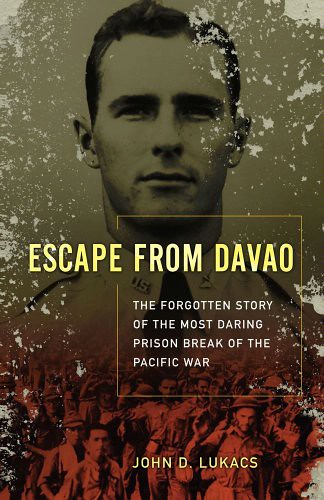
Book review: "Escape from Davao" by John D. Lukacs
At the heart of "Escape from Davao" is a great story – the daring escape of 10 American prisoners of war from Japanese captivity in the Philippines during World War II. The escape itself, dramatic and suspenseful, falls in the middle of the book and is the highlight of the work. The other parts of the book, which look at the fighting that led up to the capture of the Americans and the events after their escape, have some interesting parts but are not as gripping as the middle section.
I didn't know much about World War II events in the Philippines before I picked up "Escape from Davao," so the first section showing the desperate fighting by outmanned American troops trying to defend the islands in 1942 was enlightening. Author John D. Lukacs describes how the U.S. government basically abandoned the American forces there, forcing the surrender that led to the brutalities of the Bataan death march. Lukacs further details the starvation and abuses of Japanese prisoner of war camps (for more on this, read Laura Hillenbrand's compelling bestseller "Unbroken").
Lukacs writes competently, but even given good material to work with, his storytelling is fairly flat and he sometimes bogs down the book with excessive minutiae. He tells the story entirely from the point of view of the American soldiers, giving it a simple good-guys-versus-bad-guys storyline. This is not terrible (the Japanese captors really could be awful), but more from the perspective of the Japanese or from the Filipinos who helped the Americans would have given the book greater depth.
In the middle section, as the Americans plot and then execute their escape plan, the action proves page-turning, but it's sometimes hard to tell the characters apart. Lukacs profiles the Americans so similarly -- tough, gung-ho young men all willing to chip in to help the team -- that it is difficult to distinguish one from another.
The last part of the book shows how the escaped prisoners' tales of Japanese brutality struggled to be told publicly in the face of extreme military censorship and message control. Lukacs wanders quite a bit in this section before finally coming to a remarkable point: It took nearly two years for the horrors of the Bataan death march and Japanese POW camps to be revealed to the American people. In this day of instant news updates and Twitter bulletins, it's amazing to realize how different things were back then.
One minor annoyance is that Lukacs uses military time ("1700 hours" and so forth) throughout the book, making me wonder if he expected only members of the armed services to read the book.
The book has some nice maps, but they are introduced too early and give away some of the story. Similarly, the book has a batch of photos at the middle of the book and if you look at them too soon, they reveal what happens to the characters.
I didn't know much about World War II events in the Philippines before I picked up "Escape from Davao," so the first section showing the desperate fighting by outmanned American troops trying to defend the islands in 1942 was enlightening. Author John D. Lukacs describes how the U.S. government basically abandoned the American forces there, forcing the surrender that led to the brutalities of the Bataan death march. Lukacs further details the starvation and abuses of Japanese prisoner of war camps (for more on this, read Laura Hillenbrand's compelling bestseller "Unbroken").
Lukacs writes competently, but even given good material to work with, his storytelling is fairly flat and he sometimes bogs down the book with excessive minutiae. He tells the story entirely from the point of view of the American soldiers, giving it a simple good-guys-versus-bad-guys storyline. This is not terrible (the Japanese captors really could be awful), but more from the perspective of the Japanese or from the Filipinos who helped the Americans would have given the book greater depth.
In the middle section, as the Americans plot and then execute their escape plan, the action proves page-turning, but it's sometimes hard to tell the characters apart. Lukacs profiles the Americans so similarly -- tough, gung-ho young men all willing to chip in to help the team -- that it is difficult to distinguish one from another.
The last part of the book shows how the escaped prisoners' tales of Japanese brutality struggled to be told publicly in the face of extreme military censorship and message control. Lukacs wanders quite a bit in this section before finally coming to a remarkable point: It took nearly two years for the horrors of the Bataan death march and Japanese POW camps to be revealed to the American people. In this day of instant news updates and Twitter bulletins, it's amazing to realize how different things were back then.
One minor annoyance is that Lukacs uses military time ("1700 hours" and so forth) throughout the book, making me wonder if he expected only members of the armed services to read the book.
The book has some nice maps, but they are introduced too early and give away some of the story. Similarly, the book has a batch of photos at the middle of the book and if you look at them too soon, they reveal what happens to the characters.
Friday, December 30, 2011
Newspapers discover how to make money doing nothing
The newspaper industry has figured out how to get customers to pay for NOT receiving the paper.
In the past, newspapers would credit subscribers during a "vacation stop" for the days when the paper was not delivered. This seems common sense -- no one should pay for a product they don't receive, right?
But that practice seems to be ending. Calls to the Los Angeles Times and Long Beach Press-Telegram confirm that those papers no longer give credit during a vacation stop. And online reports suggest that such papers as the Chicago Tribune and Salt Tribune have similarly changed their practice.
The representative with the Los Angeles Times said the no-credit policy has become the "industry standard."
Still, a representative of the New York Times said that paper does continue to offer a credit to subscribers during a vacation stop.
Newspapers that do adopt this practice are clearly gambling that most subscribers won't notice that they're paying for something they're not getting. Smart consumers could choose to cancel the paper when they go on vacation, and restart when they return. But given the many online news options, some consumers may not restart at all.
In the past, newspapers would credit subscribers during a "vacation stop" for the days when the paper was not delivered. This seems common sense -- no one should pay for a product they don't receive, right?
But that practice seems to be ending. Calls to the Los Angeles Times and Long Beach Press-Telegram confirm that those papers no longer give credit during a vacation stop. And online reports suggest that such papers as the Chicago Tribune and Salt Tribune have similarly changed their practice.
The representative with the Los Angeles Times said the no-credit policy has become the "industry standard."
Still, a representative of the New York Times said that paper does continue to offer a credit to subscribers during a vacation stop.
Newspapers that do adopt this practice are clearly gambling that most subscribers won't notice that they're paying for something they're not getting. Smart consumers could choose to cancel the paper when they go on vacation, and restart when they return. But given the many online news options, some consumers may not restart at all.
Sunday, December 25, 2011
Steps to take before leasing a car
Leasing a car is not for everyone. But if you like getting a new car every few years, don’t drive more than 10,000 to 12,000 miles a year, and recognize that your monthly payments are essentially just rent, leasing may be for you. A few things to keep in mind before leasing a car:
- Educate yourself. Leasing has its own unique jargon, so check out car leasing guides at sites such as Edmunds.com or Leaseguide.com so the salesperson can’t baffle you with terms like “residual value” and “money factor.” Use an online car lease calculator to estimate your payments.
- Check manufacturers’ websites for leasing specials. Then call or email four or five dealers in your area and ask for their best offer on the car you want. To best compare offers, make sure the upfront payment, number of miles allowed (you pay a penalty if you go over), and length of term are the same.
- Consider the length of the lease. Edmunds.com says that a three-year term is best. “The majority of carmakers offer three-year bumper-to-bumper warranties. If your lease is for three years you will always be under warranty without paying extra for an extended service contract.”
- When you contact dealers by phone or email, evaluate the sale person. You want a salesperson who is honest and open, not someone who tries to manipulate you. “Ask yourself if you feel comfortable dealing with him,” Edmund.com said. “Is he impatient and pushy? Or relaxed and open?”
- Watch out for extra costs. When you go to the dealer to complete the deal, Edmunds warns that they may try to sell you extra items such as extended service contracts, fabric protection, alarms or a LoJack vehicle locator. “In most cases, we recommend turning down these extras,” the website said.
Thursday, December 22, 2011
The rules for using bank gift cards
Gift cards that can be used at multiple retailers have long been laden with various fees that are not permitted in California with single-store cards. But federal rules instituted last year give consumers more protections when using these so-called bank gift cards, which carry a Visa, MasterCard, Discover Card or American Express logo. Some things to know:
- While single-store cards cannot expire under California law, bank gift cards can. But the new federal rules say they cannot expire for at least five years after purchase, and any money added to the card must be usable for five years. The expiration terms must be “clearly and conspicuously” stated on the card.
- You cannot be charged an “inactivity” or “dormancy” fee unless the card has been unused for 12 months. Even then, you can only be charged one fee per month. Fees must be clearly stated to the buyer before purchase regardless of whether the transaction is done in person, by phone or online.
- "Virtual” or “e-gift” cards have the same protections as physical cards. You can buy an electronic credit online and give it as a gift. The recipient either prints out the code or uses it to make purchases over the Internet.
- You may be charged simply for buying the card. “Purchase fees” are typically $3 to $7 for each card, though there’s no limit under the law. So it may be smarter to give cash or a check.
Sunday, December 11, 2011
Book review: "Batavia's Graveyard" by Mike Dash
When the Dutch trading ship Batavia wrecked on the rocky shores of an uninhabited Indian Ocean atoll in 1629, the 322 people aboard probably thought things couldn’t get any worse. Little did they know that a madman would soon make their lives a living hell.
“Batavia’s Graveyard” is the true story of the shockingly barbaric events that followed the wreck of the Batavia off the coast of Western Australia. It is a book that is often fascinating, yet readers should be warned that the brutality of the story can be stomach-turning.
At the heart of the story is a psychopath named Jeronimus Corneliez who leads a band of shipwreck survivors in savagely killing about 120 people in cold blood. Among the victims were children, pregnant women, even a baby.
Author Mike Dash gets the book off to a fast start as the Batavia, on its maiden voyage, violently runs aground in the rocky archipelago known as Houtman’s Abrolhos. After this invigorating start, the story slows WAY down as Dash goes back years in time to the Netherlands to set the stage for the story.
Dash has clearly done an extraordinary job of research for this book, delving into documents nearly 400 years old. But he sometimes goes into so much detail on arcane elements that it bogs the story down. In the first third of the book, Dash offers up descriptions of religious zealotry in 17th-century Europe, the history of the Dutch East India Company, the importance of the spice trade and the subtleties of Dutch social strata at the time. Some of this is interesting, but it just goes on too long and can be skimmed.
Once the voyage is underway, we see the seeds of a mutiny germinate on board, as antipathy among the top officers on board simmers alongside an unhappy crew. The mutiny never happens at sea, but after the shipwreck, with the top officers gone off in search of help, trouble explodes.
From a historian’s perspective, this is a terrific book, full of facts and details from long ago. I like Dash’s descriptions of shipboard life, and the problems of disease and malnutrition. Even his descriptions of brutal punishment methods, such as keelhauling, are interesting (if disturbing).
But for the more casual reader, the book has some weaknesses, one of the biggest being that there are no likeable individuals among the main characters. You just don't have anyone to root for. The most prominent “good guy,” Wiebbe Hayes, emerges late in the story, but Dash is unable to offer much detail about him.
There are some helpful maps in the book, but one small annoying element is that Dash continually refers to Hayes Island and High Island as being to the “north” of the islands where Corneliez and the other mutineers did the killing – yet the map shows those islands clearly to the west.
If you like this sort of book, you might consider Nathaniel Philbrick’s “In the Heart of the Sea,” the story of a 19th-century whaling expedition that goes very wrong.
-------
(Please support this blog by clicking on an ad.)
-------
(Please support this blog by clicking on an ad.)
Saturday, December 3, 2011
Notable attacks, and attempted attacks, in the United States since 9/11
Successful
Oct.-Nov. 2001: Anonymous, anthrax-laced letters are sent to news organizations and two U.S. senators. Five people die and 17 are sickened. In 2008, the FBI concluded that the letters were sent by Bruce Ivins, a microbiologist at the United States Army Medical Research Institute of Infectious Diseases who had committed suicide a week earlier.
May 31, 2009: Scott Roeder, an antiabortion extremist, shoots and kills abortion doctor George Tiller during a Sunday service in the vestibule of a Wichita church. Roeder is later convicted and sentenced to life in prison.
June 1, 2009: American-born Abdulhakim Mujahid Muhammad, 26, a convert to Islam, shoots into a military recruiting office in Little Rock, Ark., killing one Army soldier and wounding another. Police said he told them he was "mad at the U.S. military because of what they had done to Muslims in the past."
June 10, 2009: An 88-year-old white supremacist walks into the U.S. Holocaust Memorial Museum in Washington and opens fire, killing a security guard and sending visitors scrambling for cover, police say. The accused gunman, James W. von Brunn, dies in custody seven months later.
Nov. 5, 2009: Thirteen people are killed and 32 wounded at Ft. Hood, Texas, in an attack blamed on Maj. Nidal Malik Hasan, an Army psychiatrist. Witnesses testify later that Hasan shouted "Allahu akbar" – Arabic for "God is great" – before opening fire on a group of soldiers undergoing health checks in preparation for deployment to Iraq and Afghanistan. Hasan is awaiting court-martial on 13 counts of premeditated murder.
Jan. 4, 2010: Johnny Lee Wicks, a 66-year-old retiree apparently upset over losing a lawsuit related to his Social Security benefits, opens fire in a Las Vegas federal courthouse lobby, killing a security officer and wounding another person. Wicks is killed in a shootout with court officers.
Feb. 18, 2010: A. Joseph Stack, a 53-year-old software engineer who had been feuding with the Internal Revenue Service, burns his house down, then flies a small plane into a building housing IRS employees. Stack and IRS worker Vernon Hunter are killed, and two people are seriously injured.
Failed/thwarted
Dec. 22, 2001: Richard Reid, a 28-year-old British citizen and Muslim convert, tries to set off two bombs in his sneakers on a trans-Atlantic flight heading to the U.S. After a violent struggle at 30,000 feet, the 6-foot-4, 220-pound Reid is subdued by flight attendants and at least six passengers and eventually sedated. Reid is later convicted and sentenced to three life sentences plus 110 additional years in prison.
March 2004: Officials reveal that Al Qaeda had planned to attack Los Angeles’ tallest building – Library Tower (now U.S. Bank Tower ) – and Chicago’s Sears Tower in the months after Sept. 11 as part of a second wave of strikes that was never carried out.
Feb. 10, 2006: FBI agents in Puerto Rico search five homes and a business to thwart what the agency said was a "domestic terrorist attack" planned by militants favoring independence for the U.S. island territory. Critics, however, accuse the FBI of using the specter of terrorism to turn the public against those advocating Puerto Rican independence.
Dec. 25, 2009: Umar Farouk Abdulmutallab, a 23-year-old Nigerian, attempts to detonate explosives in his underwear aboard a Northwest Airlines jet over Detroit, but is thwarted by other passengers and the crew. He tells interrogators that he had been trained and outfitted with the bomb by the Yemen-based branch of Al Qaeda.
May 1, 2010: Faisal Shahzad, a Pakistani immigrant and naturalized U.S. citizen, parks an SUV loaded with three homemade bombs in New York’s Times Square and tries to set them off. They fail to detonate and Shahzad is arrested as he boards a flight out of the U.S. He is convicted and sentenced to life in prison.
Nov. 27, 2010: Mohamed Osman Mohamud, a 19-year-old a naturalized U.S. citizen from Somalia, is arrested and accused of trying to explode a powerful car bomb amid throngs of people at a holiday ceremony in downtown Portland, Ore. Investigators say that Mohamud had been working with two men he thought were terrorists, but were actually undercover FBI agents.
-------
(Please support this blog by clicking on an ad.)
-------
(Please support this blog by clicking on an ad.)
Subscribe to:
Posts (Atom)