Traditional television is under attack. Consumers, sick of endless commercials and high cable and satellite prices, are turning elsewhere. Some are signing on to Internet streaming services like Netflix and Hulu, while others are going even further, shunning anything even resembling TV, and getting their entertainment from Instagram, video games and the endless variety of new phone apps.
You would think that, given this environment, the TV industry would be doing everything it could to hold onto viewers. So why are they aggravating so many viewers by not letting them see the whole screen?
An increasing number of programs are cutting off the visible part of the show on each side. Watching sports, I find key parts of the action sometimes happen off-screen to the right or left. Written information, like the team line-ups, are often cut off.
A PBS documentary on Walt Disney cut off the full names and titles of people being interviewed. On some shows, I see only half the face of a speaker. I feel like I'm seeing only three-quarters of each show.
Even commercials -- the lifeblood of TV -- are increasingly framed in a way that you can't even see the full name of the product.
Some say that I need to buy a wide-screen TV, but why is the onus on me just because some television producers have changed their product? My TV works perfectly well, and the screen proportions it uses were perfectly fine for 50 years of television.
Why should I spend hundreds or even thousand of dollars on a new TV to meet their needs? If I run out and buy a new set, and then the Gods of TV decide to change show proportions again -- making them even wider, or taller, or who knows, oval or round -- do we all have to drop everything and go purchase new TVs again?
I'm enjoying TV less and less each time I find a show where parts are missing.
"You don't have any choice but to get a wide-screen TV," some people say. But I do have a choice. I can choose to watch the frustration-free shows where they don't cut off the edges ("Jeopardy," for example). Or, I can choose not to watch TV at all -- and increasingly that's what I do.
---
(Please support this blog by clicking on an ad)
Wednesday, January 27, 2016


Tuesday, January 26, 2016
Italians parents blame the mayor for not giving out free food
More and more I feel like I just don't understand how people think. This came up today when I read a New York Times story about an Italian city where many parents have failed to pay their school lunch fees.
In all, the article said, parents in the city of Corsico have run up a tab of over a million euros ($1,090,000) in unpaid school lunch fees. Some families owe as much 6,000 euros ($6,510).
The mayor decided enough was enough. He said simply, if you don't pay your lunch fees your kids don't get school lunches. Pretty straightforward, right?
This is where things get weird. The reactions to the mayor's action were bewildering, if not outright bizarre.
Some called the mayor's action "blackmail" (huh?). Others said it would create "schoolroom apartheid" because some students would eat school lunches and others wouldn't. Besides the fact that the term "apartheid" stems from something far more serious than lunches, is it really so scary that kids would eat different things?
One politician said, "You can't deny food to a child." Well, besides the fact that parents often do deny food to their children ("no snacking right before dinner," for example), in this case no one was stopping kids from eating lunch.
And the article had still more comments from parents and educators attacking the mayor, and saying he's responsible if kids end up going hungry because they don't get a free school lunch.
Let's consider the basics: Who is responsible for making sure a child has a lunch to eat? The child's parents, of course. And these parents in Corsico, like so many others, have two choices: Give their children a homemade lunch, or pay for a school lunch. So who gets blamed if the parents do neither? Well, obviously, it's ... the mayor?
See the article here.
---
Please support this blog by clicking on an ad.
Thursday, December 24, 2015
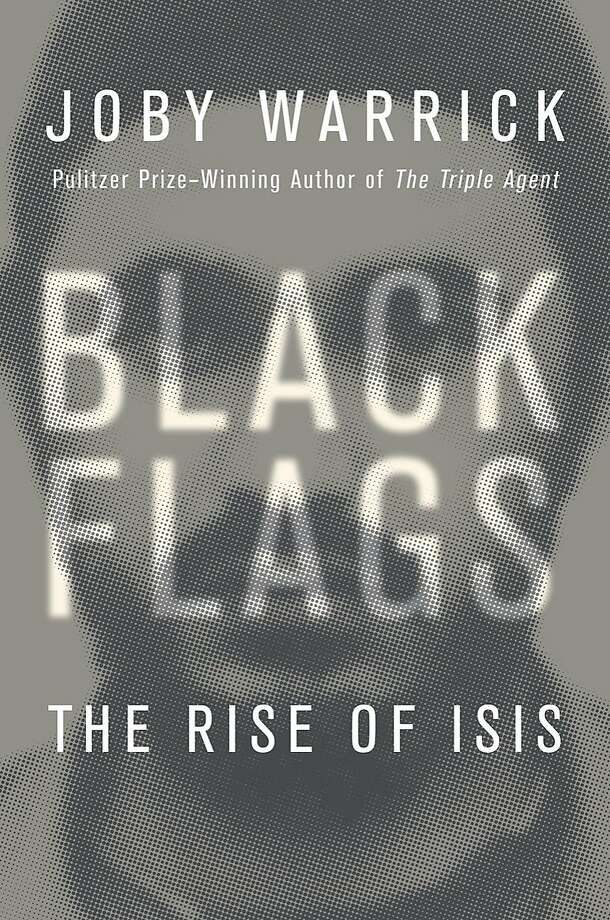
Book review: "Black Flags: The Rise of ISIS" by Joby Warrick
Reading the 2015 book "Black Flags" can be painful. As author Joby Warrick details the origins of the terrorist group ISIS, you learn of the many ways that the United States and its allies contributed to the group's growth.
True, it's not fair to say we "created" a monster. But we certainly helped it along.
In attempting to document the rise of the organization that calls itself the Islamic State of Iraq and Syria, Warrick has given himself a difficult task. This sort of story could easily splinter into many pieces, losing the reader in a fog of too many players.

But in "Black Flags," Warrick does well, maintaining a tight narrative that mostly follows the career of terrorist leader Abu Musab Al-Zarqawi. While Zarqawi didn't live to see the birth of the entity called ISIS – he was killed by Americans in 2006– Warrick makes it clear that he laid the groundwork.
Zarqawi grew up a thug and a drunk. In trying to straighten him out, his family put him into a strict Islamic religion education program. It backfired, giving Zarqawi religious rationales for his anarchist urges.
"It was like he went too straight," said one source quoted by Warrick. "So now you've got the worst of both worlds."
Imprisoned in the 1990s in Jordan, Zarqawi was placed together with some of the most hardened criminals. Locking up the worst criminals in one place might have made sense on paper, but in reality it created a festering pot of Islamist rage that would burst loose when Zarqawi and his compatriots were released from prison in a wide 1999 amnesty by Jordan's new King Abdullah II.
(Abdullah would later say that he never intended to include such prisoners in the amnesty. "Why," he demanded of his staff, "didn't someone check?")
Free to terrorize, Zarqawi found what he wanted in Iraq after the U.S. invasion of 2003. The U.S. had kicked out Saddam Hussein but failed to make sure a stable government was put in place. Into the vacuum came Islamist insurgents led by Zarqawi, feeding off the chaos and the growing hatred of U.S. occupiers. Each U.S. mistake, like the abuse of Arab prisoners in the Abu Ghraib prison, made the insurgents stronger.
"The combination of American jets and Arab jails was the critical fulcrum around which Al-Qaeda and ISIS could germinate," said a source interviewed by Warrick.
Had it not been for the U.S. invasion of Iraq, Abu Bakr Baghdadi, would likely have continued a career as a college professor, Warrick wrote. Instead, Baghdadi joined the insurgents, rose to lead ISIS and became "the Islamic State's greatest butcher."
In keeping a neat-and-clean story line, Warrick sometimes simplifies things too much. One Iraqi's comments about U.S. troops is used to symbolize the attitude of the whole country. He praises Jordan's internal police, the Mukhabarat, for rooting out terrorists, while overlooking that fact that its zealousness sometimes results in the harassment and imprisonment of innocent people.
Still, anyone who reads "Black Flags" will gain a better understanding of ISIS and its related Islamist terrorist kin.
So what's the takeaway here? What does "Black Flags" tell us about the future?
First, Islamist terrorist groups will continue to try to kill Americans and western Europeans. This is how they build a following, gain prestige, and get money. And in their twisted world, the more they kill, the more prestige they earn
Second, special operations military forces can disrupt and set back these groups, but they must have reliable intelligence. This is hard, tedious work, and may require "boots on the ground."
Third, we can't afford mistakes. Every time the U.S. or its allies accidentally kills innocent civilians or mistreats Muslims, ISIS gains more followers.
----
(Please support this blog by clicking on an ad.)
True, it's not fair to say we "created" a monster. But we certainly helped it along.
In attempting to document the rise of the organization that calls itself the Islamic State of Iraq and Syria, Warrick has given himself a difficult task. This sort of story could easily splinter into many pieces, losing the reader in a fog of too many players.
But in "Black Flags," Warrick does well, maintaining a tight narrative that mostly follows the career of terrorist leader Abu Musab Al-Zarqawi. While Zarqawi didn't live to see the birth of the entity called ISIS – he was killed by Americans in 2006– Warrick makes it clear that he laid the groundwork.
Zarqawi grew up a thug and a drunk. In trying to straighten him out, his family put him into a strict Islamic religion education program. It backfired, giving Zarqawi religious rationales for his anarchist urges.
"It was like he went too straight," said one source quoted by Warrick. "So now you've got the worst of both worlds."
Imprisoned in the 1990s in Jordan, Zarqawi was placed together with some of the most hardened criminals. Locking up the worst criminals in one place might have made sense on paper, but in reality it created a festering pot of Islamist rage that would burst loose when Zarqawi and his compatriots were released from prison in a wide 1999 amnesty by Jordan's new King Abdullah II.
(Abdullah would later say that he never intended to include such prisoners in the amnesty. "Why," he demanded of his staff, "didn't someone check?")
Free to terrorize, Zarqawi found what he wanted in Iraq after the U.S. invasion of 2003. The U.S. had kicked out Saddam Hussein but failed to make sure a stable government was put in place. Into the vacuum came Islamist insurgents led by Zarqawi, feeding off the chaos and the growing hatred of U.S. occupiers. Each U.S. mistake, like the abuse of Arab prisoners in the Abu Ghraib prison, made the insurgents stronger.
"The combination of American jets and Arab jails was the critical fulcrum around which Al-Qaeda and ISIS could germinate," said a source interviewed by Warrick.
Had it not been for the U.S. invasion of Iraq, Abu Bakr Baghdadi, would likely have continued a career as a college professor, Warrick wrote. Instead, Baghdadi joined the insurgents, rose to lead ISIS and became "the Islamic State's greatest butcher."
In keeping a neat-and-clean story line, Warrick sometimes simplifies things too much. One Iraqi's comments about U.S. troops is used to symbolize the attitude of the whole country. He praises Jordan's internal police, the Mukhabarat, for rooting out terrorists, while overlooking that fact that its zealousness sometimes results in the harassment and imprisonment of innocent people.
Still, anyone who reads "Black Flags" will gain a better understanding of ISIS and its related Islamist terrorist kin.
So what's the takeaway here? What does "Black Flags" tell us about the future?
First, Islamist terrorist groups will continue to try to kill Americans and western Europeans. This is how they build a following, gain prestige, and get money. And in their twisted world, the more they kill, the more prestige they earn
Second, special operations military forces can disrupt and set back these groups, but they must have reliable intelligence. This is hard, tedious work, and may require "boots on the ground."
Third, we can't afford mistakes. Every time the U.S. or its allies accidentally kills innocent civilians or mistreats Muslims, ISIS gains more followers.
----
(Please support this blog by clicking on an ad.)
Monday, November 16, 2015
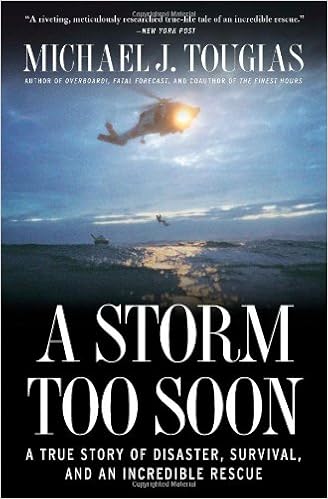
Book review: "A Storm Too Soon" by Michael J. Tougias
A horrific storm. A sinking sailboat. Three men lost at sea. What's not to like?
Michael J. Tougias, author of the gripping "Fatal Forecast," has once again put together a terrific story of maritime disaster.

This one, called "A Storm Too Soon," is set in 2007 when three men – J.P. de Lutz, Rudy Snel, and Ben Tye – set out from Florida aboard the sailboat Sean Seymour II on their way to France. Two days out in the Atlantic Ocean, they found themselves engulfed in a massive storm with 80-foot waves and are soon fighting for their lives.
Tougias, having interviewed all the players in this drama, gives us a detailed look at both the struggles of the three sailors as well as the Coast Guard crew that comes looking for them. He also includes some other stories of ocean survival to give some perspective on the complicated nature of ocean rescues.
Tougias has a real talent for offering just the right details to give a real you-are-there feel to the book while also keeping the story moving forward. For example, with the sailboat tossed over and the men struggling to get out, Togias writes:
"JP somehow manages to slide open the hatch and swim out, barely able to hold his breath. He needs air, yet he doesn't shoot directly for the surface. Instead he lets his hands feel their way to the starboard leg of the arch that rises from the stern of the boat, not far from the companion way hatch. He sweeps with his arm, feeling for the life raft canister, and follows the arch to the port side. Still no raft. It should be in the canister just a few inches aft of the arch. His lungs are screaming for air, and he's fighting their call. He can sense that his body will ignore the commands from his brain to hold his breath and that his mouth will open on its own."
The bravery and skill of the Coast Guard crew, as portrayed by Tougias, is impressive. While they all are heroes in this story, the hero among heroes is rescue swimmer Drew Dazzo. He's the one who enters the surging seas, putting his own life in peril to rescue the sailors. What he does is almost superhuman.
I also liked that Tougias stays with the characters after rescue. A lot of stories end abruptly with the characters riding into the sunset, with all their problems seemingly solved. But Tougias notes that the rescued men from the Sean Seymour II have real issues to confront right away: They need to replace their lost driver's licenses and credit cards, for one thing, and they need to figure out how to get home.
There were two things I was disappointed in with this book. First, the cover photo gives away – sort of – the end of the book. Second, I was disappointed that the book has no pictures inside, not even headshots of the characters. However, you can find a large collection of photos posted by J.P. de Lutz here. Even better, a video of the rescue is here. Suggestion: Don't look at the video until you're nearly done with the book.
If you like this sort of book, you will also like "Deadliest Sea," by Kaylee Thompson, an outstanding of the sinking of a fishing boat in Alaska and the Coast Guard efforts to save the crew.
-----------
(Please support this blog by clicking on an ad.)
Michael J. Tougias, author of the gripping "Fatal Forecast," has once again put together a terrific story of maritime disaster.
This one, called "A Storm Too Soon," is set in 2007 when three men – J.P. de Lutz, Rudy Snel, and Ben Tye – set out from Florida aboard the sailboat Sean Seymour II on their way to France. Two days out in the Atlantic Ocean, they found themselves engulfed in a massive storm with 80-foot waves and are soon fighting for their lives.
Tougias, having interviewed all the players in this drama, gives us a detailed look at both the struggles of the three sailors as well as the Coast Guard crew that comes looking for them. He also includes some other stories of ocean survival to give some perspective on the complicated nature of ocean rescues.
Tougias has a real talent for offering just the right details to give a real you-are-there feel to the book while also keeping the story moving forward. For example, with the sailboat tossed over and the men struggling to get out, Togias writes:
"JP somehow manages to slide open the hatch and swim out, barely able to hold his breath. He needs air, yet he doesn't shoot directly for the surface. Instead he lets his hands feel their way to the starboard leg of the arch that rises from the stern of the boat, not far from the companion way hatch. He sweeps with his arm, feeling for the life raft canister, and follows the arch to the port side. Still no raft. It should be in the canister just a few inches aft of the arch. His lungs are screaming for air, and he's fighting their call. He can sense that his body will ignore the commands from his brain to hold his breath and that his mouth will open on its own."
The bravery and skill of the Coast Guard crew, as portrayed by Tougias, is impressive. While they all are heroes in this story, the hero among heroes is rescue swimmer Drew Dazzo. He's the one who enters the surging seas, putting his own life in peril to rescue the sailors. What he does is almost superhuman.
I also liked that Tougias stays with the characters after rescue. A lot of stories end abruptly with the characters riding into the sunset, with all their problems seemingly solved. But Tougias notes that the rescued men from the Sean Seymour II have real issues to confront right away: They need to replace their lost driver's licenses and credit cards, for one thing, and they need to figure out how to get home.
There were two things I was disappointed in with this book. First, the cover photo gives away – sort of – the end of the book. Second, I was disappointed that the book has no pictures inside, not even headshots of the characters. However, you can find a large collection of photos posted by J.P. de Lutz here. Even better, a video of the rescue is here. Suggestion: Don't look at the video until you're nearly done with the book.
If you like this sort of book, you will also like "Deadliest Sea," by Kaylee Thompson, an outstanding of the sinking of a fishing boat in Alaska and the Coast Guard efforts to save the crew.
-----------
(Please support this blog by clicking on an ad.)
New York Times story on Long Beach schools get facts wrong
The New York Times just published a column praising the school system in Long Beach, California, but the piece gets at least three facts wrong.
First, author David L. Kirp, a public policy professor at the University of California, Berkeley, describes Long Beach as a "predominantly immigrant city."
"Predominately" means "mostly" or "majority of." So Long Beach is made up mostly of immigrants?
No, it's not. Census data shows that 26% of Long Beach's population is foreign-born, pretty much the same as state average (27%).
Second, the article says that in Long Beach "a third of the children under age 17 live in poverty." This is not true, either. The actually share, according to the Census, is 28%. Sure, this is not a great difference from 33%, but if you're rounding things off, it would be more accurate to say that "a quarter" of children under 17 live in poverty.
What's particular troubling about these two mistakes is that they're very easy to check. I found the answers to both on the Census website in about a minute each. Doesn't anyone at the NYT check facts?
The third mistake is Kirp's statement that in Long Beach "all fourth and fifth graders, together with their parents, tour the local college campuses." It's the "with the parents" part that's untrue. I have two children in Long Beach public schools, and they did tour colleges, but parents didn't come along.
Are there other mistakes in the article? Maybe. I didn't check every fact, and in some cases it's pretty much impossible to. The author, for example, states that "two-thirds" of new U.S. college students "arrive on campus unprepared for college rigor." What does that mean? He doesn't explain, and like most other assertions in the piece, he doesn't cite a source.
-------------
(Please support this blog by clicking on an ad.)
First, author David L. Kirp, a public policy professor at the University of California, Berkeley, describes Long Beach as a "predominantly immigrant city."
"Predominately" means "mostly" or "majority of." So Long Beach is made up mostly of immigrants?
No, it's not. Census data shows that 26% of Long Beach's population is foreign-born, pretty much the same as state average (27%).
Second, the article says that in Long Beach "a third of the children under age 17 live in poverty." This is not true, either. The actually share, according to the Census, is 28%. Sure, this is not a great difference from 33%, but if you're rounding things off, it would be more accurate to say that "a quarter" of children under 17 live in poverty.
What's particular troubling about these two mistakes is that they're very easy to check. I found the answers to both on the Census website in about a minute each. Doesn't anyone at the NYT check facts?
The third mistake is Kirp's statement that in Long Beach "all fourth and fifth graders, together with their parents, tour the local college campuses." It's the "with the parents" part that's untrue. I have two children in Long Beach public schools, and they did tour colleges, but parents didn't come along.
Are there other mistakes in the article? Maybe. I didn't check every fact, and in some cases it's pretty much impossible to. The author, for example, states that "two-thirds" of new U.S. college students "arrive on campus unprepared for college rigor." What does that mean? He doesn't explain, and like most other assertions in the piece, he doesn't cite a source.
-------------
(Please support this blog by clicking on an ad.)
Tuesday, October 27, 2015
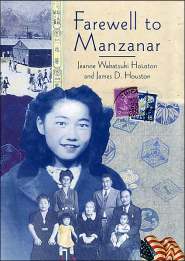
Book review: "Farewell to Manzanar" by Jeanne Wakatsuki Houston
Americans have grown to realize that the confinement of 110,000 U.S. residents of Japanese descent in internment camps during World War II was one of the most shameful chapters in this nation's history.
Yet the topic remains in the shadows, an uncomfortable chapter of history that Americans know little about.

In "Farewell to Manzanar," Jeanne Wakatsuki Houston puts a human face on the episode and takes us inside one of the most famous of the internment camps. Wakatsuki lived from age 7 to 11 at Manzanar, the camp created in a bleak desert landscape in eastern California, .
While there's no justifying the internment, Wakatsuki's portrayal of life in the camp is warmer and less harsh than you often hear. These were not, she makes clear, anything like the Nazi death camps.
Wakatsuki recounts how her family, like others of Japanese descent, lived relatively unremarkable lives in Southern California before the war. But once Japan attacked Pearl Harbor, the Japanese-American community immediately knew that their lives were about to change.
Forcibly relocated to Manzanar, families did their best to create a "normal" life amid cramped and drafty wooden barracks. People decorated their creaky homes the best they could, got jobs, and sent their children to school. Residents could attend church, takes classes and get items from the Sears catalog delivered.
The harm of the camp came in many, sometimes subtle, ways. Wakatsuki recalls the internment camps helped break up her family for a simple reason: They stopped eating meals together. The camps had large dining halls and in Wakatsuki's large family, the children drifted off to regularly eat dinner with their friends.
"My own family, after three years of mess hall living, collapsed as an integrated unit. Whatever dignity or feeling of filial strength we may have known before December 1941 was lost, and we did not recover it until many years after the war."
Watasuki recalls that even after leaving the internment camps, she retained a sense of shame, as if she had done something wrong. Sometimes she was excluded from a white friend's home, or from a group like the Girl Scouts simply because she was of Japanese descent.
"What is so infuriating, looking back, is how I accepted the situation," she writes. "If refused by someone's parents, I would never say, 'Go to hell!' or "I'll find other friends," or "Who wants to come to your house anyway?' I would see it as my fault, the result of my failings. I was imposing a burden on them."
"Farewell to Manzanar" is an easy and worthwhile read, bringing color and light to a period once kept in the dark.
---
(Please support this blog by clicking on an ad.)
Yet the topic remains in the shadows, an uncomfortable chapter of history that Americans know little about.
In "Farewell to Manzanar," Jeanne Wakatsuki Houston puts a human face on the episode and takes us inside one of the most famous of the internment camps. Wakatsuki lived from age 7 to 11 at Manzanar, the camp created in a bleak desert landscape in eastern California, .
While there's no justifying the internment, Wakatsuki's portrayal of life in the camp is warmer and less harsh than you often hear. These were not, she makes clear, anything like the Nazi death camps.
Wakatsuki recounts how her family, like others of Japanese descent, lived relatively unremarkable lives in Southern California before the war. But once Japan attacked Pearl Harbor, the Japanese-American community immediately knew that their lives were about to change.
Forcibly relocated to Manzanar, families did their best to create a "normal" life amid cramped and drafty wooden barracks. People decorated their creaky homes the best they could, got jobs, and sent their children to school. Residents could attend church, takes classes and get items from the Sears catalog delivered.
The harm of the camp came in many, sometimes subtle, ways. Wakatsuki recalls the internment camps helped break up her family for a simple reason: They stopped eating meals together. The camps had large dining halls and in Wakatsuki's large family, the children drifted off to regularly eat dinner with their friends.
"My own family, after three years of mess hall living, collapsed as an integrated unit. Whatever dignity or feeling of filial strength we may have known before December 1941 was lost, and we did not recover it until many years after the war."
Watasuki recalls that even after leaving the internment camps, she retained a sense of shame, as if she had done something wrong. Sometimes she was excluded from a white friend's home, or from a group like the Girl Scouts simply because she was of Japanese descent.
"What is so infuriating, looking back, is how I accepted the situation," she writes. "If refused by someone's parents, I would never say, 'Go to hell!' or "I'll find other friends," or "Who wants to come to your house anyway?' I would see it as my fault, the result of my failings. I was imposing a burden on them."
"Farewell to Manzanar" is an easy and worthwhile read, bringing color and light to a period once kept in the dark.
---
(Please support this blog by clicking on an ad.)
Friday, October 2, 2015
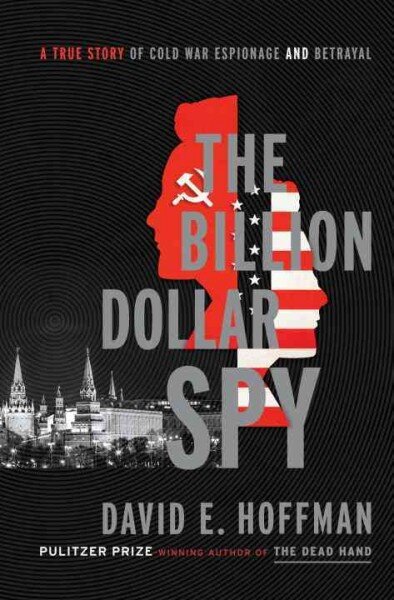
Book review: "The Billion Dollar Spy" by David E. Hoffman
Remember those old spy movies that featured things like letters written in invisible ink, tiny cameras hidden in pens, suicide pills, and messages stashed furtively under park benches?
Real spies work much the same way, it turns out. One of the biggest takeaways from the true-espionage book "The Billion Dollar Spy" is discovering how much real life is like those movies.

In "The Billion Dollar Spy," author David E. Hoffman tells the story of Adolf Tolkachev, a Russian engineer who passed an incredible volume of military secrets to American CIA agents during the Cold War from 1979 to 1985. The value of this intelligence was once estimated at over a billion dollars in terms of how it allowed the United States to adapt its military technology. Indeed, it's likely that Tolkachev by himself contributed mightily to the downfall of the Soviet Union.
In telling this story, Hoffman has to do a little "Spying 101" for readers. He describes, for instance, how CIA agents in Moscow went through elaborate steps -- driving in circles, switching from a car to a train to walking -- to make sure they weren't being followed. He describes the sometime elaborate disguises they wore. He describes how something as simple as a painted "V" on a pillar, or an open window could be a signal to a spy.
It's notable how little role technology played. They weren't hacking into computer networks or anything like that -- it was a nitty-gritty, person-to-person, street-level actions that made the difference.
Hoffman constructs the story largely from now-declassified documents that give a detialed look at how the CIA "handled" spies like Tolkachev. Unfortunately, late in the book, the Americans lose Tolkachev and Hoffman can only give us the basics of what happens then.
Still, it's a fascinating book that reads like a John Le Carre page-turner.
---
(Please support this blog by clicking on ad.)
Real spies work much the same way, it turns out. One of the biggest takeaways from the true-espionage book "The Billion Dollar Spy" is discovering how much real life is like those movies.
In "The Billion Dollar Spy," author David E. Hoffman tells the story of Adolf Tolkachev, a Russian engineer who passed an incredible volume of military secrets to American CIA agents during the Cold War from 1979 to 1985. The value of this intelligence was once estimated at over a billion dollars in terms of how it allowed the United States to adapt its military technology. Indeed, it's likely that Tolkachev by himself contributed mightily to the downfall of the Soviet Union.
In telling this story, Hoffman has to do a little "Spying 101" for readers. He describes, for instance, how CIA agents in Moscow went through elaborate steps -- driving in circles, switching from a car to a train to walking -- to make sure they weren't being followed. He describes the sometime elaborate disguises they wore. He describes how something as simple as a painted "V" on a pillar, or an open window could be a signal to a spy.
It's notable how little role technology played. They weren't hacking into computer networks or anything like that -- it was a nitty-gritty, person-to-person, street-level actions that made the difference.
Hoffman constructs the story largely from now-declassified documents that give a detialed look at how the CIA "handled" spies like Tolkachev. Unfortunately, late in the book, the Americans lose Tolkachev and Hoffman can only give us the basics of what happens then.
Still, it's a fascinating book that reads like a John Le Carre page-turner.
---
(Please support this blog by clicking on ad.)
Subscribe to:
Posts (Atom)