Sunday, December 5, 2021

Why college football fans stay home

College football remains a popular game on television, but in-person attendance at games is dropping. Some of the sport's leaders have expressed surprise at this, but if you've been to a college football games in recent years, you'll know why so many seats are empty: Fans at college football games are not treated very well.

College football fans pay a lot to attend a game, then are screened like criminals at the entrance gates and are treated as a mere afterthought in a TV-centered event. 

Even I,  a college football fan who has attended hundreds of games across the country over the years, am questioning whether to keep going.

Empty stands at this year's game between San Diego 
State and Towson State

Here are the problems:

The Price of Admission: Earlier this year I spent $61 per seat for three tickets to the UCLA-Arizona game in Tucson. No, wait a minute, there was a mysterious extra $2 "fee" on each ticket, so it was $63. No, wait a minute, there was another $1 per ticket "delivery cost" (even though these were electronic tickets). So a total of $192 for three seats on a metal bench in the upper deck with no back or arm rests. If we wanted to sit closer to the field, the price would have been over $140 per seat.

And this wasn't even a big game: Coming in, Arizona was on a 16-game losing streak.

By comparison, a $12 ticket to the local movie theater gives you a wide reclining seat with a footrest.

It's common to pay over $100 per seat for many college football games. But that's not all. A friend of mine said he had to make a $5,000 donation to San Diego State just for privilege of buying season football tickets.

And don't forget the $10 to $40 you'll spend for parking.

Or, you could stay at home and watch the game on TV for no more than the monthly price of your satellite or cable fee, which gives you access to scores of games.

When does the game start? If you bought tickets to see "Hamilton" even six months from now, you would know whether it was an 8 p.m. show or a 2 p.m. matinee and that would not change. But college football fans are kept in the dark, with the kickoff time not announced until a week or two ahead of time. It could be an afternoon game, it could be a night game, it could even start at 9 a.m. (as the Boise State-San Diego State game did this year). 

Sure, you might need to plan your life, but TV dictates when the game starts and they'll tell you when they're good and ready.

Entering the stadium: You'd think that fans paying the high ticket prices of college football would be warmly welcomed at the gate, but instead they're greeted by grim security personnel doing intrusive searches, X-ray scanners and a long list of items they can't bring in. Depending on the stadium, you might be barred from bringing in food, fanny packs, even diaper bags.

Commercial timeouts: This is probably the biggest complaint among in-person college football fans. Imagine if you went to "Hamilton" and every seven or eight minutes, the show just stopped, all the performers milled about on the stage for three minutes, and then they show restarted. And this happened about 20 times during the show. Would you continue to go to the theater if every show was like this?

This is pretty much what football fans have to deal with because of the pervasive TV commercial breaks throughout the game. Everything stops and nothing happens  over and over and over. These stoppages can easily add an hour to each game. 

Sure, if you're watching at home on TV, you have to deal with the commercial breaks, too. But you can surf channels, do other things around the house, or simply record the game so you can skip through all the breaks.

Hungry? As I mentioned, some venues make it difficult to bring your own sandwich and chips to the game. Before considering going to the concession stand, you might want to consider taking out a loan. As just an example. a regular bottle of water at San Diego State games in 2021 cost $7, while a personal pizza was $10 and a beer $14.

I've also noticed that some stadiums are going "cashless" for all purchases. Personally, this doesn't bother me much, but for some people it might. It's another example of how the venue is doing what's convenient for it, not for the fans.

Replays:  Watching on TV, you get multiple replays of key moments, plus an endless parade of key stats. But at stadiums, they seem to offer this kind of thing grudgingly: A handful of replays here, a smattering of basic stats there. On TV, they'll note if the quarterback has completed 12 passes in a row, or if one team has failed to convert on five straight third downs, but this kind of proactive, fan-friendly information is rare in the stadium

Can you understand the public address announcer?  Usually you can't. Is it that hard to have a good P.A. system? 


Thursday, December 2, 2021

Book review: "So Happiness to Meet You" by Karin Esterhammer

Many an American, perhaps unhappy with life in the U.S., or just bored, has pondered what it would be like to leave the country and start anew elsewhere.  Would it be exciting? Liberating? Strange? 

For most Americans this is just a passing daydream, but Karin Esterhammer actually did it. In 2008, she and her husband Robin, plus their 8-year-old son, abruptly left their Los Angeles home and moved to Vietnam.

In her enjoyable book "So Happiness to Meet You," Esterhammer describes the difficulties, surprises and comical moments that followed.   

Esterhammer had just been laid off from her job and her husband's small business was sputtering, so they decided that a year in low-cost Vietnam, with Robin paid to teach English, could help them right their floundering financial ship. It didn't work out quite that smoothly — for a while, they wondered if they would ever be able to return to the U.S. — but their shaky financial state makes this a better book.

Rather than sheltering away in a high-end neighborhood surrounded other ex-patriates and waited on by servants, Esterhammer and her family take up residence in a "regular" Vietnamese neighborhood. They soon find they must padlock their door to keep neighbors from wandering into their house and snooping around. They learn to deal with frequent power outages and floods, and the sounds of karaoke being sung at all times of the day and night.

But there are plusses too. Esterhammer comes to form close bonds with her neighbors, gets to plenty of practice speaking Vietnamese, and learns to cook local foods.

Looking around at her neighborhood, she also gains an appreciation for enjoying life with little money.

"The Vietnamese are philosophical about struggle: Don't look back, tomorrow will be better," she notes.

I loved how open Esterhammer is in telling the story, even when it comes to her family's personal lives. She describes getting breast implants removed in a Vietnamese hospital, and her shock when the woman she is sharing a recovery room with crawls into bed with her. 

When Robin loses most of his teaching jobs, she observes some of his classes and soon discovers why: He is a terrible teacher.

"The lessons were not just sleep-inducing, but PhD-dissertation-on-potting-soil sleep-inducing."

She knocks her husband for sleeping long hours and not being much help around the house.  I was kind of expecting the book to end with a divorce (spoiler alert: It does not).

Esterhammer's encounters with a group of ex-patriate wives in a group she dubs the "Ladies who Lunch Because They're Bored" are painfully comical. (Said one of the wives: "I have no interest in learning about Vietnamese culture.")

Esterhammer's family returned to California two and a half years after they arrived, but she came away with a  love for her adopted homeland.

"If you ever get the chance to become stranded in a foreign country with no money to get home, I recommend Vietnam."


Wednesday, October 13, 2021

Arizona football fans disappoint

I've seen college football games in eight of the stadiums of the Pac-12 Conference, but I've never had the chance to see the Arizona Wildcats play at their home in Tucson. 

This troubled me. While Arizona has never had a particularly successful football team, I have long had the impression that they have a loyal and committed base of fans. I respected that and wanted to see it in person.

Finally, this past Saturday, I got my chance to watch football at Arizona Stadium. And to my surprise, Arizona fans were not at all what I expected.

It was Family Weekend at the University of Arizona, where my son is a sophomore, so my wife and I joined throngs of other parents from around the country in Tucson. The Saturday night football game against UCLA was the centerpiece of the weekend's activities.

Considering that the Wildcats had lost 16 straight times, it was surprising how much buzz there was on campus about the game. Inside the school bookstore, fans lined up to buy Arizona t-shirts and other spirit wear (the school had urged people to wear white shirts to make it a "White Out" night.)

Pre-game festivities

On the university mall, fans set up a sea of tents and started tailgating a full six hours before kickoff. Music filled the air, along with the smell of barbecues. Fans bedecked in Arizona jerseys and hats played cornhole, tossed the football around and played drinking games. There was tingling sense in the air, that maybe, just maybe, the Wildcats could pull off a big upset that night.

Come game time, more than 43,000 fans filled Arizona Stadium for the game. That wasn't a sell-out but was pretty impressive considering that ESPN had labeled the Wildcats the third-worst team in the nation.

The large crowd was even more remarkable considering the unfriendly reception fans got at the stadium entrance. You would think that a team with the worse losing streak in college football would be thrilled that anyone would come to its games. I imagined something like this:

"Oh, thank you, dear sir for coming. Here’s a velvet pillow to sit on and a souvenir tankard with the beverage of your choice."

In fact, fans at Arizona stadium we’re greeted with all the warmth of a TSA body cavity search. First, there was the long list of prohibited items. No sandwiches. No cookies. No grapes. No purses. No diaper bags. No fanny packs. Once you got that message, you then had to empty all your pockets, go through an x-ray detector and be prepared to be patted down. 

Nothing like treating your fans  some of whom had paid hundreds of dollars for a single ticket   like criminals.

Despite this, the stadium was buzzing with excitement as the game neared. A rousing pregame video featuring Arizona sports highlights had the crowd cheering.

The Wildcats seemed to be charged up as well  yes, fan support does make a difference  and drove down the field on its first drive to take a 3-0 lead.

UCLA responded with a touchdown, but Arizona came back with a field goal to make it 7-6.  The underdog Wildcats were going toe-to-toe with the heavily favored Bruins. On key plays, fans roared to exhort the home team.

In the closing moments of the first half,  Arizona scored a touchdown on an electrifying trick play, and that was soon followed by an interception of a UCLA pass. The visitors led only 14-13 as the half ended and the crowd was vibrating with the thought of victory. On ESPN, which was broadcasting the game, announcer Dave Flemming said, "You're feeling the energy start to build in this stadium."

And then the strangest thing happened: People began to leave.

It wasn't apparent at first because a lot of people go the concession stands and the restrooms at halftime anyway, but by early in third quarter it was clear that 20% to 25% of the crowd had left midway through a close game.

I understand leaving a game when your team is getting blown out. But this was far from that. Arizona trailed by one and was besting UCLA in total yards and first downs. It remained a one-point game until late in the third quarter, and even after UCLA took a 24-16 lead, Flemming said, "It's still definitely a ballgame here."

Even well into the fourth quarter, the Wildcats could have tied that game with a single touchdown and two-point conversion. 

Somehow this didn't matter to the fans, who were rushing out of the stadium as if they'd just heard that chicken strips were half-price at Cracker Barrel. The stadium's energy deflated like air rushing out of a balloon. 

With seven minutes left in the game, there probably no more than 5,000 fans remained in the stadium. Some doggedly tried to maintain the enthusiasm, but it was no use. If you were watching on TV, it might have seemed that Arizona's football team ran out of gas in the fourth quarter (UCLA won 34-16). But the crowd quit on the team first. While it's hard to say how much the dwindling crowd support affected the team, it certainly didn't help.

I get that following a losing team can be frustrating. I wouldn't blame anyone for simply not coming out to see such a team play. But once you've bought a ticket, commit yourself. Sure, you can walk out of "Fast and Furious" and no one will care. But at a sporting event the energy of the crowd is part of the experience. Arizona fans, you can do better. 
 

Sunday, September 26, 2021

NPR interview falls short on border issues

I've grown weary of people who criticize without offering solutions. It's easy to be negative; it's harder to offer realistic alternatives.

I've also grown frustrated with journalists who enable this kind of negativity.

Case in point is the Sept. 24, 2021 NPR interview with immigrant advocate Alicia Schmidt Camacho, who was invited on "All Things Considered" to discuss what should be done about the many migrants attempting to cross the U.S.-Mexico border. I like NPR a lot, but in this case interviewer Audie Cornish allowed Camacho to persistently ridicule U.S. policy with little effort to suggest options.

When Camacho said that "deterrence does not work," Cornish could have asked, "Then what does work?" When she said U.S. immigration policy was a "failure," Cornish could have asked, "What would you do instead?" 

Not only did Cornish not ask those questions, she allowed Camacho to lecture listeners on off-topic points. Yes, we well know that these migrants have traveled a long way and that immigrants fill many jobs in the U.S., but telling us that does nothing to address border issues.

Eventually  though unprompted by Cornish  Camacho did say that she favored "decriminalizing ordinary migration" and dismantling the "large-scale carceral system" used by immigration agencies. 

What does that mean? It sounds like she supports open borders. But why should we have to guess?  Don't let Camacho hide behind academic jargon. Ask her directly: "Do you support opening the borders and allowing everyone in?"

Such pointed questions are not rude. They are necessary. 

Wednesday, August 25, 2021

Book review: "Flash Boys" by Michael Lewis

In "Flash Boys," author Michael Lewis does something impressive. He takes a complex and esoteric subject — the shadowy practices of Wall Street's high-frequency traders —and makes it accessible to the average reader.

This is a topic that could easily bog down in the minutiae of computer engineering and financial jargon and fog the mind of the most determined reader. Instead, Lewis engages us by turning into the story into a classic battle between good versus evil, even David versus Goliath.

By focusing on the people and not the technicalities, Lewis brings the story alive with a smoothly moving narrative. He describes how high-frequency traders armed with powerful computers profit by detecting investors' buying and selling orders, then racing ahead to get to the stock market first.  The high-frequency traders can then shift the price before the original order arrives, forcing investors to pay more when buying stock or get less when selling.

This all happens in less than a blink of an eye — it is a business measures in milliseconds. It is also a risk-free way for the high-frequency traders to make billions at the expense of investors. 

While Wall Street promotes itself as open marketplace where buyers and sellers can meet, Lewis says the reality is a murky world where dollars disappear into "dark pools" where insiders enrich themselves. Even most Wall Street bankers don't understand how the high-frequency traders are sucking money out of the market, Lewis says.

Into this bleak scenario, Lewis introduces a small group of men  the "Flash Boys"  who set out to expose the problem and right the wrong.

Lewis does a lot right in this book, but I'm frustrated because he doesn't do many things that would have made the book even better.

First, there are no pictures, not even of the central characters. He says of one person, "He didn't look like a Wall Street trader." Ok, but why not include a picture and let us decide? 

Then there's chapter two, which describes the laying of fiber cable from Chicago to New Jersey just for the use of high-frequency traders. This chapter screams for a map, maybe even two or three. But there are none.

Third, a book of this density, with many characters, companies and concepts sprinkled throughout, could really use an index. There is none.

Similarly, because many people come and go in the story, sometimes with big gaps between appearances, a guide with thumbnail descriptions of the characters at the start or back of the book would have been helpful. 

As the book goes on, the "Good vs Evil" theme runs out of steam. Even the main figure, Brad Katsuyama, eventually comes around to say of the high-frequency traders, "They are much less of a villain than I thought." He concludes that they are only doing what is expected on Wall Street.  "The system has let down the investor," says Katsuyama. 

As for the good guys, Lewis portrays them as so squeaky clean that it strains credibility. Everyone else on Wall Street is greedy as hell, but these guys are purely altruistic?  It turns out that each of the Flash Boys are themselves quite rich, so the David versus Goliath analogy does become strained. 

The latter part of the book slows as it focuses on what the Flash Boys consider the solution — a new stock exchange called IEX that Katsuyama and his colleagues are setting up. They claim IEX will level the playing field and eliminate the chance for high-frequency traders to cheat. There is no great final showdown where the villains are vanquished, but there is a small window of hope. 

Monday, July 5, 2021

Book review: "Rough Riders" by Mark Lee Gardner

A good place to start with "Rough Riders," Mark Lee Gardner's 2016 book, is at the end.

In the "Note on Sources," at the back of the book, Gardner explains why this work goes deeper than previous histories of the Rough Riders, the legendary American cavalry led by Theodore Roosevelt in the Spanish-American War. Earlier books failed to take advantage of many first-hand accounts written by soldiers that were published at the time in newspapers around the country, simply because the authors were unaware that those accounts existed. 

But today, with millions of historic newspaper pages available on the Internet, Gardner was able to find those published letters and use them to make a much more complete picture of the Rough Riders. This book, Gardner asserts, is "the first to make use of this previously unknown and significant body of firsthand accounts."

Gardner, whose 2010 book "To Hell on a Fast Horse" was also thoroughly researched, supplemented the letters he found with material culled from unpublished Rough Riders' diaries as well as books and news accounts.

The result is an meticulously detailed book about the Rough Riders, a cavalry made largely from "cowboy" volunteers from the American West the was specially created for the 1898 war on the island of Cuba. The full title of the book is "Rough Riders: Theodore Roosevelt, His Cowboy Regiment, and the Immortal Charge Up San Juan Hill."

Before reading this book, the story of the Rough Riders had long existed on the periphery of my historical knowledge. Yeah, I'd heard of them, but I didn't really know the whole story. I'd also heard a few things that suggested the supposed charge up San Juan Hill either never happened or was blown out of proportion. 

I was first surprised to learn that the Rough Riders were famous even before they even set foot in Cuba and began battle with the Spanish occupiers of the island. The whole creation of the regiment, in part because Roosevelt was involved, was widely reported across the country (Roosevelt was not president yet, but was well-known for his writings and speeches). They were, in effect, celebrity soldiers.

Theodore Roosevelt is my favorite president, but I was dismayed to read how much he and other war hawks selfishly pushed to start this conflict — any war would do — simply so they could join in the battle.

That said, the book makes it clear that the fighting on San Juan Hill (and elsewhere on Cuba) was real and deadly, and that Roosevelt was in the thick of it. Men died all around him. The fact that a bullet never hit him, even though he was often sitting high on his horse Little Texas, is remarkable (and certainly added to his mystique).

Not only did Roosevelt lead the charge up San Juan Hill, he did so twice. The first time, almost no one heard him give the order and only five men followed. They regrouped and the second charge was much more successful.

"Unfortunately, the myth that Roosevelt and his Rough Riders did not charge up San Juan Hill survives to this day, mostly perpetuated by historians who, quite frankly, either have some bias against Roosevelt or have not done their research, or both," Gardner says. 

It's important to note that this book is narrowly about the Rough Riders. I would have liked more "big picture" information on the issues that led to the war and some perspective from the Spanish side, but there's almost none of either.

Even though the Rough Riders suffered through difficult conditions from the start of their training through the end of the war, the soldiers' accounts tend to be upbeat, even "chipper." For instance, one man who was ordered by Roosevelt to stay put in a location exposed to relentless enemy fire, said, "It was a ticklish place, but we'd have lain on a gridiron of hell, if he'd given the order."

Were the soldiers truly so positive? Or was it just not fashionable at that time to complain? Even after reading the whole book I'm not sure. 

If you'd like another good book about Theodore Roosevelt , consider "River of Doubt," the story of his arduous trip through the Amazon in 1914.


Wednesday, May 5, 2021

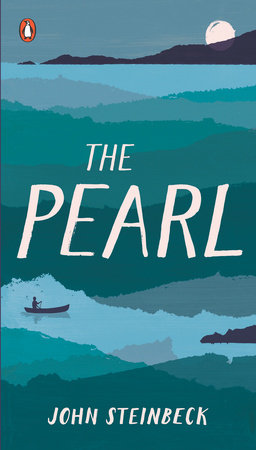
Book review: "The Pearl" by John Steinbeck

(This review contains spoilers. A lot of them.)

You want to get rich quick? Think again, suggests John Steinbeck, in "The Pearl."

In this harsh parable, Steinbeck shows sudden wealth ruining the lives of a young Mexican couple named Kino and Juana. And I mean, ruining. In the end, their baby is dead, their house is burned down, many of their neighbors are out to get them, and Kino has had to kill four people defending his family. 

It all starts when Kino, a poor and illiterate pearl diver in a small village in Baja California, finds the "Pearl of the World." The gigantic orb should make him and his family rich, but instead it only brings misery.

"The Pearl" is a short 1947 novella, with only 90 pages in my version. I finished it in two days and it could have been just one with a little more focus.

It is a smoothly engaging tale, starting right from the beginning when a scorpion bites Kino and Juana's baby. Steinbeck's descriptions are evocative. For instance:

"Kino deftly slipped the knife into the edge of shell. Through the knife he cold feel the muscle tighten hard. He worked the blade lever-wise and the closing muscle parted and the shell fell apart. The lip-like flesh writhed up and then subsided. Kino lifted the flesh, and there it lay, the great pearl, perfect as the moon."

In Steinbeck's telling, sudden wealth can not only upend the life of the recipient, but can disrupt the fabric of a community. Kino's pearl exposes greed and treachery among many of the villagers.

One small flaw: A doctor introduced early in the book as a seemingly important character curiously disappears in the latter half.

Also, I wonder about the message. Is Steinbeck suggesting that people should not attempt to improve their quality of life? If they do, is it inevitable that the hand of fate will bring misery and death into their lives?

I don't buy it. Kino hoped that his new wealth could one day send his son to school so the boy could learn to read. What's wrong with that?